
Pantheon Resources' Arctic Gambit: Unlocking Value in Alaska's Energy Transition
The Arctic has long been a high-risk frontier for energy exploration, but Pantheon Resources is rewriting the script. With its strategic focus on de-risked assets, proximity to existing infrastructure, and disciplined capital allocation, the UK-based firm is positioning itself to capitalize on Alaska's underappreciated oil and gas potential. The company's $16.25 million equity raise, coupled with its advancing Dubhe-1 appraisal well and resource upside in the Ahpun field, could mark a pivotal shift in its trajectory toward Final Investment Decision (FID) by 2028.
A Low-Infrastructure-Risk Play in a High-Stakes Region
Pantheon's Alaska projects—centered on the Ahpun and Kodiak fields—benefit from a unique advantage: proximity to the Trans-Alaska Pipeline System (TAPS) and the Dalton Highway. These existing infrastructure networks slash development costs and timelines, a stark contrast to the typical Arctic exploration model reliant on costly new builds. 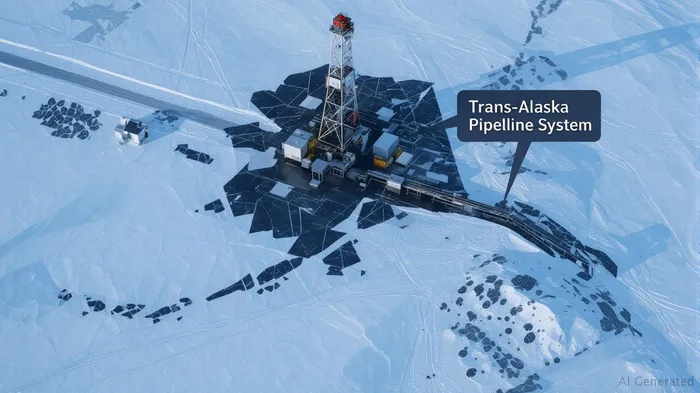
The company's $16.25 million equity raise, priced at 21.15p per share, funds the Dubhe-1 well—a critical step toward proving Phase 1 of the Alaska LNG project—and supports development planning. Crucially, this funding avoids dilution of existing shareholders, aligning with Pantheon's goal of achieving self-sufficiency by 2028 through cash flow from resource monetization.
Resource Upside: The Ahpun Advantage
Pantheon's core value lies in its independently certified resources: 1.6 billion barrels of marketable liquids and 6.6 Tcf of natural gas in the Ahpun/Kodiak fields. Recent flow tests in the Megrez-1 well, while disappointing in the Topset 1 (TS1) interval, have not diminished this asset base. Instead, they've sharpened focus on higher-potential zones like the Lower Sagavanirktok Formation.
Preliminary data from Megrez-1 suggests a 15%–50% upside to pre-drill resource estimates. The Lower Sag zones exhibit exceptional permeability (up to 1 Darcy) and hydrocarbon columns spanning 2,425 ft TVD, with potential flow rates exceeding 2,000 barrels per day. If validated, these results could boost recoverable resources beyond the current 1.6 billion-barrel baseline, a figure already validated by third-party experts like Netherland Sewell & Associates.
Catalysts: Flow Tests, US Listing, and Gas Monetization
The coming months will hinge on three key catalysts:
1. Flow Test Results: Testing of the Lower Sag and Prince Creek zones could confirm the resource upside. Investors should monitor results from these high-priority intervals, particularly CO₂ content analyses, which determine compatibility with the AGDC pipeline.
2. US Listing: Pantheon's planned move to a US exchange by early 2026 aims to secure greater liquidity and valuation recognition. A successful listing could unlock a $5–$10/barrel premium for its resources by 2028.
3. AGDC Pipeline Deal: The pre-arranged agreement to sell gas into Alaska's LNG pipeline from 2029 onward removes a major risk: gas disposal costs. This also creates a funding pathway post-FID, as Pantheon avoids the capital-intensive route of LNG export facilities.
Risks and the Case for Strategic Investment
Risks remain, including logistical delays in equipment mobilization and regulatory hurdles. The Megrez-1 setbacks underscore exploration's inherent uncertainty, but Pantheon's focus on proven zones and existing infrastructure mitigates these risks.
For energy investors seeking exposure to a de-risked Arctic play, Pantheon offers a compelling profile. Its strategy—leveraging low-cost infrastructure, prioritizing data-driven resource upgrades, and avoiding dilution—aligns with the demands of a transitioning energy landscape. With a clear path to FID by 2028 and potential upside in resource valuation, the company presents a high-reward, lower-exploration-risk opportunity.
Investment Thesis: A Buy on the Horizon?
Pantheon's stock—currently valued at 21.15p—has room to grow as catalysts materialize. A successful Lower Sag flow test, US listing, and FID announcement could reclassify resources from contingent to proven, triggering valuation multiples comparable to peers. Investors should watch for:
- Flow test results from the Lower Sag zones (Q3 2025).
- AGDC pipeline compatibility confirmation (Q4 2025).
- US listing progress and equity valuation updates.
In a world where energy majors increasingly shy from high-cost Arctic projects, Pantheon's disciplined approach turns risk into opportunity. For those willing to look beyond the headlines of exploration setbacks, this could be a turning point in Alaska's energy story—and a smart bet for the long term.







Comentarios
Aún no hay comentarios