
U.S. Oil & Gas: Tariffs, Costs, and the Threat of a Prolonged Downturn
The U.S. oil and gas sector faces a critical inflection pointIPCX-- as escalating steel tariffs and regulatory uncertainty collide with rising input costs, threatening profitability and future production. Recent policy shifts, including the June 4, 2025, increase of Section 232 steel tariffs to 50%, have intensified pressure on drilling budgets, while OPEC+'s aggressive production strategy risks further squeezing already strained margins. This article examines how these forces are reshaping the industry's outlook and why investors must reassess exposure to upstream firms with high breakeven costs.
Steel Tariffs: A Direct Blow to Drilling Economics
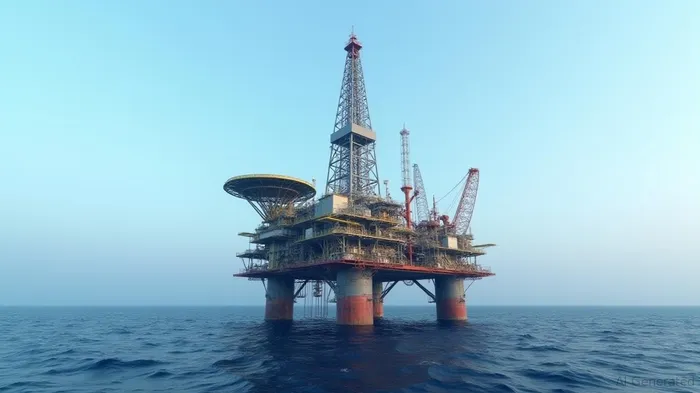
The 50% tariff on imported steel has sent prices soaring, with hot-rolled coil steel—critical for oil country tubular goods (OCTG)—reaching $890 per short ton in 2025, a 15% increase from 2024. For Gulf of Mexico offshore wells, this adds $1 million to $2 million per well, pushing OCTG costs to 8-10% of total drilling expenses. Precision Drilling's pivot to domestic suppliers highlights the scramble to mitigate costs, but smaller operators lack such flexibility. The Dallas Fed Energy Survey (March 2025) found that 55% of oilfield services firms anticipate reduced customer demand due to tariffs, with casing/tubing costs rising 25-30%.
Diverging Forecasts: Dallas Fed vs. EIA
While the U.S. Energy Information Administration (EIA) projects 2025 crude output at 13.54 million barrels per day (mb/d), the Dallas Fed's survey paints a more cautious picture. The Fed's oil production index rose only to 5.6 in Q1 2025, signaling tepid growth amid margin compression and regulatory hurdles. The EIA's assumptions may understate risks: the Dallas Fed's uncertainty index surged to 43.1, driven by tariff volatility and low oil prices. Firms' breakeven prices for new Permian Basin wells remain at $65/barrel, while WTIWTI-- prices averaged $67.60/barrel in mid-2025—narrowing profit margins to precarious levels.
OPEC+'s Production Surge: A Double-Edged Sword
OPEC+'s strategy to unwind 2.2 million barrels per day (bpd) of voluntary cuts by October 2025 poses a direct challenge to U.S. shale. By July, 1.37 million bpd of cuts had been reversed, with Morgan StanleyMS-- warning of a 1.78 million bpd surplus by August. While global decline rates (15% annually) provide a buffer, the resulting price volatility could push WTI below $60/barrel by early 2026—a level that would severely strain high-cost U.S. producers. Goldman SachsGS-- forecasts a 400,000 bpd surplus in 2025, while Bank of AmericaBAC-- sees prices dipping to $65.
The Investment Case: Prune Exposure to High-Cost Producers
The confluence of rising input costs, regulatory friction, and OPEC+'s output hikes creates a high-risk environment for upstream firms. Investors should prioritize:1. Lower-Breakeven Operators: Focus on companies with Permian Basin assets (e.g., Pioneer Natural Resources) or Gulf of Mexico offshore projects, where breakeven costs are under $60/barrel and production is less sensitive to steel tariffs.2. Hedging Strategies: Use put options on energy ETFs (e.g., the Energy Select Sector SPDR Fund (XLE)) to protect against a price crash. 3. Avoid High-Leverage Names: Smaller E&Ps with debt-heavy balance sheets (e.g., Whiting Petroleum) face heightened default risks if prices stagnate below $70/barrel.
Conclusion: A Sector at Risk of Structural Underperformance
The U.S. oil and gas sector is entering a period of heightened vulnerability. Steel tariffs have eroded margins, OPEC+ is accelerating its market-share battle, and regulatory uncertainty looms large. While the Gulf of Mexico and Permian Basin offer pockets of resilience, the broader sector's growth trajectory hinges on oil prices rising above $70/barrel—a scenario increasingly at odds with global supply dynamics. Investors would be wise to reduce exposure to upstream firms with high breakeven costs and instead seek shelter in hedged plays or midstream infrastructure, where cash flows are more insulated from price swings. The era of easy shale growth is over; the next chapter will be defined by consolidation and cost discipline.





Comentarios
Aún no hay comentarios