
Nurix Therapeutics: Clinical Wins Offer Asymmetric Upside
The biotechnology sector has long been a theater of high-risk, high-reward innovation, but few companies today embody this dynamic as compellingly as Nurix TherapeuticsNRIX--. At the heart of its strategy lies a novel class of therapeutics-targeted protein degraders-designed to exploit a fundamental biological process to combat oncology's most intractable challenges. Nurix's lead candidate, bexobrutideg (NX-5948), a Bruton's tyrosine kinase (BTK) degrader, has demonstrated extraordinary clinical results in relapsed or refractory chronic lymphocytic leukemia (CLL) and Waldenström macroglobulinemia (WM), positioning the company to capitalize on a market with significant unmet need and limited competition.
Clinical Progress and Mechanistic Innovation
Bexobrutideg's mechanism of action represents a paradigm shift in oncology. Unlike traditional inhibitors, which merely block protein activity, bexobrutideg employs targeted protein degradation to eliminate BTK entirely. This catalytic approach allows a single molecule to degrade approximately 10,000 copies of BTK per hour, achieving potent efficacy at low concentrations. In Phase 1a/1b trials, the drug achieved an 80.9% objective response rate (ORR) in 47 response-evaluable CLL patients, including those with high-risk mutations such as TP53, PLCG2, and BTK, as well as central nervous system (CNS) involvement. For WM, the ORR was 84.2% across MYD88 and CXCR4 mutation subgroups. These results are particularly striking given the historical resistance of such patient populations to conventional therapies.
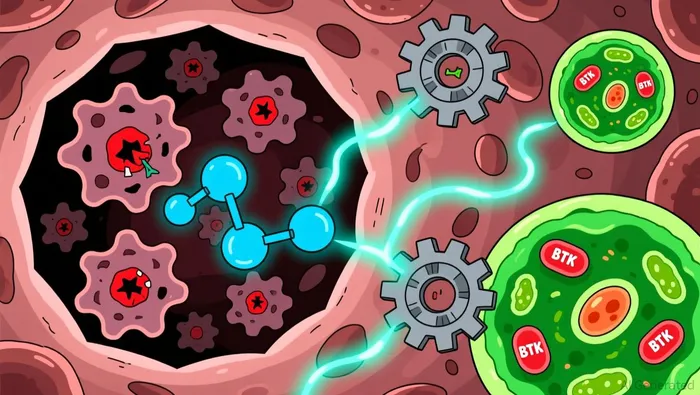
The drug's CNS penetrance further differentiates it. Bexobrutideg was detectable in cerebrospinal fluid and demonstrated activity in models with brain metastases, addressing a critical gap in treating CNS-related malignancies. This is a significant advantage over existing BTK inhibitors, which often fail to cross the blood-brain barrier effectively.
Competitive Differentiation and Safety Profile
While NurixNRIX-- faces competition from other BTK degraders, such as BeOne's BGB-16673, its safety profile offers a key differentiator. At ASH 2025, bexobrutideg's 600 mg dose cohort reported an 83% best response rate, slightly lower than BGB-16673's 94% at 200 mg. However, Nurix's drug exhibited no systemic fungal infections, no grade 4 infections, and a lower incidence of atrial fibrillation-a common side effect of BTK-targeted therapies. These safety advantages could prove decisive in regulatory and commercial contexts, where tolerability often dictates long-term patient adherence.
Moreover, Nurix's proprietary DEL-AI platform enables the design of degraders with optimized physicochemical properties, enhancing CNS penetration. This technological edge allows the company to iterate rapidly, expanding its pipeline into IRAK4 and STAT6 degraders for inflammatory diseases, as well as BRAF degraders for solid tumors. Such diversification reduces reliance on a single asset while addressing multiple high-unmet-need areas.
Market Opportunity and Regulatory Tailwinds
The oncology landscape in 2025 is defined by precision therapies and genotype-directed approaches, with regulatory agencies favoring well-validated mechanisms. Bexobrutideg's Fast Track and PRIME designations, coupled with Orphan Drug status for WM, underscore its alignment with these trends. Nurix plans to initiate pivotal trials in 2025, including a single-arm study for accelerated approval and a randomized Phase 3 trial for full approval. If successful, the drug could capture a significant share of the $3.2 billion CLL/WM market by 2030.
The asymmetric upside lies in the drug's potential to redefine treatment standards. For instance, in CLL, where third-line therapies remain suboptimal, bexobrutideg's durability- median progression-free survival of 22.1 months in early trials-could position it as a preferred option. Similarly, in WM, a rare disease with limited treatment options, the 84.2% ORR and favorable safety profile could secure a dominant market position.
Conclusion
Nurix Therapeutics stands at an inflection point, with bexobrutideg poised to deliver transformative value in oncology. Its catalytic degrader technology, combined with a robust clinical dataset and favorable safety profile, creates a compelling case for asymmetric upside. While the competitive landscape is evolving, Nurix's focus on precision, CNS activity, and AI-driven innovation provides a durable moat. For investors, the company represents a rare opportunity to back a first-in-class therapy with the potential to reshape treatment paradigms in high-unmet-need oncology segments.





Comentarios
Aún no hay comentarios