
Nuclear Renaissance: Sizewell C as a Beacon for Decarbonization Infrastructure Investment
The global energy transition hinges on scalable, low-carbon infrastructure capable of delivering reliable baseload power while aligning with net-zero targets. The UK's Sizewell C nuclear project, now poised to secure its Final Investment Decision (FID) this summer, represents a critical test case for this vision. With BrookfieldBN-- Asset Management and Centrica securing stakes of 20% and 15% respectively, the project embodies a strategic shift toward private equity participation in government-backed decarbonization ventures. For investors seeking exposure to long-term, contracted cash flows with risk mitigation, Sizewell C—and its potential to replicate post-Hinkley Point C—offers a compelling opportunity.
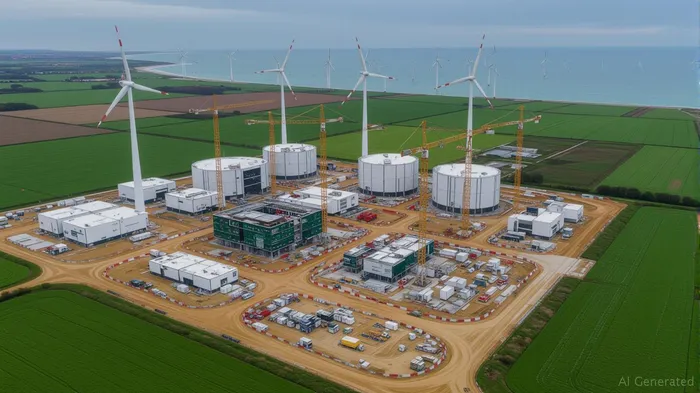
The Replicability Imperative: Sizewell C's Role in Post-Hinkley Nuclear
Hinkley Point C, the UK's first new nuclear plant in decades, has been a cautionary tale of ambition and risk. Cost overruns (now projected at £35 billion) and delays have fueled skepticism about nuclear's feasibility in a renewables-driven era. Yet Sizewell C aims to transcend these flaws through a replicable, standardized model.
Key to this is the European Pressurized Reactor (EPR) design, shared with Hinkley but refined through lessons learned. The UK government's Regulated Asset Base (RAB) funding mechanism further distinguishes Sizewell. Under RAB, investors receive a minimum 4% return, with the government absorbing extreme cost overruns—a stark contrast to Hinkley's private equity-heavy structure, which exposed stakeholders to volatile risks. This framework reduces downside exposure while anchoring returns to regulated, long-term contracts.
The project's ownership structure also reflects a strategic evolution. The UK government holds a 50% majority stake, ensuring oversight, while Brookfield and Centrica's participation injects private-sector agility. This hybrid model balances public accountability with private innovation—a template for future projects.
Risk-Reward for Private Equity: Mitigating Uncertainty with Government Backstops
For Brookfield and Centrica, Sizewell C represents a calculated bet on decarbonization's inevitability. The risks—delays, cost inflation, or regulatory shifts—are real, but the government's guarantees and RAB model create a risk-adjusted upside.
Consider the financial safeguards:
- Bpifrance's £5 billion debt guarantee reduces reliance on volatile commercial lending.
- The 4% minimum return insulates equity holders from construction delays, a common nuclear pitfall.
- Taxpayer-backed cost overruns (capped at predefined thresholds) limit downside exposure.
Meanwhile, the rewards are substantial. Sizewell's 3.2 GW capacity will power 6 million homes for 60+ years, generating stable, inflation-linked cash flows. For Brookfield—already a global infrastructure giant—this aligns with its focus on long-duration, contracted assets. Centrica, meanwhile, gains a foothold in a sector critical to its transition from fossil fuels.
The Investment Thesis: Scalable, Low-Carbon Infrastructure at a Tipping Point
Sizewell C's significance extends beyond its immediate returns. It establishes a replicable blueprint for large-scale nuclear projects in decarbonizing economies. The RAB model could attract private capital to similar ventures in France, the US, or emerging markets, where nuclear's role in grid stability is growing.
For investors, the stakes in Sizewell C offer exposure to two megatrends:
1. The energy transition's infrastructure demand: Nuclear's baseload capacity complements renewables, making it a pillar of net-zero strategies.
2. Government-backed risk mitigation: RAB-style frameworks are likely to proliferate, lowering barriers for private capital in public goods projects.
Critics cite risks like France's EDF financial instability (EDF's 12.5% stake faces scrutiny due to its state takeover in 2023) or public opposition. Yet these are balanced by the project's strategic necessity for the UK's energy security and its alignment with Prime Minister Starmer's “golden age of nuclear” agenda.
Conclusion: A Strategic Play for Patient Capital
Sizewell C is no speculative gamble. It is a high-conviction, long-term investment in the energy transition's backbone, shielded by government guarantees and scalable design. For private equity firms like Brookfield, the project is a gateway to a broader nuclear renaissance—a sector poised to attract trillions in capital over the next decade.
Investors should prioritize positions in projects with RAB-like risk-sharing structures, as these will increasingly define the future of infrastructure finance. Sizewell C is not just a UK story; it is a global template for how private capital can profitably fuel the decarbonization imperative.
In a world racing to meet climate goals, stakes in Sizewell C represent a rare blend of prudent risk management and transformational opportunity. For the patient investor, this is where capital meets purpose.





Comentarios
Aún no hay comentarios