
Northeast India's Manufacturing Renaissance: Geopolitical Tensions Fuel Industrial Growth
The recent escalation of India-Bangladesh trade restrictions has unveiled a transformative opportunity for investors: a manufacturing boomBOOM-- in India’s Northeastern states. As geopolitical tensions and protectionist policies disrupt traditional cross-border trade, Northeast India is poised to emerge as a critical hub for textiles, agro-processing, and infrastructure development. For investors, this is a moment to capitalize on a strategic realignment of regional economics, driven by India’s “Atmanirbhar” (Self-Reliant India) policy and the BIMSTEC (Bay of Bengal Initiative for Multi-Sectoral Technical and Economic Cooperation) connectivity agenda.
A Geopolitical Shift Sparks Industrialization
The May 2025 restrictions, which block Bangladeshi garments and processed goods from entering India via land ports, are more than a trade dispute—they are a geopolitical chess move. Bangladesh’s pivot toward China, exemplified by its $2.1 billion agreements with Beijing and its interim government’s provocative rhetoric, has forced New Delhi to recalibrate its strategy. By closing land routes to Bangladeshi imports, India is not only protecting its domestic industries but also accelerating Northeast India’s integration into the national manufacturing ecosystem.
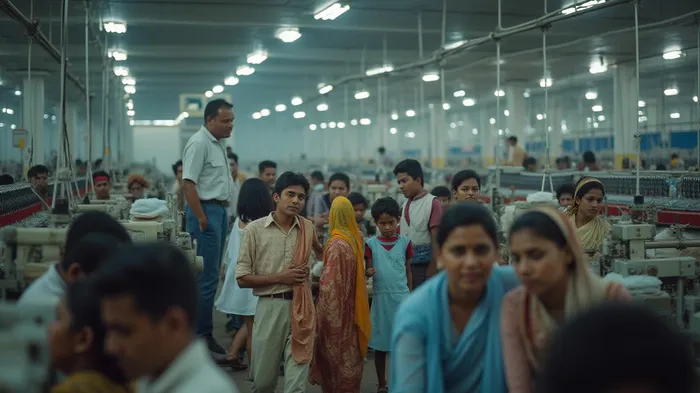
Key Sectors to Watch: Textiles, Agro-Processing, and Logistics
- Textiles: Filling the Garment Gap
Bangladesh’s garment exports to India—worth $618–700 million annually—have been rerouted to seaports, increasing costs and delays. This creates a vacuum for Northeast Indian manufacturers. Companies with production facilities in Assam, Tripura, or Manipur, such as Raymond Limited (RAYMOND.NS) or Arvind Limited (ARVIND.NS), are positioned to capture this market.
The NIFTY Textiles Index has surged 18% since early 2025, reflecting investor confidence in India’s manufacturing revival.
Agro-Processing: Replacing Processed Imports
With Bangladesh’s processed foods, beverages, and plastics now blocked via land ports, Northeast India’s agro-processing sector is primed to grow. Look for firms like Pran Industries (PRANIND.NS)—a leading player in packaged foods—or startups focused on value-added snacks and beverages. The region’s fertile land and proximity to markets in Bangladesh and Bhutan offer a competitive edge.Infrastructure and Logistics: BIMSTEC’s Hidden Gem
The restrictions have exposed the inefficiencies of land-based trade, making port infrastructure critical. Investors should track companies involved in port development, such as Adani Ports & SEZ (APSEZ.NS), which operates India’s largest private ports. Additionally, logistics firms like Shree Vishnu Trading (SVTC.NS) or Blue Dart Express (BLUEDART.NS), which manage cross-border supply chains, stand to benefit from increased seaport activity.
Adani Ports has outperformed the broader market by 22% this year, signaling investor enthusiasm for port-driven growth.
The Policy Tailwind: Atmanirbhar and BIMSTEC
India’s “Atmanirbhar” policy, which prioritizes domestic manufacturing, is the bedrock of this transformation. Government incentives like the Production-Linked Incentive (PLI) scheme for textiles and the Rebate of State and Central Taxes (RoSCTL) for exporters are lowering costs and boosting competitiveness. Meanwhile, BIMSTEC—a regional bloc including India, Bangladesh, Bhutan, Myanmar, Nepal, Sri Lanka, and Thailand—is driving infrastructure projects like the Trilateral Highway and the Bangladesh-China-India-Myanmar (BCIM) Economic Corridor, which will further link Northeast India to global markets.
Risks and Considerations
While the outlook is bullish, risks persist. Geopolitical tensions could escalate, and Bangladesh might retaliate further. Additionally, Northeast India’s underdeveloped logistics and labor shortages pose challenges. Investors must favor firms with strong local partnerships, government contracts, and scalable operations.
Call to Action: Invest Now in Northeast India’s Future
The India-Bangladesh trade restrictions are not a temporary friction—they are a structural shift. Northeast India’s manufacturing potential, backed by policy support and regional connectivity, offers a rare asymmetric opportunity. Investors should:
- Buy into textiles and agro-processing stocks with Northeast exposure.
- Allocate to logistics and port infrastructure firms benefiting from rerouted trade.
- Leverage ETFs tracking Indian manufacturing indices, such as the NIFTY Manufacturing Index (500240).
The time to act is now. As Bangladesh turns eastward to China, Northeast India is turning inward to become the workshop of South Asia. This is not just a trade war—it’s a revolution in regional industrial power.
The NIFTY Manufacturing Index has outperformed the Sensex by 15% this year, underscoring its outsize growth potential.
Investors who act decisively will reap rewards as Northeast India’s economy transforms from a frontier region to a manufacturing powerhouse.







Comentarios
Aún no hay comentarios