
Nigeria's FX Forward Crisis: A Crossroads for Manufacturing and Equity Investors
The unresolved $2.4 billion backlog of matured foreign exchange (FX) forward contracts in Nigeria has thrust the manufacturing sector into a crisis that now defines the country's economic fragility. For equity investors, this is no longer a mere regulatory dispute but a litmus test for the resilience of Nigerian equities. The stakes could not be higher: the outcome will determine whether manufacturing—a pillar of economic diversification—collapses under systemic risks or becomes a catalyst for recovery. Act now, or risk being sidelined as the fault lines deepen.
Structural Risks: A Perfect Storm for Manufacturing
The crisis exposes vulnerabilities in Nigeria's macroeconomic framework that threaten to derail its equity markets.
- Currency Volatility and Capital Flight
The Naira's sharp decline—from ₦1,567/$ to ₦1,627/$ in mid-April—reflects investor anxiety over unresolved FX obligations. Companies' inability to import raw materials has led to production bottlenecks, while banks' aggressive tactics (e.g., freezing corporate accounts) amplify operational risks.
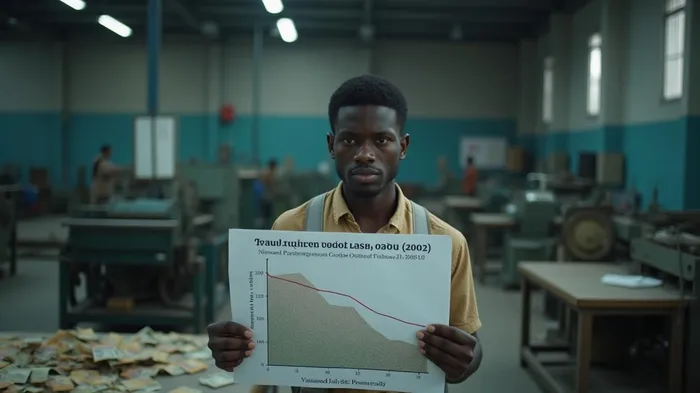
This volatility creates a self-reinforcing cycle: capital flight from manufacturing sectors erodes liquidity, further weakening the Naira and exacerbating import costs.
Regulatory Gridlock and Legal Uncertainty
The Central Bank of Nigeria (CBN) has delayed settlements for contracts lacking “valid import papers,” citing forensic audits. While $2.3 billion of claims were settled, the remaining $2.2 billion remains unresolved. The lack of a transparent verification process has left manufacturers in legal limbo, with some facing bankruptcy despite fulfilling obligations.
The CBN's stance risks eroding trust in its governance. As one manufacturer noted: “We remitted funds to banks, but now we're penalized for systemic failures beyond our control.”Sectoral Collapse and Job Losses
Over ₦1.5 trillion in losses have already been incurred by businesses, with SMEs—critical to employment—bearing the brunt. The ripple effects are stark:- Dangote Cement (DCN): Reduced cement production due to fuel shortages.
- Guinness Nigeria (GNI): Strained by rising input costs.
A sectoral collapse could trigger a broader recession, destabilizing Nigeria's equity markets.
Opportunities: A Pivot Point for Strategic Investors
Amid the chaos lies an asymmetric opportunity for investors who can navigate the risks.
- Undervalued Equities in Resilient Firms
Companies with diversified FX hedging strategies or access to alternative funding (e.g., export earnings, diaspora remittances) are poised to outperform. Consider: - Zenith Bank (ZENITH): Strong liquidity and cross-border partnerships.
MTN Nigeria: Leveraging mobile money and forex remittances.
These firms offer a buffer against FX volatility and may rebound sharply if the CBN resolves the backlog.Policy Reforms as a Catalyst
The CBN's recent moves—lifting restrictions on 43 import items and unifying FX markets—signal a shift toward market-driven solutions. Investors should monitor:- Timelines for the verification committee: Will the CBN allow companies to defend claims?
Interest rate trends: Will the CBN cut rates to ease manufacturing costs?
A credible resolution could restore investor confidence, driving a rebound in manufacturing equities.Long-Term Structural Play
The crisis underscores the need for Nigeria to modernize its FX framework. Investors should prioritize firms with:- Direct export revenue streams (e.g., oil, agriculture).
- Partnerships with foreign investors (e.g., joint ventures in infrastructure).
These companies could thrive as policy reforms stabilize the economy.
Immediate Action: Engage, Diversify, and Monitor
The window for strategic entry is narrowing. Here's how to act:
1. Engage with Policy Reforms: Pressure policymakers to fast-track the verification committee and clarify liability frameworks.
2. Diversify Exposure: Pair bets on resilient manufacturers (e.g., ZENITH, MTN) with defensive equities in telecoms and consumer goods.
3. Monitor Key Metrics: Track the CBN's FX backlog resolution pace and the Naira's stability.
The FX crisis is a crossroads: resolve it, and Nigeria's manufacturing sector—and its equities—can rebound. Fail, and the economy risks a prolonged slump. Investors who act decisively now will position themselves to capitalize on the eventual recovery.
The stakes are existential for Nigeria's economy. The time to act is now.







Comentarios
Aún no hay comentarios