
Nevada Lithium Rush: Strategic Implications for Cruz Battery Metals and U.S. Supply Chain Security
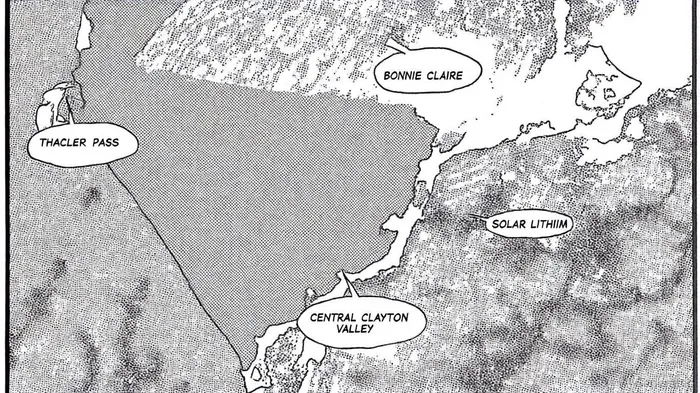
The global transition to clean energy has intensified competition for control of critical minerals, with lithium at the center of this geopolitical and economic struggle. As the United States seeks to reduce its dependence on foreign supply chains—particularly Chinese dominance in lithium processing—Nevada has emerged as a pivotal battleground. The state's lithium rush, driven by projects like Thacker Pass and Bonnie Claire, is not merely a commercial endeavor but a strategic imperative for national security and energy independence. For companies like Cruz Battery Metals, the alignment of their operational expansion with U.S. policy goals creates a compelling case for investment, underpinned by geopolitical tailwinds.
Nevada: A Strategic Hub for U.S. Lithium Security
Nevada's lithium deposits are among the most significant in the Western Hemisphere, with projects such as the Bonnie Claire lithium project—owned by Nevada Lithium Resources Inc.—demonstrating the state's potential to reshape global supply dynamics. According to a report by GlobeNewswire, Bonnie Claire's recent discovery of substantial rubidium and cesium mineralization could bolster U.S. domestic reserves of these critical minerals, which are essential for advanced battery technologies and aerospace applications[3]. The project's 61-year mine life and capacity to process nearly 3 million tonnes of ore annually underscore its long-term strategic value[3].
Meanwhile, the Trump administration's decision to acquire a 10% stake in the Thacker Pass lithium mine, operated by Lithium Americas (LAC), signals a direct intervention to secure U.S. supply chains[2]. This move, coupled with the Biden administration's earlier emphasis on critical mineral security, reflects a bipartisan recognition of lithium's role in both energy and defense sectors. Thacker Pass, with its potential to produce 40,000 metric tons of battery-grade lithium carbonate annually, could position the U.S. as a top global producer, reducing reliance on China, which currently controls over 70% of lithium processing[1].
Cruz Battery Metals: Strategic Positioning in a High-Stakes Market
Cruz Battery Metals has emerged as a key player in Nevada's lithium landscape, leveraging its proximity to major projects and partnerships with industry leaders. The company's recent acquisition of the 580-acre Central Clayton Valley Lithium Brine Project—surrounded by Schlumberger's (SLB) property—expands its footprint to 820 acres in one of the most geologically promising regions[5]. This acquisition, combined with the renewal of its Solar Lithium Project claims adjacent to American Lithium Corp.'s TLC project, positions Cruz at the nexus of Nevada's lithium corridor[2].
The company's strategy aligns with U.S. policy priorities. As James Nelson, Cruz's president, noted, the firm is capitalizing on a “shift in sentiment toward lithium and electric vehicles,” driven by rising EV adoption and government incentives[5]. Cruz's proximity to Albemarle's Clayton Valley operation—the only lithium production facility in North America—further enhances its strategic relevance[5]. With the U.S. Department of the Interior's 2025 critical minerals list emphasizing lithium's national security importance[6], Cruz's expansion is well-timed to benefit from regulatory and fiscal support.
Geopolitical Tailwinds and the Risks of Foreign Dependence
The urgency to secure domestic lithium supplies is rooted in geopolitical realities. China's dominance in refining and battery manufacturing—controlling over 80% of global battery cell production—poses a significant risk to U.S. energy and defense sectors[2]. The Department of Commerce's Section 232 investigation into processed critical minerals underscores this vulnerability, highlighting the need for diversified supply chains[5].
Nevada's lithium projects are part of a broader U.S. strategy to counter this dependence. Governor Joe Lombardo's hosting of the Governor's Lithium Summit in 2025 exemplifies the state's role in fostering cross-sector collaboration[4]. Meanwhile, the Trump administration's push for partnerships in the “Lithium Triangle” of Argentina, Bolivia, and Chile aims to create alternative supply routes, though domestic production remains the priority[1].
Investment Implications and Future Outlook
For investors, Cruz Battery Metals represents a confluence of operational momentum and geopolitical tailwinds. The company's aggressive land acquisition and claim renewals, supported by a favorable regulatory environment, position it to benefit from the U.S. government's $87 billion Nevada lithium expansion initiative[2]. While lithium prices have plummeted by 86% in early 2025[5], the strategic value of domestic production ensures continued policy and capital support.
However, challenges remain. Environmental and regulatory hurdles, particularly for large-scale projects like Thacker Pass, could delay timelines[1]. Additionally, the volatility of lithium markets necessitates careful capital allocation. For Cruz, its focus on brine-based extraction—a lower-cost method compared to hard-rock mining—offers a competitive edge[5].
Conclusion
The Nevada lithium rush is more than a resource play; it is a cornerstone of U.S. efforts to secure energy independence and counter global supply chain risks. Cruz Battery Metals, with its strategic land holdings and alignment with national security goals, is poised to thrive in this environment. As geopolitical tensions over critical minerals intensify, the company's role in reshaping the U.S. lithium landscape will likely attract both institutional and speculative capital. For investors, the key takeaway is clear: in an era where resource control equates to geopolitical power, Nevada's lithium deposits—and the companies that exploit them—are assets of unparalleled strategic value.





Comentarios
Aún no hay comentarios