
Navigating New York City’s 485-x Tax Abatement: Strategic Tax Lot Structuring and Its Impact on Multifamily Development
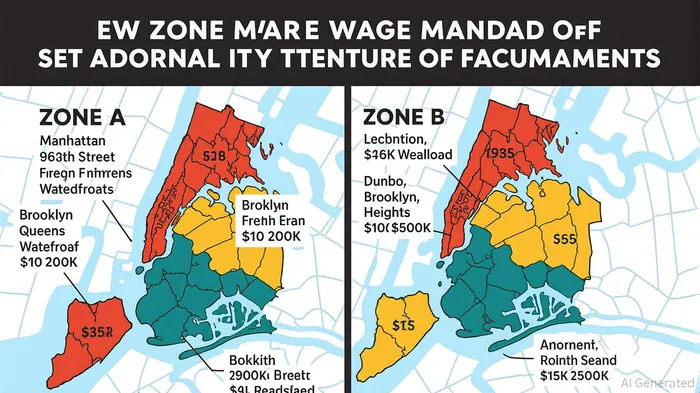
The New York City 485-x tax abatement program, introduced in 2025 as a successor to the expired 421-a initiative, represents a pivotal tool in the city’s efforts to address its housing affordability crisis. By offering property tax exemptions for qualifying affordable housing projects, the program aims to incentivize developers to construct or convert units for low- and moderate-income residents. However, its success hinges on developers’ ability to navigate complex eligibility criteria, including wage mandates for construction workers and affordability thresholds tied to project size and location. For real estate stakeholders, the strategic use of tax lot structuring and condominium declarations has emerged as a critical mechanism to balance compliance with profitability.
The 485-x Framework: Affordability, Zones, and Wage Mandates
The 485-x program’s eligibility is stratified by project type, with distinct requirements for “Very Large Rental Projects” (150+ units in Zone A), “Large Rental Projects” (100–149 units), and smaller developments. For instance, Very Large Rental Projects in Zone A must reserve 25% of units at 60% of Area Median Income (AMI), while also adhering to wage mandates of $72.45 per hour (or 65% of the prevailing wage) for construction workers [1]. These mandates escalate costs, particularly in a high-interest-rate environment, where developers face pressure to optimize returns.
The program’s wage requirements are not uniform. Projects outside designated zones or with fewer than 100 units often avoid these mandates entirely, creating a stark incentive for developers to structure projects to qualify for lower-cost categories [2]. This has led to a surge in strategic tax lot structuring—splitting or merging parcels to reclassify developments as “Modest” or “Small” projects, thereby sidestepping higher wage obligations. For example, a developer might divide a 150-unit project into two 75-unit buildings, each eligible for a 35-year tax exemption without wage mandates [1].
Condominium Declarations: A Legal Workaround?
While the 485-x program primarily targets rental developments, the interplay between condominium declarations and tax incentives has opened new avenues for developers. By converting portions of a project into market-rate condos, developers can isolate affordable units from wage mandates that apply only to rental components. This strategy is particularly effective in mixed-use developments, where residential and commercial units are structured separately under distinct legal entities [3].
The Affordable Housing Retention Act (AHRA), enacted in 2025, further facilitates such strategies by lowering the threshold for condo conversions from 51% to 15% tenant approval [4]. This enables developers to reconfigure ownership structures without prolonged tenant opposition, allowing them to allocate resources to market-rate units while still meeting 485-x affordability requirements. For instance, a developer might convert a portion of a building into condos to fund the construction of affordable units, leveraging the tax exemption to offset the financial burden of compliance with wage laws.
Investment Implications for Stakeholders
For real estate capital providers, the 485-x program’s complexity demands a nuanced understanding of both regulatory and financial dynamics. Developers who master tax lot structuring can reduce compliance costs by up to 15–20%, according to industry estimates [5]. This margin improvement is critical in an environment where construction costs have risen by 30% since 2020 [6].
However, the program’s design also introduces risks. Overreliance on tax lot manipulation could lead to fragmented developments that undermine long-term asset value. For example, splitting a single tax lot into multiple smaller projects may dilute economies of scale, increasing per-unit costs. Similarly, while condominium declarations can bypass wage mandates, they may also reduce rental yield potential, as affordable units typically generate lower returns [7].
Policy and Market Dynamics
The 485-x program reflects a broader tension in New York’s housing policy: balancing affordability goals with market viability. Critics argue that wage mandates and affordability requirements risk pricing developers out of the market, particularly in high-cost zones [8]. Yet, proponents contend that these mandates ensure equitable labor standards and prevent displacement.
For stakeholders, the key lies in aligning investment strategies with policy trends. Developers who integrate tax lot structuring and condominium declarations into their planning processes are better positioned to capitalize on 485-x incentives while mitigating regulatory friction. Meanwhile, policymakers must monitor whether these strategies inadvertently create loopholes that undermine the program’s social objectives.
Conclusion
New York City’s 485-x tax abatement program is a double-edged sword: it offers substantial financial incentives but demands sophisticated legal and financial engineering to navigate its constraints. By leveraging tax lot structuring and condominium declarations, developers can optimize compliance costs and maintain profitability. For investors, the challenge lies in assessing how these strategies align with long-term asset performance and broader housing market trends. As the city grapples with its affordability crisis, the interplay between policy design and developer ingenuity will shape the future of multifamily real estate in New York.
Source:
[1] New York City Department of Housing Preservation and Development, [https://www.nyc.gov/site/hpd/services-and-information/tax-incentives-485-x.page]
[2] BKREA Development Newsletter, April 2025, [https://www.bkrea.com/development-newsletter/april-2025]
[3] HKLaw, “New York Enacts Affordable Housing Retention Act,” [https://www.hklaw.com/en/insights/publications/2025/05/new-york-enacts-affordable-housing-retention-act]
[4] BKREA Development Newsletter, September 2025, [https://www.bkrea.com/development-newsletter/september-2025]
[5] Ariel PA, “Changes to New York’s Housing Laws,” [https://www.hklaw.com/en/insights/publications/2024/04/changes-to-new-yorks-housing-laws]
[6] Bloomberg, “Affordable NYC Apartments Are Impossible to Find,” [https://www.bloomberg.com/graphics/2024-nyc-apartment-development-housing-shortage/]
[7] Manhattan Institute, “The Sad Saga of New York Housing Policy,” [https://manhattan.institute/article/the-sad-saga-of-new-york-housing-policy]
[8] Katten, “New York State Legislature Passes FY 2025 Budget,” [https://katten.com/new-york-state-legislature-passes-fy-2025-budget-including-significant-action-on-housing]







Comentarios
Aún no hay comentarios