
Navigating the Storm: Investment Opportunities in Taiwan's Infrastructure and Tourism Recovery Post-Danas
The recent battering of Taiwan by Tropical Storm Danas—a system that intensified into a typhoon with sustained winds of 119 km/h—has laid bare the vulnerabilities of its infrastructure and tourism sectors. From flooded neighborhoods in Taichung to suspended rail services along the Alishan Forest Railway, the storm's impact underscores the need for resilient systems and strategic recovery plays. For investors, this crisis presents a dual opportunity: to back infrastructure that mitigates future disasters and to capitalize on tourism recovery efforts fueled by government spending and evolving consumer preferences.
The Impact of Danas: A Catalyst for Change
The storm's July 2025 onslaught revealed critical gaps in Taiwan's preparedness. Transportation networks bore the brunt: flights to Okinawa and Bangkok were canceled, ferry services to outlying islands like Kinmen halted, and mountain railways like Taipingshan were shut down. Coastal areas faced 8.5-meter waves, while inland regions battled flash floods. In tourism, the closure of iconic sites like Kenting National Park and the Fushan Botanical Garden sent a stark signal—the island's reliance on its natural and cultural attractions makes it acutely vulnerable to extreme weather.
The economic toll, while not yet quantified, can be inferred from historical parallels. Take Typhoon Morakot in 2009, which caused tourism revenue losses of NT$1.39 billion (US$46 million) in Taiwan's Maolin National Scenic Area over 18 months—three times the cost of infrastructure repairs. This pattern suggests that post-Danas recovery will require not just rebuilding but also reimagining tourism to withstand future shocks.
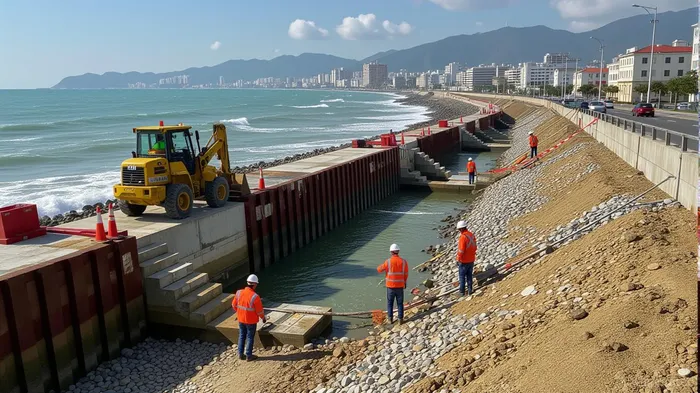
Investment Play 1: Disaster-Resistant Infrastructure
The first frontier for investors lies in infrastructure that strengthens Taiwan's resilience to storms and floods. Key areas include:
1. Flood Mitigation Systems:
- Opportunity: Invest in firms developing smart drainage systems, elevated roadways, and green infrastructure (e.g., wetlands, permeable pavements) to absorb excess water.
- Data Insight: .
- Target: Companies like Ta-An Construction (TSE: 9912) with expertise in civil engineering and disaster recovery.
- Transportation Hardening:
- Opportunity: Support upgrades to railways and highways, including reinforced bridges and flood-resistant signaling systems.
Example: The planned NT$10 billion investment in southern Taiwan's tourism infrastructure includes road improvements to access sites like Yuli's Yufu Biking Trail.
Energy Grid Resilience:
- Opportunity: Back firms modernizing Taiwan's grid with decentralized solar and battery storage to prevent outages during storms.
Investment Play 2: Tourism Recovery and Diversification
Taiwan's tourism sector must pivot from quantity to quality to recover from Danas. Government initiatives and shifting traveler preferences offer entry points:
- Cultural and Eco-Tourism:
- Opportunity: Fund projects like Tainan's greenway linking cultural sites to Taijiang National Park or Hualien's mountain tourism upgrades.
- Data Insight: .
Target: Inn Travel Group (TSE: 6104), which specializes in cultural heritage tours.
International Connectivity:
- Opportunity: Invest in air routes to underserved markets, such as Tigerair's new Yonago service, which opens Japan's lesser-visited regions.
Data Insight: .
Quality Infrastructure:
- Opportunity: Back hotels and resorts adopting sustainability certifications (e.g., LEED) and offering premium experiences like indigenous cultural immersion in Miaoli.
Risks and Considerations
- Economic Volatility: Taiwan's reliance on global trade and currency fluctuations poses risks. Monitor TWSE Index performance and U.S.-China trade tensions.
- Policy Dependence: Success hinges on government execution of recovery plans. Track progress on the NT$10 billion southern Taiwan initiative.
Conclusion: A Strategic Call to Action
Investors should prioritize flood mitigation firms and tourism operators betting on quality over volume. The storm has underscored that Taiwan's future lies not in rebuilding the past but in constructing a resilient, diversified tourism economy. For those who act now—backing infrastructure that withstands disasters and attractions that draw travelers back—this storm could prove a golden opportunity.
In the words of the old adage: “Build not for today, but for the tempest tomorrow.” Taiwan's investors must heed this lesson—and profit from it.







Comentarios
Aún no hay comentarios