
Navigating Equity Markets in a Dovish Fed Environment: Inflation, Policy, and Risk Management in 2025
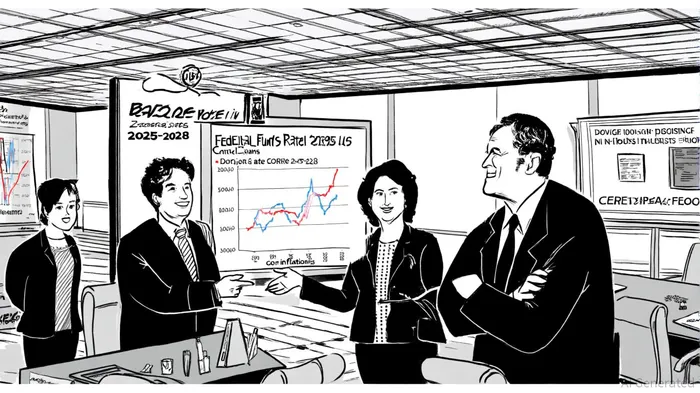
The Federal Reserve's September 2025 policy pivot has sent ripples through global equity markets, as investors grapple with the interplay of stubborn inflation and a gradual rate-cutting cycle. With core PCE inflation stubbornly above the 2% target at 3.1% for 2025 and the federal funds rate projected to fall to 3.6% by year-end, the central bank's balancing act between inflation control and economic growth has become a focal point for market strategists. This analysis examines how equity positioning and risk management strategies are evolving in response to these dynamics, drawing on recent data and institutional insights.
Inflation Persistence and Policy Uncertainty
Despite the Fed's aggressive rate hikes in 2023–2024, inflation remains anchored above target, driven by resilient non-housing core services inflation. According to the Dallas Fed's September 2025 analysis, this component alone accounts for 1.9 percentage points of the core PCE reading, reflecting entrenched demand-supply imbalances in labor-intensive sectors like healthcare and education [1]. While housing and goods inflation show signs of moderation, the lack of clarity on services inflation has forced the Fed into a cautious, data-dependent approach.
The September 2025 FOMC projections, which anticipate a gradual decline in PCE inflation to 2.0% by 2028, underscore this uncertainty. As noted by the Federal Reserve's own economic projections, the path to price stability hinges on the assumption that services inflation will normalize without triggering a protracted wage-price spiral [2]. This ambiguity has left investors hedging against both a “soft landing” and a potential relapse into stagflation—a scenario last seen in the 1970s.
Equity Positioning in a Dovish Regime
The Fed's 25-basis-point rate cut in September 2025 has already begun reshaping equity market dynamics. Large-cap growth stocks, particularly in technology, have benefited from lower discount rates, with the S&P 500 up 13% year-to-date as of September 2025 [3]. However, the Russell 2000's record high—a first since 2021—highlights the uneven impact of rate cuts. Small-cap equities, which are more sensitive to borrowing costs, have outperformed in a dovish environment, though their gains remain contingent on the pace of further easing [4].
Sectoral rotations reflect the Fed's dual mandate. Communications services and technology, which thrive in low-rate environments, have outperformed, while healthcare and real estate—sectors with high fixed costs—have lagged [5]. International equities, meanwhile, have gained traction as the dollar weakens post-rate cut, with emerging markets benefiting from reduced currency pressures and dollar-denominated debt burdens [6].
Risk Management in a Shifting Landscape
The Fed's forward guidance—projecting two more cuts in 2025 and limited easing in 2026—has introduced a layer of caution into risk management strategies. Investors are increasingly adopting hedging tools to mitigate volatility. Interest rate swaps and caps, for instance, have seen renewed demand as a way to lock in favorable rates while retaining upside potential [7]. Similarly, bond portfolios are shifting toward intermediate-duration instruments (3–7 years), which balance yield and interest rate risk, rather than long-dated bonds that could underperform in a benign growth environment [8].
For equity portfolios, the emphasis is on diversification and quality. Large-cap, high-margin stocks with strong free cash flow generation are preferred over small-cap or low-quality names, which face higher liquidity risks in a volatile rate environment [9]. Active credit selection in fixed income—particularly in investment-grade and high-yield bonds—has also gained traction, offering income and diversification benefits amid falling cash yields [10].
The Path Forward: Balancing Optimism and Caution
While the Fed's dovish pivot has fueled equity optimism, structural risks remain. The Fed's revised monetary policy framework, unveiled in August 2025, signals a return to more traditional inflation targeting, moving away from the flexible average inflation targeting (FAIT) approach adopted post-pandemic [11]. This recalibration, coupled with internal divisions within the FOMC, suggests that future policy moves will remain reactive rather than preannounced.
For investors, the key lies in maintaining flexibility. As BlackRock's September 2025 analysis notes, portfolios should prioritize “an equity overweight with a preference for U.S. large caps” while selectively extending bond durations and exploring alternatives like global equity market-neutral funds [12]. At the same time, hedging against tail risks—whether through swaptions, inflation-linked securities, or tactical asset allocations—remains critical in an environment where economic fundamentals and market valuations increasingly diverge [13].
Conclusion
The Federal Reserve's 2025 rate-cutting cycle has created a complex landscape for equity investors. While lower rates have buoyed growth stocks and small-cap equities, persistent inflation and policy uncertainty demand disciplined risk management. By aligning portfolio strategies with the Fed's evolving framework and leveraging hedging tools, investors can navigate this environment with both optimism and prudence. As the Fed's dual mandate continues to shape market outcomes, adaptability will remain the cornerstone of successful equity positioning.







Comentarios
Aún no hay comentarios