
Navigating the Energy Transition: Strategic Investment Opportunities in a Shifting Refining Landscape
The U.S. Energy Information Administration's (EIA) refinery crude runs data has emerged as a critical barometer for understanding the dynamics of the energy transition in 2025. As the refining sector grapples with structural shifts—from regional disparities in utilization rates to the accelerating decline of gasoline demand—investors must navigate a landscape where industrial conglomerates and electric utilities face divergent opportunities and risks.
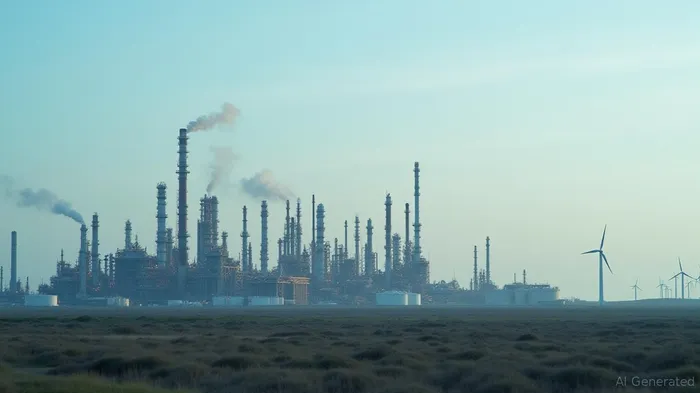
Rising Crude Runs and Industrial Conglomerates: A Tale of Resilience
The EIA's July 2025 report highlights a bifurcated refining sector. Gulf Coast refineries operate at 93.5% utilization, buoyed by access to shale oil and export infrastructure, while East Coast facilities like Phillips 66's Bayway in New Jersey hover near 59%—a historically low level. This regional divergence creates asymmetric opportunities for industrial conglomerates.
Key beneficiaries include:
1. Heavy Equipment Suppliers: CaterpillarCAT-- (CAT) and 3MMMM-- (MMM) thrive as Gulf Coast refiners invest in maintenance and retrofitting to meet low-carbon mandates. The demand for automation systems (e.g., Honeywell's [HON] control solutions) is surging, driven by the need to upgrade aging infrastructure.
2. Logistics and Infrastructure Services: Gulf Coast dominance has amplified demand for midstream operators like Kinder MorganKMI-- (KMI) and Magellan Midstream Partners (MMP), which manage crude storage and refined product distribution. These firms benefit from stable cash flows as the region maintains refining efficiency.
3. Energy Services Providers: Companies such as SchlumbergerSLB-- (SLB) and Baker HughesBKR-- (BKR) are capitalizing on retrofitting projects to reduce refinery emissions. Their revenue streams are less volatile than traditional refining, offering a hedge against commodity price swings.
Electric Utilities: Struggling with Grid Strain and Transition Costs
While industrial conglomerates capitalize on refining resilience, electric utilities face mounting challenges. The EIA's data underscores a 17% projected decline in West Coast refining capacity by 2026, driven by California's planned refinery closures. This shift accelerates the energy transition but strains grid infrastructure.
Key risks for utilities include:
1. Data Center Demand: Electricity consumption by data centers now accounts for 6–8% of U.S. generation, projected to rise to 11–15% by 2030. Utilities like Duke EnergyDUK-- (DUK) and NextEra EnergyNEE-- (NEE) are investing in grid-enhancing technologies (e.g., advanced conductors) to avoid costly rebuilds.
2. Renewable Integration: The surge in biomass-based diesel (D4) and ethanol (D6) RIN prices—driven by reduced domestic production—highlights the volatility of compliance markets. Utilities exploring nuclear energy (e.g., Constellation Energy) face long lead times and regulatory hurdles.
3. Water and Cost Pressures: Data centers are water-intensive, forcing utilities to incorporate water risk into disclosures. For example, Tennessee Valley Authority (TVA) is partnering with Origis Energy to develop power plants for Google's data centers, balancing reliability with sustainability.
Actionable Strategies for Investors
To position portfolios effectively in this evolving landscape, consider the following:
- Overweight Gulf Coast Infrastructure: Prioritize midstream and energy servicesESOA-- firms with exposure to the Gulf Coast. These entities benefit from stable refining activity and retrofitting demand.
- Hedge Against Fuel Price Volatility: Invest in biofuel compliance credit markets (e.g., D4/D6 RINs) and energy services firms like Schlumberger, which profit from refining sector modernization.
- Diversify into Grid Modernization: Allocate capital to utilities deploying grid-enhancing technologies and distributed energy resources (DERs). Firms like Xcel EnergyXEL-- (XEL) and SDG&E are pioneering microgrids and virtual power plants (VPPs).
- Monitor Policy and Regional Trends: California's refinery closures and Red Sea shipping disruptions will continue to reshape energy flows. Utilities with diversified generation portfolios (e.g., nuclear, solar + storage) are better positioned to navigate uncertainty.
Conclusion: Resilience Through Adaptability
The EIA's refinery crude runs data is more than a snapshot of current refining activity—it is a leading indicator of broader energy market dynamics. Industrial conglomerates with ties to the Gulf Coast and energy services sector are well-positioned to capitalize on resilience, while electric utilities must balance grid upgrades with decarbonization goals. For investors, the key lies in aligning portfolios with structural shifts: favoring Gulf infrastructure, hedging against fuel volatility, and supporting utilities embracing grid modernization. As the energy transition accelerates, adaptability will be the defining trait of successful portfolios.





Comentarios
Aún no hay comentarios