
Navigating the Crossroads: Fed Divisions and Equity Sector Rotation Opportunities
The Federal Reserve's June 2025 FOMC meeting minutes revealed a striking divide among policymakers on the trajectory of monetary policy, with nine members advocating for two rate cuts by year-end and seven dissenting. This internal conflict underscores the Fed's struggle to balance inflation risks, geopolitical uncertainties, and slowing growth—a tension that will likely drive equity market dynamics in the coming quarters. For investors, the Fed's divided stance creates a fertile landscape for sector rotation strategies, as different industries will respond asymmetrically to evolving policy signals and economic conditions.
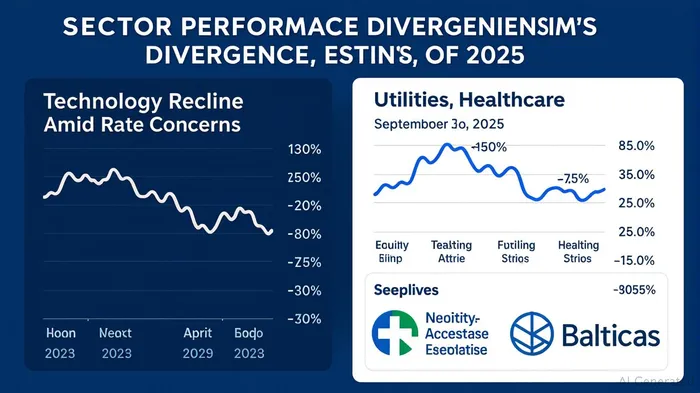
The Fed's Fork in the Road
The minutes highlight two competing narratives shaping the Fed's outlook. On one side, officials acknowledge the risks of persistent inflation from tariffs, supply chain bottlenecks, and Middle East geopolitical tensions. These factors could force the Fed to maintain rates higher for longer, dampening rate-sensitive sectors like tech and housing. Conversely, the Fed's downgraded GDP growth projections (revised to 1.4% for Q4 2025) and softening labor market data suggest a vulnerability to a slowdown, creating pressure to ease monetary policy. This duality has left markets in a “wait-and-see” mode, with the S&P 500 oscillating within a tight range since the FOMC meeting.
The Fed's internal split also signals heightened uncertainty about the efficacy of its policy tools. While the balance sheet runoff continues (projected to end in February 2026), the Fed's new morning repo operations aim to stabilize short-term liquidity—a technical fix that may not address the deeper inflation-growth dilemma. Investors should monitor two critical indicators: the pass-through of tariffs to consumer prices and the trajectory of wage growth. If inflation surprises to the upside, rate-cut expectations will fade, reshaping sector dynamics.







Comentarios
Aún no hay comentarios