
Navigating Consumer Pessimism: Sector Opportunities in a Cost-Driven Economy
The global economy in 2025 is marked by a paradox: while aggregate demand remains robust, consumer sentiment is increasingly constrained by rising costs in essential sectors. Medical care, food, and energy prices are reshaping household budgets, forcing a reallocation of spending toward necessities at the expense of discretionary categories. For investors, this shift presents both opportunities and risks. Essential sectors are becoming more resilient, while discretionary markets face structural headwinds. Understanding this dynamic is critical to navigating a cost-driven economy.
The Rise of Essential Sectors
Rising costs in healthcare, food, and energy are not merely temporary inflationary pressures but structural trends with long-term implications. According to the 2025 Global Medical Trends Survey, global medical costs are projected to grow by 10.4% in 2025, with the U.S. group market facing an 8.5% increase and the individual market 7.5%. These figures are driven by the proliferation of high-cost drugs, such as GLP-1 medications for obesity and diabetes, which have seen a 500% surge in spending since 2018. Chronic conditions like obesity, costing nearly $173 billion annually in medical care, further amplify this trend.
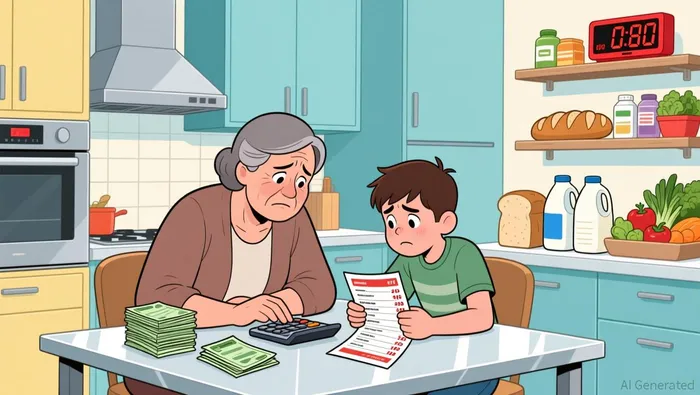 Food and energy costs are compounding these pressures. U.S. consumers now allocate 10.6% of their disposable income to food, a slight decline from 2023 but still elevated due to persistent inflation. Grocery prices rose 2.7% in September 2025, and nearly half of Americans report finding groceries less affordable than a year ago. Energy costs have also surged, with utility bills averaging $265 per month in 2025-a 12% increase from 2024-driven by rising electricity demand and constrained supply.
These trends are forcing households to prioritize essentials. Seventy-three percent of consumers anticipate higher grocery prices, while spending on housing, healthcare, and transportation continues to rise. For investors, this signals a structural shift toward sectors that cater to these needs.
The Squeeze on Discretionary Spending
Discretionary sectors, by contrast, are under significant strain. Consumer spending intentions for non-essential categories-such as dining out, travel, and entertainment-remain below 2021 levels and have fallen for the first time since June 2025. This decline reflects a broader reallocation of budgets: households are cutting back on fresh produce and dining out while prioritizing core groceries like meat and dairy.
The impact is particularly pronounced for younger generations. Gen Z, for instance, is more likely to reduce food spending to manage unexpected costs, often relying on savings or credit to cover essentials. This behavior underscores a broader erosion of consumer confidence, with households increasingly prioritizing financial security over lifestyle expenditures.
For investors, the risks of overexposure to discretionary markets are clear. Sectors reliant on discretionary spending-such as luxury goods, entertainment, and non-essential services-are likely to face prolonged headwinds as households tighten budgets.
Investment Opportunities in Resilient Sectors
The resilience of essential sectors offers compelling investment opportunities. Healthcare, in particular, is a prime candidate. The demand for cost-containment strategies-such as transparent pharmacy benefit models and digital health interventions-reflects a growing need for efficiency in an inflationary environment. Employers, too, are prioritizing solutions to manage rising medical costs, creating demand for innovative healthcare providers and technology firms.
In the food and energy sectors, companies that enhance affordability and efficiency are likely to thrive. For example, firms specializing in supply chain optimization, sustainable agriculture, or energy-efficient utilities could benefit from the ongoing shift in consumer priorities. The rise of GLP-1 drugs also highlights the potential of biotechnology firms addressing chronic health conditions.
Energy utilities, meanwhile, are positioned to capitalize on the surge in demand for reliable and affordable power. With electricity prices rising due to constrained supply, investments in grid modernization and renewable energy infrastructure could yield long-term returns.
Caution in Discretionary Markets
While essential sectors offer stability, discretionary markets require careful scrutiny. Overexposure to these sectors risks significant losses as consumer behavior continues to shift. For instance, the decline in dining-out spending and the reallocation of budgets away from non-essential items suggest that traditional retail and entertainment models may struggle to adapt.
Investors should also consider the broader macroeconomic context. High inflation and interest rates are likely to prolong the squeeze on discretionary spending, making it difficult for these sectors to recover to pre-pandemic levels.
Conclusion
The cost-driven economy of 2025 is redefining the investment landscape. Essential sectors-healthcare, food, and energy-are becoming increasingly resilient, driven by structural demand and inflationary pressures. Discretionary markets, however, face a prolonged period of adjustment as households prioritize financial security over lifestyle expenditures. For investors, the path forward lies in aligning portfolios with these enduring trends while exercising caution in overexposed discretionary segments.
[2] US consumer sentiment 2025: holiday spending trends [https://www.mckinsey.com/industries/consumer-packaged-goods/our-insights/the-state-of-the-us-consumer]
[3] State of the US consumer: November 2025 [https://www.deloitte.com/us/en/insights/topics/economy/consumer-pulse/state-of-the-us-consumer.html]
[4] Business Group on Health Survey Reveals Almost 8% in ... [https://www.businessgrouphealth.org/newsroom/news-and-press-releases/press-releases/2025-employer-health-care-strategy-survey]
[5] America's deepening affordability crisis summed up in 5 ... [https://www.cbsnews.com/news/affordability-2025-inflation-food-prices-housing-child-care-health-costs/]
[8] Rising Healthcare Costs: GLP-1 & Containment Strategies [https://www.definitivehc.com/blog/rising-healthcare-costs]
[9] Key drivers of 2025 healthcare cost increases [https://www.christensengroup.com/article/key-drivers-of-2025-healthcare-cost-increases]







Comentarios
Aún no hay comentarios