
Narrowing the Gap: Geopolitical Tensions in the Strait of Hormuz and the Oil Price Crossroads
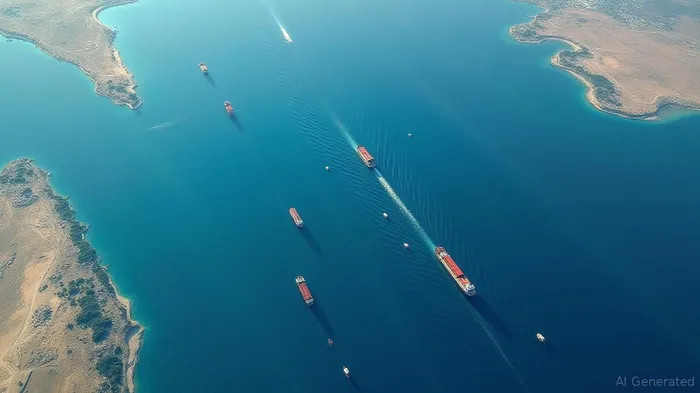
The Strait of Hormuz, a 34-mile-wide bottleneck through which nearly 20% of global oil supply flows, has become the epicenter of geopolitical volatility. As tensions escalate between Iran and the U.S., with former President Donald Trump's hawkish rhetoric reigniting regional instability, the market faces a stark dilemma: will short-term disruptions push oil prices toward $110 per barrel, or will long-term oversupply dynamics drag prices below $60 by 2026? This article dissects Goldman Sachs' scenarios, contrasting immediate risks with structural trends, and offers a hedging strategy to navigate this crossroads.
The Geopolitical Tightrope: Scenarios and Probabilities
Goldman Sachs' April 2025 analysis paints a stark picture of divergent outcomes:
- Base Case (60% Probability): No major disruption to Hormuz flows. Brent crude averages $60 by end-2025, with non-OPEC supply growth (Brazil, Canada, Norway) offsetting Middle Eastern output.
- Moderate Disruption (30% Probability): A 10% reduction in Hormuz flows for a year (e.g., Iranian retaliation against U.S. sanctions) lifts prices to $85–$90, with a geopolitical risk premium of $10–$15 already priced in.
- Extreme Scenario (10% Probability): A 50% cut in Hormuz flows for a month (e.g., Houthi attacks or U.S.-Iran hostilities) triggers a $110 spike, with Barclays warning of a potential $130+ surge if the strait is fully blocked.
The math hinges on Iran's calculus. With exports already down to 2.1 million barrels per day (mb/d), further sanctions or military action could force Tehran to weaponize Hormuz. However, a full closure remains a low-probability, high-impact “black swan,” as it would cripple Iran's own oil revenues and invite U.S. retaliation.
The Bearish 2026 Outlook: Why Supply Could Overwhelm Demand
While short-term risks loom large, Goldman's $56 Brent forecast for 2026 reflects a structural shift:
- Non-OPEC Surges: Brazil's pre-salt fields, Canada's oil sands, and Guyana's offshore projects are set to add 1.2 mb/d by 2026, exceeding demand growth of just 0.4 mb/d.
- OPEC+ Volatility: The cartel's cohesion is fraying. A price war—driven by Saudi Arabia's need to balance budgets at $78/bbl vs. Russia's $48/bbl breakeven—is plausible if demand weakens.
- U.S. Shale's Ceiling: Despite hedging, shale production is expected to peak at 14 mb/d by 2027, with declining returns slowing growth.
This oversupply dynamic creates a “geopolitical paradox”: even as Hormuz risks spike prices temporarily, investors must brace for a post-2026 market where supply outpaces demand.
Investment Strategies: Balancing Scenarios
To capitalize on this volatility while mitigating downside risk, consider the following:
1. Long Exposure to Oil with Downside Protection
- Buy call options on Brent futures (e.g., crude oil ETFs like USO) to profit from a Hormuz-driven spike. Pair this with put options at $50 strike (costing ~$3/bbl) to hedge against Goldman's bearish 2026 outlook.
- Target: A 10–20% allocation to oil derivatives, with options expiring within 6–12 months to avoid time decay.
2. Equity Plays: Defensive Energy Stocks
- Integrated majors (e.g., XOM, CVX) benefit from refining margins in high-price environments while offering dividends during downturns.
- Midstream assets (e.g., EPD, ENB) with fee-based revenue models are insulated from price swings.
3. Geopolitical Risk Premium Trading
- Short Terrorism Risk Insurance ETFs (e.g., TRMD) if tensions de-escalate, capitalizing on reduced premiums.
- Use Inverse oil ETFs (e.g., SCO) to bet on Goldman's bearish supply thesis.
4. Sector Rotation: Energy vs. Utilities
- Rotate into renewables stocks (e.g., FSLR, ENPH) if oil prices collapse, as lower energy costs accelerate the shift to solar/wind.
Conclusion: The Strait's Shadow and the Investor's Dilemma
The Strait of Hormuz is a geopolitical Rorschach test: to some, it's a catalyst for $110 oil; to others, a distraction from the coming oversupply. Investors must weigh two realities:
- Short-term: Hedge against Hormuz disruptions with call options and defensive equities.
- Long-term: Position for a post-2026 bear market via inverse ETFs or midstream stocks.
The key is diversification. As Goldman's game theory model suggests, the Nash equilibrium for Brent lies at $52–$56—far below the $110 “what if.” But markets often price in extremes before reality sets in. Stay nimble, and let the Strait's risks inform your portfolio, not dictate it.
Data sources: Goldman SachsAAAU--, Barclays, IEA, U.S. Energy Information Administration.







Comentarios
Aún no hay comentarios