
Mexico's Remittance Crossroads: Regulatory Alignment for Growth and Security
Mexico's economy stands at a pivotal juncture. Remittances—$64.7 billion in 2024—represent 4.5% of GDP, surpassing foreign direct investment and tourism. Yet, April 2025 saw a 2.5% year-on-year decline in remittances, a stark warning of vulnerabilities. For investors, this is no mere statistical blip. It signals an opportunity to capitalize on a market where regulatory alignment between the U.S. and Mexico could unlock sustainable growth, mitigate poverty, and counter illicit flows. The path forward lies in blockchain-based fintech solutions and strategic infrastructure investments in Mexico's southern states—regions disproportionately reliant on remittances yet underserved by traditional finance.
The Double-Edged Sword of Remittances
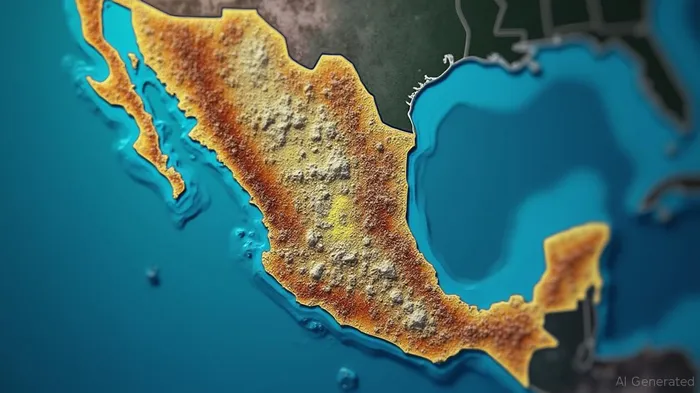
Remittances are both Mexico's economic lifeline and its Achilles' heel. In 2023, states like Michoacán relied on remittances for 15.9% of GDP, while Guerrero depended on 14.1%. These figures underscore their role in poverty mitigation: without remittances, extreme poverty would have risen by 351,000 in 2020 alone. However, the April 2025 decline—part of a 2.6% drop in February—threatens this stability. Compounding risks are U.S. proposals like the WIRED Act (a 3.5% remittance tax) and geopolitical tensions over immigration policies. These factors could drive migrants to informal channels, enriching criminal networks and destabilizing households.
The Regulatory Imperative: Balancing Security and Inclusion
The U.S.-Mexico relationship is the linchpin. Current anti-money laundering (AML) measures, such as the U.S. requirement to report transactions over $3,000, risk excluding low-income migrants. A 2024 study found 99% of remittances are under $1,000, yet 40% of migrants lack bank accounts. The solution? Regulatory alignment through the 2026 USMCA review. By harmonizing AML standards with financial inclusion, the U.S. and Mexico can:
1. Legalize informal flows, reducing reliance on criminal networks.
2. Lower fees via blockchain platforms, which currently cost 50% less than traditional remittance services.
3. Create transparency through immutable ledgers, deterring illicit use.
Investment Opportunities in Fintech and Infrastructure
The decline in remittances highlights a structural challenge: Mexico's financial inclusion rate (55% of adults) lags behind regional peers. Investors should focus on two sectors:
1. Blockchain Remittance Platforms
Companies like Bitso (Mexico's largest crypto exchange) and Ripple (XRP) are already pioneering low-cost, real-time cross-border payments. A $390 remittance sent via blockchain avoids intermediaries, cutting fees from 6% to 2%. As the U.S. and Mexico move toward digital remittance standards under USMCA, these firms will gain regulatory tailwinds.
2. Southern Mexican Infrastructure
States like Guerrero and Oaxaca—where remittances account for 14–16% of GDP—are starved of investment. Targeted projects in renewable energy, logistics, and healthcare could:
- Diversify local economies, reducing reliance on remittances.
- Attract FDI, leveraging remittance corridors as consumer hubs.
- Improve financial access via mobile banking partnerships.
Act Now: The Clock is Ticking
Geopolitical risks loom large. A U.S. administration shift could revive mass deportation policies, slashing remittances by 4–5% in border states like Tamaulipas. Meanwhile, the peso's volatility—20.2 to the dollar in March 2025—adds uncertainty. Investors must act before the 2026 USMCA deadline to secure positions in:
- Blockchain infrastructure with cross-border licenses.
- Regional infrastructure funds focused on Mexico's south.
Conclusion: A Win-Win for Growth and Security
Mexico's remittance-driven economy is at a crossroads. The April 2025 decline is a call to action. By backing fintech solutions that align U.S.-Mexico regulations and investing in underserved regions, investors can profit from a safer, more inclusive financial system. The rewards? A 0.3% boost to GDP, reduced poverty, and a strategic edge in a market where $64 billion in annual flows demand innovation. The time to act is now—before geopolitical winds shift further.







Comentarios
Aún no hay comentarios