
Meg O'Neill's Leadership at BP and Its Implications for Energy Transition and Shareholder Value
Meg O'Neill's appointment as BP's first female CEO marks a pivotal moment for the oil giant, signaling a strategic recalibration toward traditional hydrocarbons amid a global energy transition. As the incoming leader, O'Neill brings a track record of prioritizing operational rigor and capital discipline from her tenure at Woodside EnergyWDS--, where she oversaw a doubling of oil and gas production and expanded liquefied natural gas (LNG) projects according to Bloomberg. However, her leadership raises critical questions: Can her focus on fossil fuels align with decarbonization goals, and will this strategy enable BPBP-- to outperform legacy peers like ExxonMobilXOM-- and ShellSHEL-- in a shifting energy landscape?
Strategic Shift: Hydrocarbons Over Renewables
BP's recent pivot under outgoing CEO Murray Auchincloss has already signaled a retreat from renewables, with plans to allocate $10 billion annually to oil and gas projects and limit low-carbon investments to $1.5–2 billion per year according to BP's official statement. O'Neill's appointment reinforces this trajectory, as her career at WoodsideWDS-- was defined by large-scale fossil fuel projects and a pragmatic approach to sustainability. While she championed carbon-management initiatives and green hydrogen, these efforts were scaled back when costs rose, prioritizing profitability over climate ambitions.
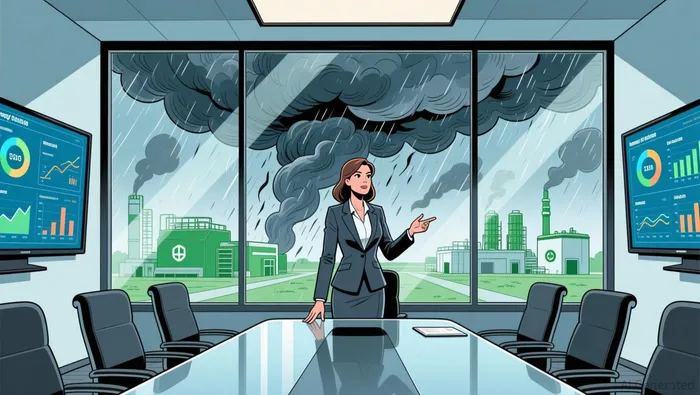
This strategy contrasts sharply with BP's earlier pledge to become a "net-zero" company by 2050. Critics argue that the firm's capital expenditure from 2020 to 2024-$76 billion-allocated only 6% to low-carbon activities, raising concerns about greenwashing. O'Neill's leadership, therefore, risks alienating investors seeking genuine decarbonization, particularly as global regulators and consumers increasingly demand accountability.
Financial Performance: A Mixed Picture
BP's Q3 2025 results highlight both progress and challenges. The company reported an adjusted net income of $2.21 billion, exceeding analyst estimates, driven by increased oil and gas production. However, this pales in comparison to ExxonMobil's $7.55 billion earnings for the same period, underscoring BP's lag in profitability. Shell, meanwhile, reported $1.86 per ADS, bolstered by cost reductions but hampered by lower oil prices.
O'Neill's mandate includes a $20 billion divestment program by 2027 to reduce debt and streamline operations according to Al Jazeera. While this could enhance short-term shareholder value, BP's debt-to-capitalization ratio of 43.67% remains higher than the industry average of 31.96%, exposing the firm to commodity price volatility. In contrast, ExxonMobil's disciplined cost management and focus on core assets have enabled it to double unit earnings since 2019 according to AOL Finance.
Shareholder Value vs. Long-Term Sustainability
BP's strategic reset aims to deliver 20% compound annual growth in free cash flow through 2027, supported by $4–5 billion in cost savings. However, this approach mirrors legacy oil stocks' short-term profit prioritization, which may conflict with long-term energy transition goals. For instance, Shell's balanced portfolio of renewables and hydrocarbons has bolstered investor confidence, while BP's retreat from low-carbon investments could erode its competitive edge.
O'Neill's emphasis on gas as a transitional energy source aligns with BP's current direction, but natural gas remains a contentious bridge fuel. While it emits less CO₂ than oil, methane leaks and long-term stranded asset risks persist according to The Fool. Activist investors like Follow This have criticized her appointment, warning that her fossil fuel-centric approach may weaken BP's long-term value.
Conclusion: A High-Stakes Gamble
Meg O'Neill's leadership presents a paradox: her expertise in capital discipline and operational efficiency could stabilize BP's short-term performance, but her reliance on hydrocarbons risks misalignment with global decarbonization trends. While BP's share price surged 22.5% in 2025-outpacing peers like Chevron and Exxon-this momentum may falter if energy markets shift toward renewables according to Nasdaq.
For investors, the key question is whether O'Neill can balance profitability with sustainability. Her success will depend on BP's ability to navigate regulatory pressures, technological advancements, and investor expectations. In a decarbonizing world, the oil giant's survival may hinge on its capacity to reinvent itself-not just as a leaner hydrocarbon player, but as a credible participant in the energy transition.





Comentarios
Aún no hay comentarios