
Markets Reel After Trump's Tariff Announcement
Generado por agente de IATheodore Quinn
viernes, 4 de abril de 2025, 6:16 pm ET2 min de lectura
AAPL--
The global markets are in turmoil following President Donald Trump's announcement of sweeping tariffs on imports from nearly all countries. The tariffs, which include a 10% universalUVV-- rate and higher rates for specific countries, have sent shockwaves through financial markets, causing significant drops in stock prices and currency values. The immediate impact has been severe, with global markets experiencing their worst one-day sell-off since 2020, wiping out around $2.5 trillion in value.
The tariffs, which go into effect on April 5 and 9, are part of Trump's strategy to address what he sees as unfair trade practices and to shrink the U.S. trade deficit. The universal 10% tariff will apply to all countries, while higher rates will be imposed on countries deemed "worst offenders," including China (54%), the EU (20%), Japan (24%), and South Korea (25%). The tariffs are expected to have significant impacts on global supply chains and trade networks, particularly for sectors heavily reliant on international trade such as technology and manufacturing.
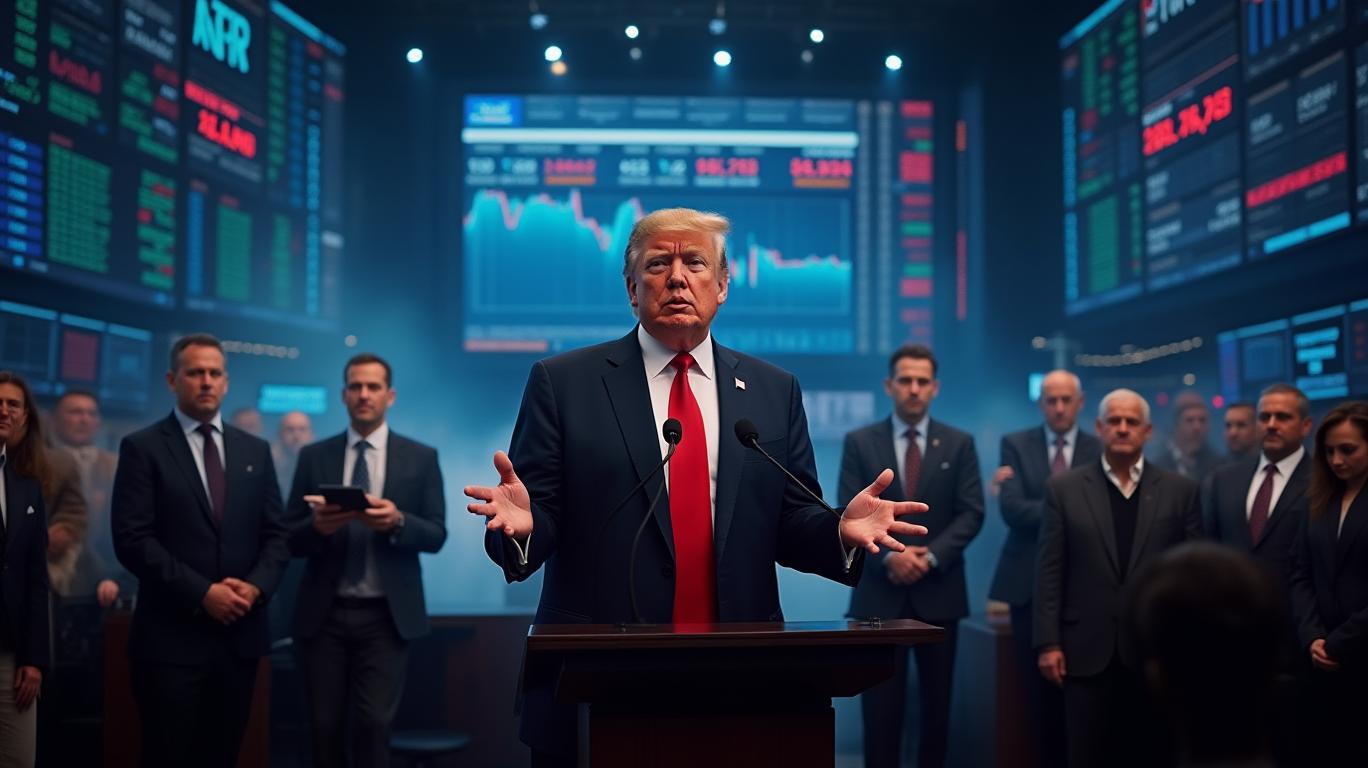
The technology sector, which is heavily reliant on international trade, will be particularly affected. For example, Apple's shares dropped over 8%, AmazonAMZN-- was down more than 6%, and NvidiaNVDA-- dropped over 5% following the tariff announcement. These drops indicate the potential impact on the technology sector, as companies may face higher costs for components and finished products. The manufacturing sector will also be significantly impacted, as the tariffs on major manufacturing countries will increase the cost of imported goods, which could lead to higher prices for consumers and reduced competitiveness for U.S. manufacturers.
The tariffs could also lead to retaliatory measures from other countries, further disrupting global trade networks. For example, China has urged the U.S. to "immediately cancel its unilateral tariff measures and properly resolve differences with its trading partners through equal dialogue." This could lead to a trade war, which would have even more significant impacts on global supply chains and trade networks.
The long-term economic implications of the tariffs and retaliatory measures are severe and could lead to a prolonged period of economic instability, higher costs, and potential recession for both the U.S. and its trading partners. The immediate market reactions and statements from global leaders indicate that the situation is already having a significant impact, and the long-term effects could be even more profound.
The tariffs could also have a significant impact on the U.S. economy. For instance, the tariffs could lead to a higher cost of funding for the U.S., as capital flows that drive the deficit may disappear. This could lead to a higher cost of funding for the U.S. economy, which could have a significant impact on the U.S. economy. The tariffs could also lead to a higher cost of funding for the U.S., as capital flows that drive the deficit may disappear. This could lead to a higher cost of funding for the U.S. economy, which could have a significant impact on the U.S. economy.
In conclusion, the newly imposed tariffs by President Trump are expected to have significant impacts on global supply chains and trade networks, particularly for sectors heavily reliant on international trade such as technology and manufacturing. The tariffs could lead to disruptions in supply chains, increased costs for companies, and retaliatory measures from other countries, which could further disrupt global trade networks. The long-term economic implications of the tariffs and retaliatory measures are severe and could lead to a prolonged period of economic instability, higher costs, and potential recession for both the U.S. and its trading partners. The immediate market reactions and statements from global leaders indicate that the situation is already having a significant impact, and the long-term effects could be even more profound.
AMZN--
NVDA--
The global markets are in turmoil following President Donald Trump's announcement of sweeping tariffs on imports from nearly all countries. The tariffs, which include a 10% universalUVV-- rate and higher rates for specific countries, have sent shockwaves through financial markets, causing significant drops in stock prices and currency values. The immediate impact has been severe, with global markets experiencing their worst one-day sell-off since 2020, wiping out around $2.5 trillion in value.
The tariffs, which go into effect on April 5 and 9, are part of Trump's strategy to address what he sees as unfair trade practices and to shrink the U.S. trade deficit. The universal 10% tariff will apply to all countries, while higher rates will be imposed on countries deemed "worst offenders," including China (54%), the EU (20%), Japan (24%), and South Korea (25%). The tariffs are expected to have significant impacts on global supply chains and trade networks, particularly for sectors heavily reliant on international trade such as technology and manufacturing.
The technology sector, which is heavily reliant on international trade, will be particularly affected. For example, Apple's shares dropped over 8%, AmazonAMZN-- was down more than 6%, and NvidiaNVDA-- dropped over 5% following the tariff announcement. These drops indicate the potential impact on the technology sector, as companies may face higher costs for components and finished products. The manufacturing sector will also be significantly impacted, as the tariffs on major manufacturing countries will increase the cost of imported goods, which could lead to higher prices for consumers and reduced competitiveness for U.S. manufacturers.
The tariffs could also lead to retaliatory measures from other countries, further disrupting global trade networks. For example, China has urged the U.S. to "immediately cancel its unilateral tariff measures and properly resolve differences with its trading partners through equal dialogue." This could lead to a trade war, which would have even more significant impacts on global supply chains and trade networks.
The long-term economic implications of the tariffs and retaliatory measures are severe and could lead to a prolonged period of economic instability, higher costs, and potential recession for both the U.S. and its trading partners. The immediate market reactions and statements from global leaders indicate that the situation is already having a significant impact, and the long-term effects could be even more profound.
The tariffs could also have a significant impact on the U.S. economy. For instance, the tariffs could lead to a higher cost of funding for the U.S., as capital flows that drive the deficit may disappear. This could lead to a higher cost of funding for the U.S. economy, which could have a significant impact on the U.S. economy. The tariffs could also lead to a higher cost of funding for the U.S., as capital flows that drive the deficit may disappear. This could lead to a higher cost of funding for the U.S. economy, which could have a significant impact on the U.S. economy.
In conclusion, the newly imposed tariffs by President Trump are expected to have significant impacts on global supply chains and trade networks, particularly for sectors heavily reliant on international trade such as technology and manufacturing. The tariffs could lead to disruptions in supply chains, increased costs for companies, and retaliatory measures from other countries, which could further disrupt global trade networks. The long-term economic implications of the tariffs and retaliatory measures are severe and could lead to a prolonged period of economic instability, higher costs, and potential recession for both the U.S. and its trading partners. The immediate market reactions and statements from global leaders indicate that the situation is already having a significant impact, and the long-term effects could be even more profound.

Divulgación editorial y transparencia de la IA: Ainvest News utiliza tecnología avanzada de Modelos de Lenguaje Largo (LLM) para sintetizar y analizar datos de mercado en tiempo real. Para garantizar los más altos estándares de integridad, cada artículo se somete a un riguroso proceso de verificación con participación humana.
Mientras la IA asiste en el procesamiento de datos y la redacción inicial, un miembro editorial profesional de Ainvest revisa, verifica y aprueba de forma independiente todo el contenido para garantizar su precisión y cumplimiento con los estándares editoriales de Ainvest Fintech Inc. Esta supervisión humana está diseñada para mitigar las alucinaciones de la IA y garantizar el contexto financiero.
Advertencia sobre inversiones: Este contenido se proporciona únicamente con fines informativos y no constituye asesoramiento profesional de inversión, legal o financiero. Los mercados conllevan riesgos inherentes. Se recomienda a los usuarios que realicen una investigación independiente o consulten a un asesor financiero certificado antes de tomar cualquier decisión. Ainvest Fintech Inc. se exime de toda responsabilidad por las acciones tomadas con base en esta información. ¿Encontró un error? Reportar un problema


SOBRE NOSOTROS
Nuestra historiaAutores de noticiasBase de conocimientosPolítica de privacidadTérmino de usoDescargo de responsabilidad de corretaje de tercerosTérminos de uso de AIMEDivulgaciones de riesgos de AInvest AICarrerasCONTÁCTENOS
Email: support@ainvest.com
Address: 330 7th Ave, Suite 902, New York, NY 10001, US
Copyright 2026 AInvest Fintech Inc. All rights reserved.


Comentarios
Aún no hay comentarios