
Litigation Finance as a Strategic Asset Class: Navigating Legal Dynamics and Trust Erosion in a Tech-Driven Era
The litigation finance industry, once a niche corner of the legal market, has emerged as a compelling asset class for investors seeking uncorrelated returns. By 2025, the global market had reached USD17.5 billion, with projections suggesting it could balloon to USD67.2 billion by 2037, driven by rising legal costs and complex commercial disputes. Yet, this growth is not without turbulence. Regulatory scrutiny, capital constraints, and the ethical quagmires of artificial intelligence (AI) are reshaping the landscape, creating both opportunities and red flags for investors.
Market Expansion and Regulatory Headwinds
The U.S. and U.K. remain the twin engines of litigation finance growth. In the U.S., commercial litigation funding is expected to surge from USD4.5 billion in 2023 to USD9.7 billion by 2032 according to analysis. However, regulatory uncertainty looms large. Tax policy shifts and disclosure requirements threaten to disrupt the industry's financial models, while the U.K.'s Civil Justice Council has proposed stricter oversight, slowing new case intake. Funders are adapting: secondary transactions, where portfolios are sold to unlock liquidity, have gained traction, as seen in Omni Bridgeway's partnership with Ares Management Corp.. These innovations signal resilience but also highlight the sector's fragility in the face of regulatory headwinds.
AI and the Trust Deficit
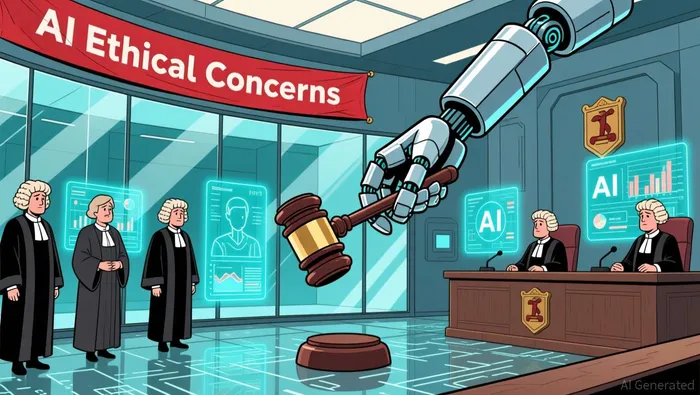
The integration of AI into litigation finance introduces a double-edged sword. On one hand, algorithms like Legalist, Inc.'s "truffle sniffer" enable funders to identify statistically favorable cases with unprecedented efficiency. On the other, AI misuse is eroding client trust. The American Bar Association has warned of ethical pitfalls, including fabricated citations in court documents and data confidentiality breaches when sensitive information is input into AI tools. These risks are not hypothetical: 72% of S&P 500 companies disclosed material AI risks in 2025, with reputational damage as the most cited concern. For litigation finance firms, whose credibility hinges on perceived legitimacy, such lapses could be catastrophic. A single instance of AI-driven over-litigation or ethically dubious claims could trigger regulatory scrutiny and investor flight.
Valuation Impacts and Risk Mitigation
The financial implications of these dynamics are stark. Recent case studies underscore the volatility. The Clio lawsuit, which centers on AI data ownership, has sparked industry-wide debates about the ethical use of legal data. Meanwhile, the Disclosure Dollar Loss Index rose by 56% in the first half of 2025 alone. These trends suggest that litigation finance firms must prioritize transparency and governance. Those that fail to align with frameworks like the EU AI Act's risk categorization or the NIST AI Risk Management Framework may find themselves excluded from high-value partnerships or subject to reputational damage according to industry analysis.
Strategic Opportunities for Investors
Despite these challenges, the sector offers unique opportunities. Portfolio funding and hybrid models, which blend litigation finance with traditional legal services, provide stable, long-term revenue streams. Firms that adopt robust AI governance-such as Latham & Watkins, which has invested USD20 million in AI infrastructure-position themselves as leaders in a tech-driven future. For investors, the key lies in discerning firms that treat AI as a tool for efficiency rather than a shortcut to profit.
Conclusion
Litigation finance's ascent as a strategic asset class is inextricably linked to its ability to navigate legal and ethical crosscurrents. While AI and regulatory pressures pose significant risks, they also create a filter: only those firms that prioritize trust, transparency, and innovation will thrive. For investors, the path forward demands rigorous due diligence, a nuanced understanding of AI's dual role, and a willingness to bet on resilience in an industry at a crossroads.





Comentarios
Aún no hay comentarios