
Labor Market Shifts and Equity Sectors: High-Conviction Investment Opportunities in September 2025
The U.S. labor market in late 2025 presents a complex tapestry of resilience and fragility. While the unemployment rate edged higher to 4.3% in August 2025, reflecting a modest cooling from the post-pandemic peak, according to the BLS report, sectoral employment trends reveal stark divergences. These shifts, coupled with the Federal Reserve's recent 25-basis-point rate cut, are reshaping investment opportunities across equity sectors. For investors, the challenge lies in identifying industries best positioned to capitalize on labor supply dynamics while mitigating risks from broader macroeconomic uncertainties.
Labor Market Divergence and Sectoral Implications
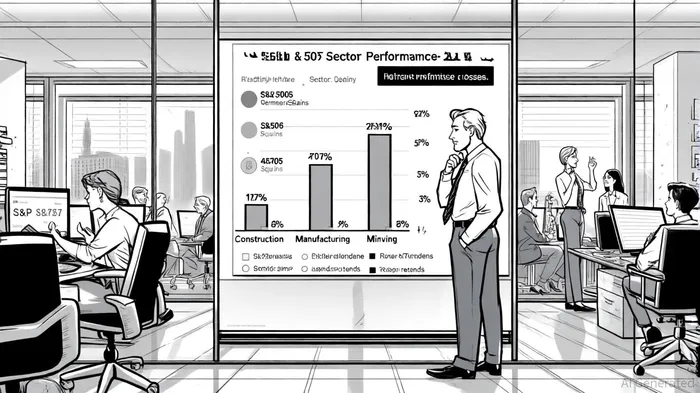
The Bureau of Labor Statistics (BLS) August 2025 report underscores a labor market in transition. Healthcare added 46,800 jobs, driven by aging demographics and persistent staffing shortages, according to UnemploymentData, while federal government employment continued its decline, losing 15,000 positions in a single month, per BLS prebenchmark data. Construction and manufacturing faced headwinds, with residential construction and transportation equipment sectors contracting, as noted in an Alaric Securities review. These trends align with S&P 500 sector performance, where Health Care surged 5.37% year-to-date, outpacing the index's 2.03% gain, according to James Investment commentary.
Conversely, the Technology sector, which had long benefited from a tight labor market, saw a 0.11% decline in August 2025, per a MarketBeat analysis. This underperformance reflects both profit-taking and concerns over slowing demand in AI-driven sectors, where wage growth (up 3.7% year-over-year, per a Wedbush analysis) has failed to offset structural challenges like global supply chain bottlenecks.
The Fed's Rate Cut: A Tailwind for Select Sectors
The Federal Reserve's September 2025 rate cut to 4.00–4.25%, reported in a CNBC piece, has amplified sectoral divergences. Lower borrowing costs are poised to benefit capital-intensive industries. Real estate, for instance, stands to gain as mortgage rates decline, boosting homebuilder stocks and real estate investment trusts (REITs). Similarly, technology firms—whose valuations rely on discounted future cash flows—could see renewed investor appetite as interest rates fall, according to a BlackRock analysis.
Financials, meanwhile, face a double-edged sword. While the sector gained 3.09% in August 2025, per an Aston Carter analysis, net interest margins (NIMs) for large banks may compress further as the Fed eases policy. This creates an asymmetry: regional banks with higher NIMs could outperform, while asset-sensitive institutions like community banks may struggle, as discussed in an Investopedia analysis.
High-Conviction Opportunities in a Fragmented Market
Three sectors emerge as compelling investment targets based on labor and equity trends:
Health Care: With 31,000 jobs added in August 2025, according to BLS industry data, the sector's growth is underpinned by structural demand. Aging populations and regulatory tailwinds (e.g., Medicare expansion) suggest sustained momentum. Equities in medical device manufacturers and telehealth platforms appear particularly attractive.
Materials and Energy: The Materials sector's 5.19% gain in August 2025, cited in an Aerotek report, reflects robust demand for industrial metals and construction materials. Energy, though historically lagging, offers a forward PEG ratio of 1.66, per BLS CES data, suggesting undervaluation amid a potential rebound in oil prices.
Consumer Discretionary: Despite a 7,000-job loss in construction, the broader Consumer Discretionary sector added 4.66% to its value in August 2025, according to LPL Financial's weekly note. This resilience, driven by pent-up demand for travel and durable goods, positions it to benefit from the Fed's rate cut, which should boost consumer spending power.
Risks and Macro Considerations
Investors must remain vigilant about risks. The BLS's downward revision of 911,000 jobs for 2024–2025, documented in the BLS Monthly Labor Review, highlights the fragility of labor market data. A resurgence in inflation or geopolitical shocks (e.g., Middle East tensions) could force the Fed to reverse its easing cycle, pressuring growth-dependent sectors like Technology. Defensive plays in Utilities and Consumer Staples, though underperforming in August per the economic calendar, may regain relevance if volatility rises.
Conclusion
The September 2025 labor market, while cooling, retains enough strength to support a gradual Fed easing cycle. For equity investors, the key lies in aligning portfolios with sectors benefiting from both labor supply shifts and monetary policy tailwinds. Health Care, Materials, and Consumer Discretionary offer compelling opportunities, but a balanced approach—hedging against inflationary or geopolitical risks—is essential. As always, the interplay between data and policy will remain the ultimate determinant of market outcomes.





Comentarios
Aún no hay comentarios