
Ivonescimab's Emerging OS Signal in Western Patients Positions Summit Therapeutics as a High-Growth Biotech Play in NSCLC
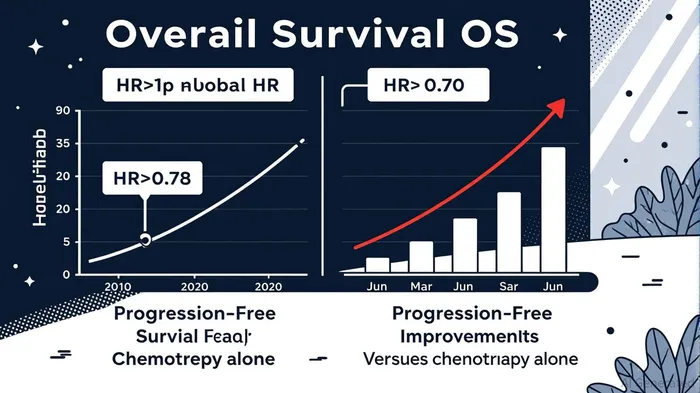
The biotechnology sector has long grappled with the challenge of developing effective therapies for non-small cell lung cancer (NSCLC), particularly in patients with EGFR mutations who progress after third-generation tyrosine kinase inhibitors (TKIs). Summit Therapeutics’ ivonescimab, a PD-1/VEGF bispecific antibody, is emerging as a transformative candidate in this space. Recent updates from the global Phase III HARMONi trial reveal a statistically meaningful overall survival (OS) improvement in Western patients, particularly in North America, with a hazard ratio (HR) of 0.70 and a nominal p-value of 0.0332 [1]. This data, coupled with a manageable safety profile and growing analyst optimism, positions Summit as a compelling high-growth play in the evolving NSCLC landscape.
Late-Stage Clinical Progress: A Differentiated OS Signal
The HARMONi trial evaluated ivonescimab in combination with chemotherapy for EGFR-mutated, platinum-resistant non-squamous NSCLC patients. While the overall trial population did not achieve statistical significance in OS (HR=0.79, p=0.0570), an updated analysis of Western patients demonstrated a robust HR of 0.78 (p=0.0332), with North American patients showing an even stronger HR of 0.70 [1]. This regional disparity raises intriguing questions about biomarker heterogeneity or treatment adherence but underscores the drug’s potential in key markets.
The OS benefit is complemented by a statistically significant improvement in progression-free survival (PFS), with a global HR of 0.52 (p<0.001) and median PFS of 6.8 months for ivonescimab plus chemotherapy versus 4.4 months for chemotherapy alone [1]. Notably, these results were consistent across subgroups, including patients with brain metastases, a population historically resistant to immunotherapies. The safety profile further strengthens the case: no new signals emerged, and adverse events were manageable, aligning with the tolerability required for long-term use in advanced NSCLC [1].
Unmet Need and Therapeutic Differentiation
The second-line (2L+) treatment of EGFR-mutant NSCLC remains a significant unmet need. Despite advances in PD-1 inhibitors, trials such as those combining petosemtamab with pembrolizumab have yet to deliver consistent OS benefits [2]. Ivonescimab’s bispecific design—simultaneously targeting PD-1 and VEGF pathways—appears to circumvent resistance mechanisms observed in monotherapies. For instance, in a head-to-head comparison with pembrolizumab in PD-L1-positive NSCLC, ivonescimab achieved a median PFS of 11.14 months versus 5.82 months [3]. This differentiation is critical in a market where failed PD-1 therapies have left a gap for durable, well-tolerated options.
Analyst Optimism and Market Re-Rating Potential
Summit Therapeutics’ stock has attracted bullish attention, with multiple analysts upgrading their price targets following the HARMONi data. H.C. Wainwright reiterated a $44 price target, while Guggenheim and Truist set targets of $40 and $35, respectively, reflecting confidence in the drug’s commercial potential [3]. These estimates assume 15% market penetration in first-line squamous NSCLC, projecting $2 billion in annual U.S. sales by 2030 [3].
The company’s financial position further supports this optimism. With $487 million in cash and $235 million in additional financing secured, Summit is well-positioned to advance ivonescimab through regulatory submissions, including a pending Biologics License Application (BLA) in the U.S. [4]. The FDA’s Fast Track designation for the HARMONi setting underscores the urgency of addressing this patient population, while Akeso’s approvals in China provide a revenue runway and validate the drug’s global potential [3].
Conclusion: A Convergence of Catalysts
Summit Therapeutics stands at a pivotal inflection point. The emerging OS signal in Western patients, combined with a differentiated mechanism and favorable safety profile, addresses a critical unmet need in 2L+ EGFRm NSCLC. As the company prepares for regulatory milestones and potential U.S. approval, the alignment of clinical, commercial, and financial catalysts suggests a significant re-rating of its market value. For investors, the question is no longer whether ivonescimab can deliver—but how quickly the market will recognize its transformative potential.
Source:
[1] Ivonescimab Plus Chemotherapy Demonstrates Consistent Global Benefit: HARMONi Data Update Shows OS HR=0.78, Nominal P=0.0332 [https://www.prnewswire.com/news-releases/ivonescimab-plus-chemotherapy-demonstrates-consistent-global-benefit-harmoni-data-update-shows-os-hr0-78--nominal-p0-0332--302548481.html]
[2] MerusMRUS-- Announces Financial Results for the Second ... [https://www.stocktitan.net/news/MRUS/merus-announces-financial-results-for-the-second-quarter-2025-and-7blybhoahfk3.html]
[3] Ivonescimab Demonstrates Superior Efficacy in Phase III Lung Cancer Trials, Positioning for Global Regulatory Approvals [https://trial.medpath.com/news/8ded5abacfed46df/ivonescimab-demonstrates-superior-efficacy-in-phase-iii-lung-cancer-trials-positioning-for-global-regulatory-approvals]
[4] Summit TherapeuticsSMMT-- Q3 2024 Slides: Ivonescimab Shows Superior PFS Vs Pembrolizumab [https://www.investing.com/news/company-news/summit-therapeutics-q3-2024-slides-ivonescimab-shows-superior-pfs-vs-pembrolizumab-93CH-4167173]





Comentarios
Aún no hay comentarios