
Italy's Fiscal Tightrope: Assessing Risks and Opportunities in Sovereign Debt and Banking Equities
Italy's 2025 fiscal strategy represents a delicate balancing act. The government, led by Prime Minister Giorgia Meloni, has committed to reducing the budget deficit to 3% of GDP-aligning with EU requirements-while simultaneously pursuing tax cuts for middle-income earners and increasing defense spending. This maneuver raises critical questions for investors: How sustainable is this fiscal path? What risks and opportunities does it create for Italian sovereign debt and banking sector equities?
Fiscal Discipline and Tax Cuts: A Double-Edged Sword
According to a Bloomberg report, Italy's 2025 budget draft projects a deficit of 3% of GDP, down from an initial target of 3.3%, driven by higher-than-expected tax revenues from rising employment and inflation. This fiscal tightening has allowed the government to introduce tax cuts for individuals earning €28,000–€60,000 annually, including merging tax brackets to lower rates for middle-income households, according to the EU stress-test results. Additionally, families with newborns earning up to €40,000 will receive a €1,000 bonus, per Trading Economics data.
While these measures aim to stimulate growth and social welfare, they risk creating a fiscal illusion. As noted by Yahoo Finance, the deficit reduction relies partly on temporary factors, such as inflation-driven fiscal drag, which may not persist in 2026. Moreover, Italy's GDP growth is projected at a modest 0.5–0.6% in 2025, constrained by external headwinds like U.S. trade tariffs and a weak German economy, according to a Bloomberg analysis. For investors, this raises concerns about the durability of fiscal improvements and the potential for renewed deficit pressures if growth falters.
Defense Spending and Geopolitical Realities
Italy's commitment to increasing defense spending to meet NATO's 2% of GDP target-up from 1.49% in 2024-adds another layer of complexity, as detailed in a WarWingsDaily piece. The government plans to achieve this by reclassifying expenditures such as military pensions and civilian technology investments under the defense budget, per a Caliber report. While this demonstrates political will to align with allies, it risks diverting resources from other priorities, such as infrastructure or healthcare. As Politico highlights, internal coalition tensions persist, with Matteo Salvini's party advocating for more aggressive fiscal measures. For now, the 2025 budget allocates €31.3 billion to defense, or 3.4% of the state budget, but future allocations may face scrutiny if economic conditions deteriorate.
Sovereign Debt: A Narrowing Risk Premium
The fiscal adjustments have had a measurable impact on Italy's debt market. As of September 2025, the 10-year bond yield stood at 3.67%, with the Italy-Germany yield spread narrowing to 81 basis points-well below its long-term average of 1.97%. This reflects improved investor confidence, bolstered by S&P's upgrade of Italy's credit rating to 'BBB+' in April 2025 and Moody's positive outlook (reported by Yahoo Finance). However, the yield trajectory remains volatile. While projections suggest a decline to 3.53% within 12 months, any reversal in fiscal discipline or growth stagnation could trigger a rapid widening of spreads.
For bond investors, the key risks lie in the interplay between fiscal policy and external shocks. The U.S. reduction of EU tariffs to 10% has provided temporary relief (as reported by Yahoo Finance), but ongoing trade tensions and Italy's heavy debt burden (129% of GDP as of 2024) mean that market sentiment remains fragile. A return to fiscal laxity or geopolitical instability could swiftly erode gains.
Banking Sector: Resilience Amid Regulatory Shifts
Italy's banking sector, long a focal point of concern, has shown surprising resilience. The 2025 EU-wide stress tests revealed that major banks like Intesa Sanpaolo and UniCredit maintained capital adequacy ratios above 15.6%, with CET1 ratios remaining well above minimum requirements even under adverse scenarios (EU stress-test results). This strength is partly due to robust profitability and prudent risk management, but also reflects the sector's role in funding the government's fiscal maneuvers.
However, regulatory changes in 2025 introduce new challenges. The delayed implementation of Basel III's market risk framework and the introduction of MiCAR (Markets in Crypto-Assets Regulation) are increasing compliance costs, according to a Finovate guide. Additionally, the Digital Operational Resilience Act (DORA) is pushing banks to invest heavily in cybersecurity and digital infrastructure. While these measures enhance long-term stability, they may squeeze short-term margins, particularly for smaller institutions.
Equity investors face a mixed picture. On one hand, strong capital buffers and strategic mergers (e.g., UniCredit's acquisition of Banco BPM) suggest consolidation and efficiency gains. On the other, the sector's exposure to Italy's sluggish economy and regulatory pressures could dampen returns.
Conclusion: A Calculated Gamble
Italy's 2025 fiscal strategy is a high-stakes gamble. The government has succeeded in narrowing the deficit and securing credit rating upgrades, while tax cuts and defense spending aim to address both domestic and geopolitical priorities. For sovereign debt investors, the narrowing yield spread and improved ratings present opportunities, but these must be weighed against the fragility of Italy's growth model and external vulnerabilities.
In the banking sector, resilience is evident, but regulatory and economic headwinds could test profitability. Investors with a long-term horizon may find value in equities of well-capitalized institutions, provided they can navigate the evolving regulatory landscape.
As always, the devil will be in the execution. If Italy can maintain fiscal discipline while fostering growth, its markets may yet surprise. But for now, caution remains warranted. 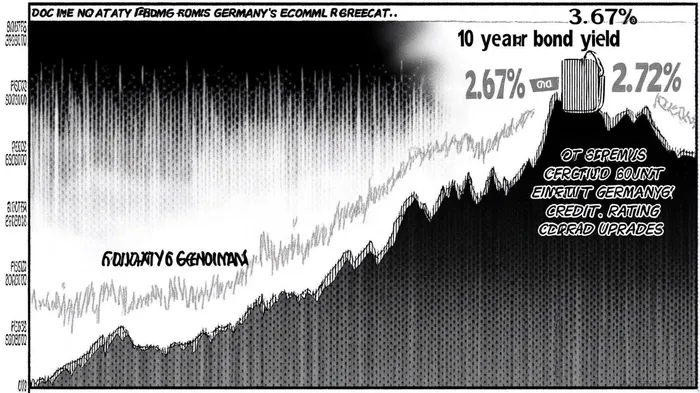







Comentarios
Aún no hay comentarios