
Investor Recourse in the Biotech Sector: Legal and Market Risks in the Wake of MLTX Allegations
The MLTXMLTX-- Case: A Cautionary Tale of Misaligned Expectations
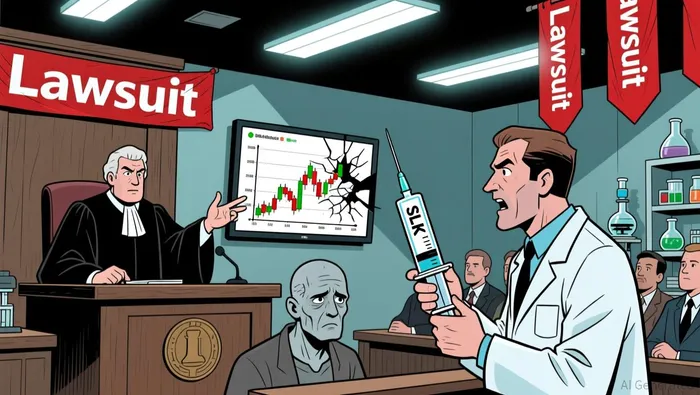
MoonLake Immunotherapeutics, once a darling of the biotech space, now finds itself at the center of a securities fraud lawsuit alleging that it overstated the clinical advantages of its drug candidate, sonelokimab (SLK), while concealing critical flaws in its Nanobody technology. According to a Marketscreener report, the lawsuit claims the company inflated its stock price by misleading investors about SLK's superiority over existing monoclonal antibodies like BIMZELX, only for a disastrous Phase 3 trial result to trigger a near 90% collapse in share value, as Marketscreener reported. This pattern-of inflated expectations followed by abrupt reality checks-has become alarmingly common in biotech, where speculative valuations often hinge on unproven clinical data.
The legal action, which targets MLTX for violations of securities laws, underscores a broader issue: the asymmetry of information between firms and investors. Shareholders who purchased MLTX securities between March 10, 2024, and September 29, 2025, are now eligible to join the class action, with a lead plaintiff deadline set for December 15, 2025, as Morningstar reported. For those who missed the initial warning signs, this deadline represents a final opportunity to seek redress.
Historical Precedents: Legal Overhangs and Stock Valuation Impacts
The MLTX saga is not an isolated incident. Historical cases reveal a consistent pattern: class-action lawsuits in the biotech sector often precipitate sharp declines in stock valuations, driven by both direct legal costs and eroded investor confidence. Consider James Hardie Industries (ASX: JHX), which faced a 47% drop in total shareholder returns over 12 months following allegations of misrepresenting inventory levels and demand, as Yahoo Finance reported. Similarly, Fortinet (FTNT) saw its shares fall 6.5% after lawsuits emerged over allegedly misleading statements about its firewall upgrade cycle, despite its long-term growth narrative in cybersecurity, as Simply Wall St reported.
These examples highlight a critical insight: legal risks in biotech are not merely abstract threats but tangible forces that reshape market dynamics. Unlike traditional industries, biotech valuations are often predicated on future earnings expectations and the perceived success of clinical pipelines. When these assumptions are challenged-whether by regulatory scrutiny, trial failures, or legal actions-the resulting volatility can be catastrophic.
Investor Strategies: Mitigating Risk in a High-Stakes Environment
For investors, the MLTX case serves as a clarion call to reassess risk management frameworks. First, due diligence must extend beyond clinical data to include governance practices and communication transparency. Second, diversification remains a cornerstone strategy, as sector-specific legal risks can disproportionately impact concentrated portfolios. Third, active participation in class-action lawsuits-by meeting deadlines and engaging legal counsel-can transform losses into potential recoveries.
The lead plaintiff deadline for MLTX is a case in point. Investors who acted during the class period (March–September 2025) must register by December 15, 2025, to retain eligibility, as Morningstar reported. This is not merely a procedural formality; it is a strategic imperative. By joining the lawsuit, shareholders can leverage collective bargaining power to pressure MLTX into a settlement, potentially recouping a portion of their losses.
The Path Forward: Balancing Innovation and Accountability
The biotech sector's future hinges on its ability to reconcile innovation with accountability. While breakthrough therapies demand bold investment, they also require rigorous oversight to prevent the erosion of trust. For regulators, this means enforcing stricter disclosure requirements for clinical trial data. For investors, it means adopting a more skeptical lens when evaluating high-risk, high-reward opportunities.
In the case of MoonLakeMLTX-- Immunotherapeutics, the coming months will test the resilience of both the company and its stakeholders. But one truth remains unambiguous: in a sector where hope and hype often collide, legal recourse is not just a last resort-it is a necessary safeguard for long-term portfolio stability.





Comentarios
Aún no hay comentarios