
Intergenerational Behavioral Trends: A New Frontier for Investment in Media and Consumer Markets
Media Consumption: The Rise of Video and the Blurring of Platforms
Gen Z and Baby Boomers differ markedly in their media preferences. Gen Z, for instance, consumes 95 minutes daily on TikTok and favors short-form, interactive content like AR filters and live streams. Baby Boomers, by contrast, rely on traditional media such as cable news and print newspapers, later supplementing with Facebook or YouTube according to research. Yet, a critical convergence is emerging: both generations are increasingly turning to video-based news. By 2025, 72% of all generations engage with video-based news, reflecting a shared appetite for visual storytelling. 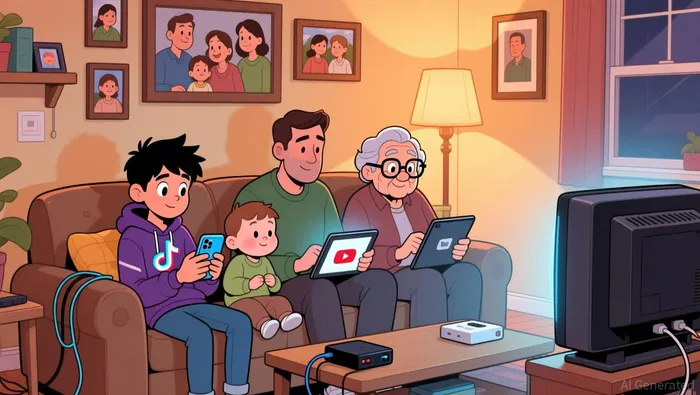 This trend underscores the potential of platforms that adapt video content to diverse formats-short-form for Gen Z and longer, in-depth analyses for Boomers.
The financial implications are clear. Media companies that leverage AI-driven personalization to cater to both demographics-such as YouTube's algorithmic curation or TikTok's expanding news partnerships-stand to capture a broader audience. For example, Coca-Cola's "Share a Coke" campaign successfully bridged generational divides by leveraging nostalgia for Boomers and personalization for Gen Z, demonstrating how cross-platform strategies can drive brand loyalty.
Emotional Communication: Trust, Authenticity, and Community
Emotional communication between Gen Z and Baby Boomers diverges in method but converges in intent. Gen Z prioritizes authenticity and mental well-being, often seeking user-generated content and brands aligned with social causes. Baby Boomers, meanwhile, rely on established institutions and face-to-face relationships for trust according to market analysis. Yet both generations value emotional resilience and community support, albeit through different channels. Gen Z turns to social networks for real-time validation, while Boomers rely on family and traditional media as research shows.
This duality presents opportunities in sectors like fintech and mental health. For instance, AI-driven financial advisors like JPMorgan's IndexGPT offer personalized investment strategies, appealing to Gen Z's tech-savviness while addressing Boomers' need for stability. Similarly, platforms integrating mental health resources into social media-such as Instagram's crisis support tools-can cater to both generations' emotional needs according to industry reports.
Social Engagement and Investment: Community-Driven Decisions
The investment behaviors of Gen Z and Baby Boomers reflect a shared reliance on community-driven insights, albeit through distinct mediums. Gen Z, dubbed "Social Investors," uses TikTok and Robinhood for real-time trading tips, favoring agility and peer influence. Baby Boomers, conversely, prioritize long-term stability and traditional advisors according to financial research. However, both generations increasingly seek socially informed decisions. For example, 51% of investors across all generations prioritized emergency savings in 2024, reflecting a common emphasis on financial security.
The rise of ESG (Environmental, Social, and Governance) investing further illustrates this overlap. Gen Z's demand for sustainability has driven the growth of ESG ETFs, which now hold over $97 billion in assets. Meanwhile, Boomers, as inheritors of generational wealth, are increasingly aligning their portfolios with values-driven strategies according to wealth transfer data. Fintech platforms like Alkami, which use AI to facilitate intergenerational wealth transfers, exemplify how technology can bridge these preferences.
Strategic Investment Opportunities
The convergence of Gen Z and Baby Boomers' behaviors points to three key sectors for investment:
1. Cross-Platform Media: Companies that adapt video content to both short-form and long-form formats, such as YouTube and TikTok, are well-positioned to capture both demographics.
2. AI-Driven Fintech: Platforms offering personalized, values-aligned investment tools-like IndexGPT and ESG-focused robo-advisors-can serve the dual needs of agility and stability.
3. Community-Centric Brands: Businesses leveraging nostalgia (e.g., Coca-Cola) or social impact (e.g., Patagonia) can resonate across generations by addressing shared values.
Conclusion
The intergenerational divide is often overstated. While Gen Z and Baby Boomers differ in their digital habits, their shared tendencies in media consumption, emotional communication, and social engagement reveal a unified market opportunity. Investors who recognize these overlaps and target platforms that bridge them-through technology, personalization, and values alignment-will be well-placed to capitalize on the evolving consumer landscape.







Comentarios
Aún no hay comentarios