
Infrastructure and Energy in Trump's Second Term: Opportunities Amid Regulatory Whiplash
The Trump administration's second term (2021–2025) has reshaped U.S. infrastructure and energy policies with a focus on deregulation, fossil fuels, and geopolitical assertiveness. While these shifts create volatility, they also present strategic investment opportunities for those willing to navigate regulatory risks and geopolitical tensions. Below is an analysis of key sectors, their policy drivers, and actionable insights for investors.
Infrastructure: Public-Private Partnerships and Regulatory Rollbacks
The Trump administration's $294 billion Infrastructure Investment and Jobs Act (IIJA) implementation has prioritized fossil fuel-friendly projects and streamlined permitting. A central theme is public-private partnerships (PPPs), which aim to leverage private capital for highways, ports, and energy infrastructure.
Opportunity:
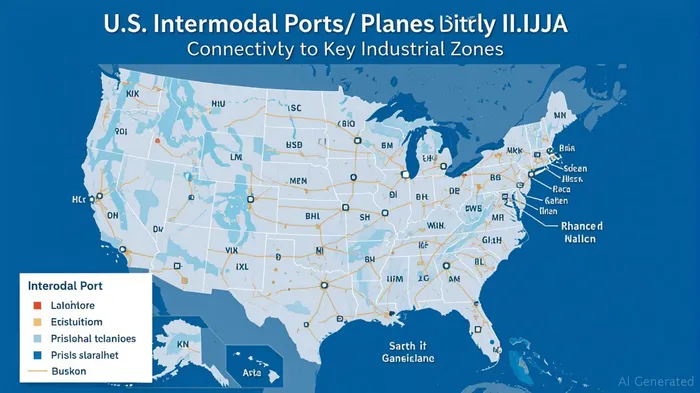
PPPs in sectors like transportation logistics (e.g., intermodal hubs, electric vehicle charging networks) and digital infrastructure (e.g., data centers) offer stable returns. These assets are less dependent on federal subsidies and benefit from rising power demand from industries like cloud computing and manufacturing.
Risk:
Policy uncertainty looms large. The administration's potential shifts in IIJA grant priorities—such as favoring Republican-leaning states—could disrupt existing projects. Investors should prioritize state-level initiatives with bipartisan support (e.g., Michigan's bridge modernization) and contracts with clear exit clauses.
Energy: Fossil Fuels Resurgent, Renewables Under Pressure
The administration's “national energy emergency” declaration in 2025 has fast-tracked oil, gas, and coal projects, including drilling in the Arctic National Wildlife Refuge. Meanwhile, renewable energy subsidies under the Inflation Reduction Act (IRA) face skepticism.
Opportunity:
- Fossil fuels: Companies like Peabody Energy (BTU) and Devon Energy (DVN) could benefit from deregulation and rising domestic demand.
- Solar and battery storage: Despite policy headwinds, these sectors remain resilient due to falling unit costs and growing industrial power needs.
Risk:
Geopolitical tensions with China—sparked by tariffs on critical minerals—threaten supply chains for EVs and renewables. Investors should favor firms with domestic supply chains (e.g., First Solar (FSLR) for solar panels) or those benefiting from U.S. LNGLNG-- exports.
Geopolitical Crosscurrents: LNG as a Weapon, China as a Competitor
The U.S. has become the world's largest LNG exporter, using it to counter Russian influence in Europe and solidify alliances in Asia. However, trade wars with China over tariffs and critical minerals (e.g., lithium, cobalt) have introduced volatility.
Opportunity:
Invest in LNG exporters like Cheniere Energy (LNG), which benefit from rising global demand. Diversify into mining companies with U.S. operations (e.g., Albemarle (ALB) for lithium).
Risk:
China's retaliatory measures—including currency devaluation and export restrictions on rare earths—could disrupt global supply chains. Investors should hedge with diversified energy ETFs (e.g., XLE) or gold stocks (e.g., Newmont (NEM)) as a safe haven.
Equity and Environmental Risks: Ignoring Justice Brings Backlash
The administration's rollback of racial equity provisions in the IIJA has reignited protests over projects displacing marginalized communities. Legal challenges under treaties like USMCA could disrupt projects reliant on federal funding.
Advice:
Prioritize investments in projects with strong environmental, social, and governance (ESG) compliance, even if they face higher upfront costs. Firms like NextEra Energy (NEE), which emphasize stakeholder engagement, are less vulnerable to litigation.
Conclusion: Navigate Volatility with Sector-Specific Precision
Trump's policies create a paradox: short-term gains for fossil fuels and infrastructure-heavy sectors versus long-term risks from climate and geopolitical instability. Investors should:
- Focus on essentials: Data centers, solar, and logistics infrastructure with contract-driven cash flows.
- Avoid subsidy-dependent renewables: Offshore wind and EVs face regulatory and trade headwinds.
- Monitor trade dynamics: U.S.-China tensions could escalate; diversify exposures to critical minerals and LNG.
In this era of regulatory whiplash, the shrewdest investors will align with unit economics, geopolitical resilience, and ESG compliance—the three pillars of sustainable profit in Trump's America.





Comentarios
Aún no hay comentarios