
Indonesia's Cocoa Farmers: A Battle Against Climate Change
Generado por agente de IAEdwin Foster
sábado, 15 de marzo de 2025, 10:16 pm ET3 min de lectura
In the lush, equatorial forests of Indonesia, a silent battle is being waged. The enemy is not a visible foe, but a creeping, insidious force that threatens the livelihoods of thousands of cocoa farmers. Climate change, with its unpredictable weather patterns and rising temperatures, is pushing cocoa prices to record levels and forcing farmers to adapt or perish. Yet, amidst this crisis, a glimmer of hope emerges from the collaboration between these farmers and businesses, who are working tirelessly to mitigate the bitter impacts of climate change.
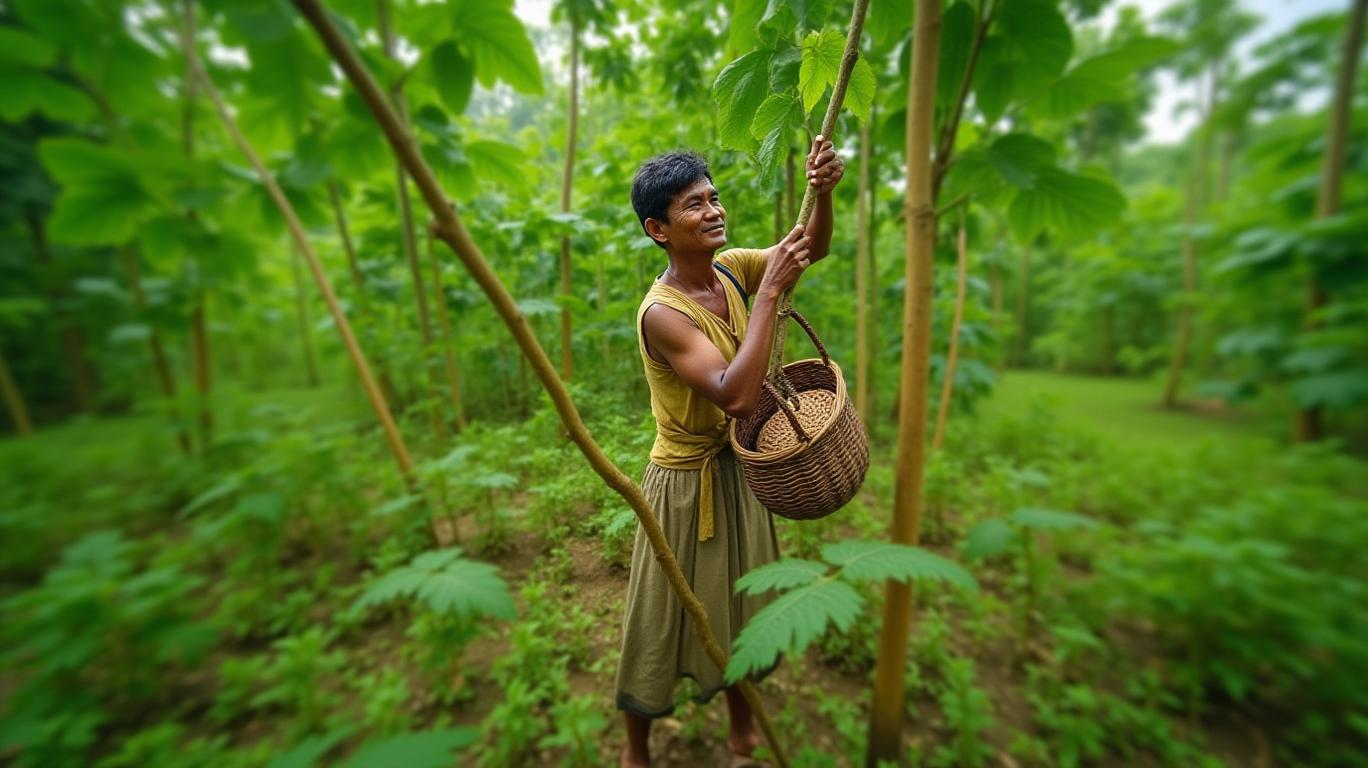
The cocoa tree, a high-maintenance crop that thrives only near the equator, requires a delicate balance of temperature, humidity, and sunlight. It takes five years for a tree to start producing the seeds that are processed into cocoa, making it a long-term investment for farmers. However, climate change is disrupting this delicate balance, with hotter weather hurting yields and longer rainy seasons triggering the spread of fungus and deadly pests. The result is a vicious cycle: farmers switch to other crops, further reducing cocoa supplies and pushing prices higher. In 2024, prices nearly tripled, reaching about US$12,000 per ton, driving up chocolate costs and leading some chocolate makers to try growing cocoa in laboratories.
Indonesia, the third-largest producer of cocoa in the world, is at the forefront of this battle. Farmers like Tari Santoso, who works with Indonesian chocolate maker Krakakoa, are adopting innovative agricultural practices to enhance crop resilience and productivity. Santoso has started using practices that help his cocoa trees flourish, regularly pruning and grafting new branches onto older trees to promote growth and prevent the spread of disease. He is using organic fertilizer and has adopted agroforestry techniques, integrating other crops and trees such as bananas, dragon fruit, coffee, and pepper, into his farm to foster a healthier ecosystem and invest in other income sources.
Krakakoa has trained over 1,000 cocoa farmers in Indonesia, providing financial support and helping farmers form cooperatives that offer low-interest loans. This partnership has enabled farmers to access better resources and improve their farming techniques, leading to increased yields and financial stability. For example, the cooperative provides low-interest loans to farmers, with interest paid back into the cooperative rather than to banks outside of the community. This financial support has been crucial for farmers who need bigger loans from government-owned banks, as the guaranteed buyer agreements can provide the collateral needed to get loans approved.
The measurable outcomes of these partnerships are evident. The average cocoa yield for farmers in the Cacau+ program in Brazil increased from 340 kilograms per hectare (kg/ha) to 640 kg/ha at the end of the second year, with the goal of reaching 1,200 kg/ha by the end of the four-year cycle. This significant improvement in yield has led to well-being and prosperity for cocoa producers and their families.
However, the challenges remain. Fewer people see cocoa farming as a lucrative business and instead are planting other crops such as palm oil. And many small-scale farmers still cannot get loans. Rajendra Aryal, the FAO’s country director for Indonesia, hopes that continued collaboration between farmers and other stakeholders could make cocoa farming more attractive again. He stated, “If we can look at the major issues these (farmers) are facing ... I think this sector could be, again, very attractive to the farmers.”
The collaboration between Indonesia’s National ResearchNRC-- and Innovation Agency and the local division of international chocolate maker Mars has resulted in the release of a new variant of cocoa that produces more pods per tree. This innovation directly addresses the challenge of reduced yields due to climate change by increasing the productivity of cocoa trees.
The financial and logistical support provided by businesses and NGOs have significantly impacted the livelihoods and economic stability of Indonesian cocoa farmers. For instance, farmer Tari Santoso, who works with Indonesian chocolate maker Krakakoa, has seen substantial improvements in his cocoa production. Santoso stated, “It wasn’t very successful before we met Krakakoa. But then, we received training ... things are much better.” Krakakoa has trained over 1,000 cocoa farmers in Indonesia, providing them with financial support and training on better growing practices. This includes pruning, grafting new branches onto older trees, using organic fertilizer, and adopting agroforestry techniques. These practices have helped farmers like Santoso to form cooperatives that provide low-interest loans, further stabilizing their economic situation.
The partnership between farmers and businesses has enabled farmers to access bigger loans from government-owned banks. Armin Hari, a communications manager at the Cocoa Sustainability Partnership, explained that guaranteed buyer agreements can provide the collateral needed to get loans approved. This financial support has been crucial for farmers who need larger loans to invest in their farms and improve their livelihoods.
Furthermore, the collaboration between Indonesia’s National Research and Innovation Agency and Mars has led to the release of a new variant of cocoa that produces more pods per tree. This innovation directly benefits farmers by increasing their yields and, consequently, their income. Rajendra Aryal, the FAO’s country director for Indonesia, highlighted that continued collaboration between farmers and other stakeholders could make cocoa farming more attractive again, despite the challenges. He stated, “If we can look at the major issues these (farmers) are facing ... I think this sector could be, again, very attractive to the farmers.” This indicates that the support from businesses and NGOs is not only addressing immediate financial needs but also working towards long-term sustainability and attractiveness of cocoa farming.
In conclusion, the battle against climate change in Indonesia's cocoa sector is far from over. However, the collaborative efforts between farmers and businesses offer a beacon of hope. By adopting sustainable agricultural practices, enhancing crop resilience, and providing financial and logistical support, these partnerships are not only mitigating the impacts of climate change but also ensuring the long-term sustainability of cocoa farming in Indonesia. The world must choose: cooperation or collapse.



Divulgación editorial y transparencia de la IA: Ainvest News utiliza tecnología avanzada de Modelos de Lenguaje Largo (LLM) para sintetizar y analizar datos de mercado en tiempo real. Para garantizar los más altos estándares de integridad, cada artículo se somete a un riguroso proceso de verificación con participación humana.
Mientras la IA asiste en el procesamiento de datos y la redacción inicial, un miembro editorial profesional de Ainvest revisa, verifica y aprueba de forma independiente todo el contenido para garantizar su precisión y cumplimiento con los estándares editoriales de Ainvest Fintech Inc. Esta supervisión humana está diseñada para mitigar las alucinaciones de la IA y garantizar el contexto financiero.
Advertencia sobre inversiones: Este contenido se proporciona únicamente con fines informativos y no constituye asesoramiento profesional de inversión, legal o financiero. Los mercados conllevan riesgos inherentes. Se recomienda a los usuarios que realicen una investigación independiente o consulten a un asesor financiero certificado antes de tomar cualquier decisión. Ainvest Fintech Inc. se exime de toda responsabilidad por las acciones tomadas con base en esta información. ¿Encontró un error? Reportar un problema


SOBRE NOSOTROS
Nuestra historiaAutores de noticiasBase de conocimientosPolítica de privacidadTérmino de usoDescargo de responsabilidad de corretaje de tercerosTérminos de uso de AIMEDivulgaciones de riesgos de AInvest AICarrerasCONTÁCTENOS
Email: support@ainvest.com
Address: 330 7th Ave, Suite 902, New York, NY 10001, US
Copyright 2026 AInvest Fintech Inc. All rights reserved.


Comentarios
Aún no hay comentarios