
Inditex's Q2 Sales Disappointment: A Cautionary Signal for Fast-Fashion Exposure Amid Shifting Consumer Behavior and FX Headwinds
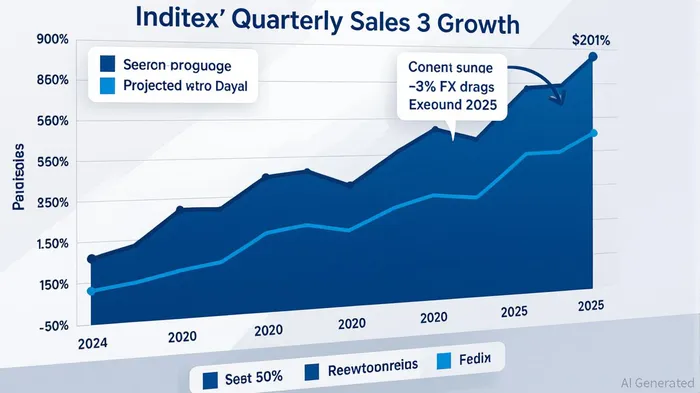
The recent performance of Inditex, the Spanish fast-fashion giant behind Zara, has raised critical questions about the sector's long-term resilience. While the company reported a 6% sales increase in early Q2 2025 compared to the same period in 2024, this growth rate represents a sharp deceleration from the 12% expansion recorded in the prior year and fell short of analysts' 7.3% expectations [4]. This underperformance, coupled with persistent foreign exchange (FX) headwinds and shifting consumer behavior, underscores growing risks for investors exposed to fast fashion.
FX Volatility and Trade Uncertainty: A Double-Edged Sword
Inditex's Q2 results were clouded by the deteriorating impact of currency fluctuations. The company now forecasts a -3 percentage point drag on annual sales growth due to the depreciation of the U.S. dollar and Mexican peso against the euro—a significant revision from the previously anticipated -1 percentage point impact [2]. This adjustment reflects broader macroeconomic turbulence, including the erratic tariff policies of U.S. President Donald Trump, which have dampened consumer confidence in key markets [2].
Barclays analysts have noted that Inditex's results “fail to dispel concerns on slowing growth,” emphasizing that FX volatility and trade tensions are not isolated challenges but systemic pressures reshaping the retail landscape [3]. While Inditex has mitigated some risks through a diversified supplier base and nearshoring strategies, these measures cannot fully offset the drag from a weaker euro, which reduces international earnings when converted into the company's reporting currency [4].
Consumer Behavior: The Paradox of Sustainability and Affordability
Beyond FX pressures, the fast-fashion sector faces a deeper existential challenge: the tension between sustainability-driven consumer values and the model's inherent reliance on rapid, low-cost production. A 2025 study by SHU revealed that 94% of Gen Z respondents support sustainable fashion, yet 17% continue to shop at fast-fashion retailers weekly, and 62% do so monthly [1]. This paradox highlights the sector's enduring appeal—affordable, trend-driven clothing—clashing with rising ethical expectations.
Meanwhile, higher-income consumers, who generate 76% more textile waste than lower-income groups, are increasingly scrutinized for their environmental footprint [1]. Online shopping, now dominant in markets like China and the U.S., further complicates the landscape. Over 90% of consumers in these regions shopped at online-only retailers in the past month, with platforms like Shein and AmazonAMZN-- leveraging speed and convenience to outpace traditional fast-fashion players [3].
The rise of second-hand markets and upcycling movements adds another layer of risk. Platforms such as ThredUpTDUP-- and Vinted are gaining traction as consumers seek alternatives to overconsumption, challenging the fast-fashion model's reliance on constant new inventory [1]. For brands like Inditex, which reported a 1.5% year-on-year sales increase in Q1 2025 to €8.274 billion, these trends signal a potential erosion of market share unless they pivot toward circular business models [4].
Regulatory Pressures: Compliance as a Cost Center
Emerging regulations in the U.S. and Europe are compounding these challenges. California's SB707 and AB405, for instance, mandate extended producer responsibility (EPR) programs and greenhouse gas disclosures, requiring brands to fund take-back initiatives and meet recycling targets [4]. Similar laws in New York and Washington impose financial and operational burdens, pushing companies to invest in technologies for traceability and waste reduction [6].
These regulatory shifts are not merely compliance hurdles but fundamental reconfigurations of cost structures. As one industry expert notes, “The financial implications extend beyond immediate expenses; brands must now future-proof their operations against resource scarcity and climate risks” [6]. For fast-fashion firms, which have historically prioritized speed and scale over sustainability, such transitions demand significant capital and strategic realignment.
Investment Risks: A Sector at a Crossroads
The confluence of FX volatility, consumer skepticism, and regulatory scrutiny raises critical questions for investors. While Inditex's Q2 performance—bolstered by well-received SS25 collections—demonstrates its ability to adapt to short-term challenges [4], the long-term outlook remains uncertain. The company's reliance on a business model that thrives on rapid production cycles and low margins is increasingly at odds with a world demanding transparency, sustainability, and resilience.
William Woods of Bernstein acknowledges that “mid-single-digit growth is relatively solid in the current environment,” but this optimism is tempered by the reality that even robust growth may not offset structural risks [5]. For investors, the key question is whether fast-fashion brands can evolve from disruptors to stewards of sustainable consumption—or whether they will be outpaced by competitors embracing circularity and digital innovation.
Conclusion
Inditex's Q2 sales disappointment is more than a quarterly blip—it is a harbinger of broader forces reshaping the fast-fashion sector. As FX headwinds intensify, consumer preferences evolve, and regulations tighten, the sector's traditional drivers of growth are under siege. For investors, the lesson is clear: exposure to fast fashion must be evaluated through a lens that balances short-term agility with long-term sustainability. The companies that survive—and thrive—will be those that can reconcile speed with responsibility, affordability with accountability, and growth with environmental stewardship.





Comentarios
Aún no hay comentarios