
Income Generation in a Low-Yield Environment: Evaluating the BMO Mid-Term US IG Corporate Bond Index ETF as a Strategic Fixed-Income Play
In an era where central banks have normalized historically low interest rates, the search for income-generating assets has become a defining challenge for investors. The BMO Mid-Term US IG Corporate Bond Index ETF (ZIC) emerges as a compelling candidate in this landscape, offering a 3.80% forward dividend yield while navigating the delicate balance between risk and return. This analysis examines ZIC's recent $0.045 per share dividend declaration, its alignment with broader market dynamics, and its strategic positioning in a low-yield environment.
A Yield Premium in a Treasuries-Driven World
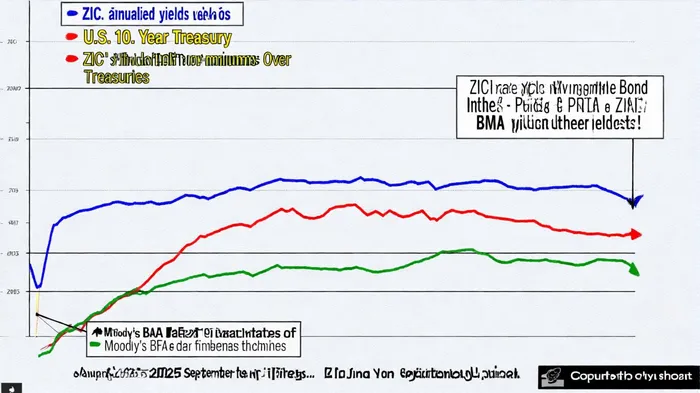
The U.S. 10-Year Treasury yield, a benchmark for risk-free returns, stood at 4.08% as of September 2025 [1]. In contrast, the BMO Mid-Term US IG Corporate Bond Index ETF (ZIC) delivers a forward yield of 3.80%, reflecting the additional compensation investors demand for holding corporate debt over government bonds [2]. This yield differential, though modest, is significant in a market where even high-quality corporate bonds trade at historically tight credit spreads. For instance, the Moody's Seasoned Baa Corporate Bond Yield, a proxy for riskier investment-grade debt, reached 6.05% in September 2025 [3]. ZIC's focus on mid-term (5–10-year) investment-grade corporate bonds positions it to capture a middle ground: higher yields than Treasuries while avoiding the volatility and default risks associated with longer-duration or lower-grade credits.
The ETF's recent dividend of $0.045 per share, payable on October 2, 2025, underscores its reliability as an income source. With a monthly payout schedule and a trailing twelve-month yield of 3.83% [4], ZIC provides a predictable cash flow stream, a critical attribute in an environment where equity dividends and short-term instruments offer less.
Risk-Adjusted Returns in a Tight Credit Spread Regime
Corporate credit spreads—the difference between corporate bond yields and Treasuries—have narrowed to 0.77%, a level not seen since 1998 [5]. This compression reflects robust corporate fundamentals and investor confidence in the Federal Reserve's rate-cutting trajectory. For ZIC, which tracks the Bloomberg U.S. Investment Grade 5–10 Year Corporate Bond Index, this environment amplifies its appeal. By focusing on bonds with intermediate maturities and high credit quality (typically BBB or higher), the ETF minimizes exposure to interest rate volatility and default risk while maintaining a yield premium over Treasuries.
However, tight credit spreads also imply limited cushion for unexpected shocks. If economic uncertainty rises or credit conditions deteriorate, spreads could widen, reducing the ETF's yield and potentially its price. ZIC's moderate duration—implied by its 5–10-year maturity focus—offers some insulation against rate hikes but exposes it to modest price fluctuations in a rising rate environment. Investors must weigh this trade-off against the current low-yield backdrop, where even small yield advantages are valuable.
Strategic Positioning and Competitive Advantages
ZIC's 0.28% expense ratio [6] positions it as a cost-effective alternative to actively managed fixed-income funds, which often charge higher fees for similar outcomes. Its full replication of the Bloomberg index ensures broad diversification across sectors and issuers, reducing idiosyncratic risk. While specific sector allocations for September 2025 are not disclosed, the ETF's mandate suggests a balanced exposure to industrials, financials, and utilities—sectors historically resilient in low-growth environments.
Comparatively, U.S. Treasury-focused ETFs like the BMO Mid-Term U.S. Treasury Bond Index ETF (ZTM) offer yields ranging from 1.46% to 4.62% [7], significantly lower than ZIC's 3.80%. This yield gap highlights ZIC's competitive edge for income-focused investors willing to accept a modest increase in credit risk for higher returns.
Visualizing the Yield Landscape
Conclusion: A Prudent Bet in a Yield-Starved World
The BMO Mid-Term US IG Corporate Bond Index ETF exemplifies the strategic value of investment-grade corporate bonds in a low-yield environment. Its 3.80% yield, combined with a moderate risk profile and low fees, makes it an attractive option for investors seeking income without excessive credit or duration risk. While tight credit spreads and potential rate volatility pose challenges, ZIC's alignment with a stable, high-quality corporate bond index positions it to deliver consistent returns. In a world where “risk-free” yields are anything but, ZIC offers a disciplined path to income generation.







Comentarios
Aún no hay comentarios