
Income-Generating ETFs in a Low-Yield World: The Case of LTTI
The Yield Challenge and LTTI's Strategy
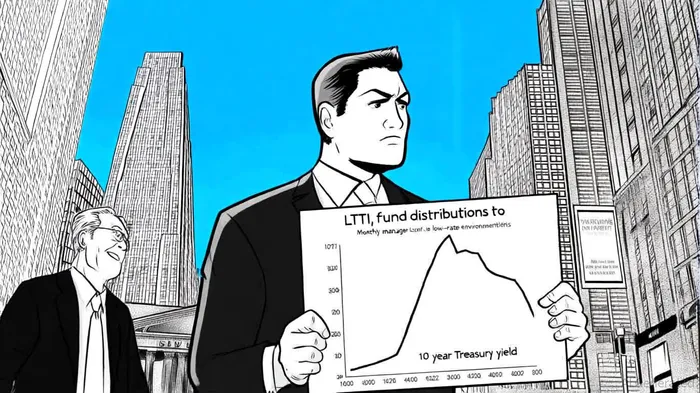
The global yield landscape remains subdued, with 10-year U.S. Treasury yields hovering near 3.5% as of late 2025. For investors seeking income, this environment demands creative strategies. LTTILTTI-- addresses this by combining exposure to long-duration U.S. Treasuries with an options overlay. Specifically, the fund writes (sells) weekly FLEX call options on the iShares 20+ Year Treasury Bond ETF (TLT), targeting an annual income level approximately 5% higher than TLT's yield, according to StockAnalysis. This approach generates premium income, which is then distributed to shareholders, enhancing returns, according to DividendInvestor.
The recent October 2025 distribution of $0.143 per share-equating to an 8.76% annualized yield based on the July 31, 2025, net asset value (NAV)-exemplifies this strategy's effectiveness, as shown in FT Portfolios. While the 30-day SEC yield remains negative at -0.58%, this metric reflects a standardized calculation of net investment income over 30 days, whereas the distribution rate annualizes the most recent payout, per FT Portfolios dividend history. The disparity underscores the importance of understanding how LTTI's options strategy generates returns that diverge from traditional yield metrics.
Structural Mechanics and Risk Considerations
LTTI's portfolio is weighted toward 20+ year U.S. Treasuries, with a weighted average effective duration of 16.22 years and a maturity of 25.85 years (per the FT Portfolios summary). This long-duration exposure amplifies sensitivity to interest rate movements, a double-edged sword in a low-yield environment. When rates fall, bond prices rise, potentially boosting capital appreciation. Conversely, rising rates could erode principal value.
The options strategy further complicates risk profiles. By selling call options, LTTI forgoes participation in significant upward movements in TLT's price, capping upside potential. However, this trade-off is intentional: the fund prioritizes consistent premium income over capital gains. For instance, the October 2025 distribution was supported by a call-writing strategy that generated $0.143 per share, even as the underlying Treasury holdings faced modest price pressures, according to BestETF.
Performance and Cost Efficiency
Since its inception in February 2025, LTTI has demonstrated resilience. As of August 22, 2025, its net asset value (NAV) appreciated 0.68%, while its market price rose 0.84%, reflecting a slight premium of 0.10% (per the FT Portfolios summary). The fund's 0.65% total expense ratio is competitive for its niche, particularly given the complexity of its options strategies.
However, investors must weigh these benefits against potential drawbacks. The fund's non-diversified status means it can concentrate holdings in specific Treasuries or options, increasing volatility. Additionally, distributions may include returns of capital or realized gains, which could reduce future NAVs (per DividendInvestor).
A Compelling Case for Yield-Seekers?
For investors prioritizing income over capital preservation, LTTI offers a unique value proposition. Its October 2025 distribution of $0.143 per share highlights its ability to deliver consistent payouts, even as broader yields stagnate. The fund's strategy is particularly effective in stable or slightly bearish rate environments, where the premium from sold options offsets bond price declines.
Yet, this approach is not without caveats. In a scenario of rapid rate increases, LTTI's long-duration Treasuries could suffer meaningful losses, and its options strategy might fail to offset these declines. Similarly, in a sharp market downturn, the fund's lack of downside protection-unlike traditional hedged strategies-could amplify losses (per BestETF).
Conclusion
The FT Vest 20+ Year Treasury & Target Income ETF represents a sophisticated response to the challenges of a low-yield world. By combining long-duration Treasuries with a disciplined options strategy, LTTI generates elevated distributions that outpace conventional fixed-income alternatives. The October 2025 payout of $0.143 per share underscores its operational effectiveness, though investors must remain cognizant of its structural risks. For those willing to accept duration risk and market volatility, LTTI offers a compelling, if imperfect, solution to the income conundrum.





Comentarios
Aún no hay comentarios