
The Impact of Political Rhetoric on Pharmaceutical Sector Volatility
The pharmaceutical sector has long been a barometer of public trust and regulatory scrutiny. Yet recent events—particularly President Donald Trump's controversial claims linking acetaminophen (Tylenol) to autism risk during pregnancy—have underscored how political rhetoric can amplify sector volatility, disrupt market dynamics, and erode confidence in scientific consensus. This analysis examines the interplay between political messaging, regulatory shifts, and investor behavior, using the Tylenol controversy as a case study to assess broader implications for healthcare stocks.
The Tylenol Controversy: A Case of Mismatched Messaging
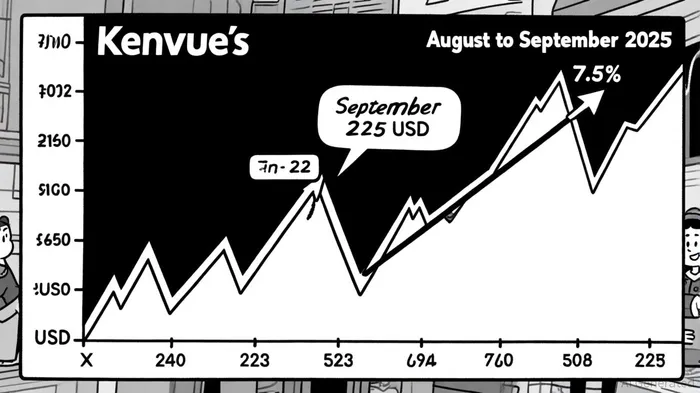
In September 2025, the Trump administration asserted a potential link between acetaminophen use during pregnancy and autism, despite robust scientific evidence refuting causality. This claim, amplified by Health and Human Services Secretary Robert F. Kennedy Jr., triggered immediate market reactions. KenvueKVUE--, the parent company of Tylenol, saw its stock plummet by 7.5% on the day of the announcement, marking a record low[1]. Over the preceding six months, the stock had already lost 25% of its value amid repeated allegations about acetaminophen and autism[2].
The administration's stance contrasts sharply with the medical community. The American College of Obstetricians and Gynecologists (ACOG) and the Society for Maternal-Fetal Medicine have emphasized that acetaminophen remains the safest option for managing pain and fever during pregnancy, with no conclusive evidence of developmental harm[3]. A 2024 NIH-funded study of 2.5 million children further confirmed no causal relationship between prenatal acetaminophen use and autism when confounding factors were controlled[4].
Regulatory Uncertainty and Market Reactions
The FDA's response to the controversy has been cautious. While the agency announced plans to update acetaminophen labeling to reflect the “possible association” with autism, it explicitly stated that no causal link had been proven[5]. This ambiguity has left investors in a precarious position. Kenvue's stock rebounded 6% in European trading the following day, but analysts caution that long-term impacts on sales remain uncertain, given the lack of new scientific evidence and prior judicial dismissals of similar claims[6].
Broader regulatory shifts under the Trump administration have compounded sector volatility. Tariffs on imported drugs and active pharmaceutical ingredients (APIs), ranging from 10% to 200%, threaten to disrupt supply chains and increase costs for companies reliant on international manufacturing, such as Novartis and Roche[7]. Meanwhile, the administration's crackdown on misleading pharmaceutical advertising—targeting direct-to-consumer (DTC) campaigns and social media influencers—aims to rebuild public trust but risks further destabilizing an industry already grappling with declining consumer confidence[8].
Public Trust and the Erosion of Scientific Authority
Public trust in pharmaceutical companies has plummeted in recent years, with only 31% of Americans expressing confidence in the sector as of 2025, down from 51% in 2015[9]. The Tylenol controversy has exacerbated this crisis. By promoting unproven claims and alternative treatments like leucovorin—a form of folic acid—without sufficient evidence, the administration has fueled skepticism about the industry's commitment to transparency[10].
This erosion of trust has tangible economic consequences. A 2023 Kantar Media analysis found that only 33% of Americans find pharma ads believable, compared to 62% who trust peer recommendations[11]. The administration's September 2025 crackdown on DTC advertising, including the closure of the “adequate provision” loophole, aims to address this gap but may also reduce the sector's ability to engage consumers directly[12].
Broader Implications for Healthcare Stocks
The Tylenol episode highlights a critical vulnerability in the pharmaceutical sector: its susceptibility to political narratives that prioritize ideology over evidence. For investors, this underscores the importance of monitoring regulatory shifts and public sentiment alongside traditional financial metrics. Key healthcare stocks, such as Kenvue and Johnson & Johnson, face dual pressures—market volatility from political claims and reputational risks from regulatory scrutiny.
Moreover, the administration's emphasis on domestic manufacturing and drug pricing reforms, including the revival of the Most Favored Nation (MFN) pricing policy, could reshape the sector's competitive landscape. While these measures aim to reduce costs, they risk stifling innovation by compressing profit margins for companies investing in R&D[13].
Conclusion: Navigating the New Normal
The pharmaceutical sector stands at a crossroads. Political rhetoric, when divorced from scientific consensus, can create artificial volatility and undermine public trust. For investors, the path forward requires a nuanced understanding of regulatory trends, scientific developments, and the political economy of healthcare. As the Trump administration's policies continue to evolve, the sector's resilience will depend on its ability to balance innovation with transparency—and to resist the allure of politicized narratives.





Comentarios
Aún no hay comentarios