
The Impact of U.S. Critical Minerals Tariff Expansion on Global Metal Markets
The U.S. critical minerals tariff expansion of 2025 has reshaped global metal markets, creating both turbulence and opportunity. By designating silver as a critical mineral and imposing Section 232 tariffs on palladium and lead-related imports, the Trump administration has amplified supply chain vulnerabilities while distorting pricing mechanisms. For investors, this environment demands a nuanced approach to underpriced but high-risk metals, where geopolitical tensions, industrial demand, and policy uncertainty intersect.
Silver: A Strategic Commodity in Turbulent Times
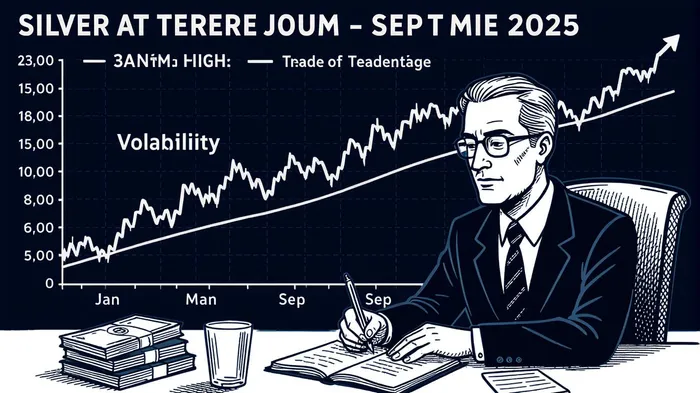
Silver’s recent surge to a 13-year high of $38.17 per ounce in July 2025 reflects its dual role as an industrial and monetary asset. According to a report by the U.S. Geological Survey, silver’s critical mineral status—granted on August 26, 2025—has heightened fears of supply disruptions, with premiums for physical silver coins (e.g., Silver Eagles) reaching 19-25% above spot prices [1]. This disconnect between spot and physical markets underscores underpricing of policy risks, particularly as Section 232 tariffs loom.
Investors are increasingly turning to ETFs like the SprottSETM-- Critical Materials ETF (SETM), which tracks a basket of critical minerals, including silver. By September 2025, SETM’s net asset value (NAV) had reached $21.84, with a 1.68% daily increase, signaling growing institutional interest [3]. However, the gold-silver ratio—a key indicator of relative value—peaked at 90 in July 2025, far above its historical average of 60, suggesting silver remains undervalued relative to gold [2]. This anomaly presents a compelling case for long-term investors willing to tolerate short-term volatility.
Palladium: Volatility Amid Dual Policy Threats
Palladium’s price trajectory in 2025 has been marked by sharp swings, driven by its critical role in automotive emissions control and hydrogen technologies. In July, the metal hit a year-to-date high of $1,288 per troy ounce before retreating to $1,100 by late August [4]. This volatility stems from dual policy risks: anti-dumping investigations and potential Section 232 tariffs. Financial analysts project tariffs could reach 50%, further straining supply chains [1].
The Sprott Junior Copper Miners ETF (COPJ) offers indirect exposure to palladium through its focus on junior miners, though its NAV of $27.79 as of September 2025 reflects cautious optimism [6]. Meanwhile, geopolitical tensions—particularly Russia’s constrained exports—add another layer of uncertainty. For investors, the key is to balance exposure to palladium’s industrial demand with hedging against policy-driven price shocks.
Lead: The Overlooked Victim of Trade Policy
Lead, though not explicitly listed as a critical mineral, has been indirectly impacted by the Trump administration’s 25% tariffs on Canadian and Mexican aluminum and steel, which have increased costs for downstream industries [2]. The broader economic environment—marked by a 15.8% average effective U.S. tariff rate in August 2025—has also influenced lead’s price dynamics [1].
While lead’s industrial applications (e.g., batteries, construction) remain robust, its market is less insulated from trade policy shifts. Investors seeking exposure might consider diversified ETFs like the iShares MSCIMSCI-- USA Min Vol Factor ETF (USMV), which has shown resilience amid tariff-driven volatility [1]. However, lead’s lack of direct inclusion in critical minerals lists means it remains an overlooked asset in a high-risk, high-reward landscape.
Strategic Positioning: Navigating the New Normal
The U.S. tariff strategy has accelerated a commodity supercycle driven by critical materials, with rare earths, copper, and lithium gaining strategic importance [3]. For silver, palladium, and lead, the path forward hinges on three factors:
1. Policy Uncertainty: Legal challenges to Section 232 tariffs and potential court rulings could alter the policy landscape [1].
2. Industrial Demand: Solar PV, electronics, and hydrogen technologies will drive long-term demand for silver and palladium [5].
3. Geopolitical Realignment: U.S.-Canada interdependence and China’s dominance in refining processes will shape supply chain resilience [2].
Investors must adopt a dynamic approach, leveraging physical bullion for short-term hedges while allocating to ETFs and mining equities for growth. The Sprott Critical Materials ETF (SETM) and gold-backed ETFs, for instance, offer diversified exposure to critical minerals and safe-haven assets [5].
Conclusion
The U.S. critical minerals tariff expansion has created a fragmented yet fertile ground for strategic investment. Silver, palladium, and lead—each underpriced relative to their strategic value—present opportunities for those willing to navigate policy risks and industrial demand shifts. As the global economy grapples with deglobalization and supply chain reconfiguration, the metals market will remain a barometer of geopolitical and economic resilience.
Source:
[1] US Tariffs on Palladium and Silver: Market Impact Analysis [https://discoveryalert.com.au/news/us-tariffs-2025-precious-metal-pricing-impact/]
[2] The Impact of Trump Tariffs on US-Canada Minerals and ..., [https://www.energypolicy.columbia.edu/the-impact-of-trump-tariffs-on-us-canada-minerals-and-metals-trade/]
[3] SETM Sprott Critical Materials ETF [https://sprottetfs.com/setm-sprott-critical-materials-etf/]
[4] Precious Metals Market Volatility: Palladium, Platinum ... [https://www.linkedin.com/posts/indexbox_precious-metals-market-update-volatility-activity-7366031799338143745--3QR]
[5] Silver and platinum group metals - Time to shine? [https://www.bakersteelcap.com/2025/07/18/silver-and-platinum-group-metals-time-to-shine/]
[6] COPJ Sprott Junior Copper Miners ETF [https://www.sprottusa.com/etfs-update/copj-sprott-junior-copper-miners-etf/]





Comentarios
Aún no hay comentarios