
The Impact of the 2026 Medicare Advantage Rule Changes on Cosmetic and Healthcare Sectors
The 2026 Medicare Advantage (MA) rule changes, finalized by the Centers for Medicare & Medicaid Services (CMS), represent a significant recalibration of coverage priorities and financial obligations for retirees. These adjustments, while aimed at curbing non-essential expenditures, have profound implications for both the cosmetic and healthcare sectors-and, critically, for the resilience of retirement portfolios. By restricting access to certain cosmetic procedures and redefining supplemental benefits, the rules compel retirees to rethink their financial strategies, with Health Savings Accounts (HSAs) and alternative investments emerging as key tools for maintaining stability.
The Cosmetic Sector: A Shift in Demand and Coverage
The most immediate and visible impact of the 2026 rule lies in the exclusion of cosmetic procedures from MA plans. CMS has explicitly prohibited coverage for facelifts, treatments for facial lines, collagen and fat atrophy, and other procedures deemed purely aesthetic according to CMS. This decision aligns with broader efforts to narrow the scope of the Special Supplemental Benefits for the Chronically Ill (SSBCI) category, which now excludes services lacking a "reasonable expectation of improving or maintaining health or overall function" as defined in the rules.
For the cosmetic sector, this means a potential decline in demand from Medicare beneficiaries, particularly among the 4 million seniors who previously accessed these services through MA plans according to analysis. However, the exclusion of such procedures from MA coverage does not eliminate demand; it merely shifts the financial burden to individuals. Retirees now face the prospect of paying out-of-pocket for treatments they once expected to be partially or fully covered. This creates a ripple effect: while MA insurers may see reduced costs in this segment, private insurers and Medigap providers could experience increased demand as retirees seek alternative coverage according to AARP.
The Healthcare Sector: Cost Containment and Market Realignment
The 2026 rule also introduces critical changes to prescription drug coverage and cost-sharing, which have broader implications for the healthcare sector. The elimination of deductibles and cost-sharing for insulin and vaccines, for instance, is expected to bolster access to preventive care and chronic disease management as reported in the Federal Register. These provisions, while beneficial for public health, may pressure pharmaceutical companies to adjust pricing strategies in light of CMS's drug price negotiation mandates. 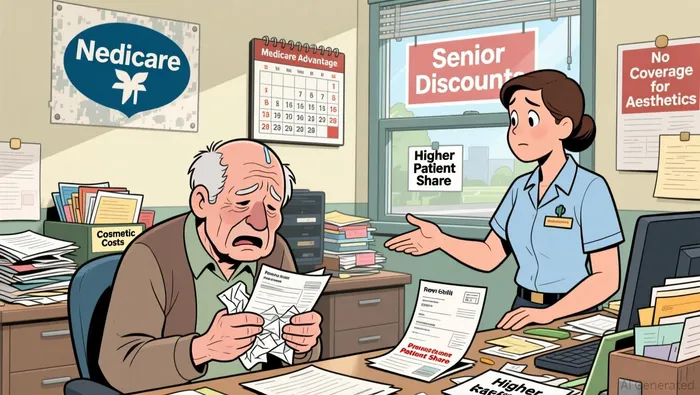
Simultaneously, the reduction in the number of available MA plans-from 34 to 32 on average-signals a trend toward consolidation among insurers. Major players like UnitedHealthcare and HumanaHUM-- are exiting more counties than they are entering, a move that could limit supplemental benefits and reshape the competitive landscape according to KFF data. This consolidation may also influence the availability of non-traditional services, such as telehealth and remote care, which were previously offered as differentiators by some MA plans as noted in industry analysis.
Portfolio Resilience: Retirees' Adaptive Strategies
The 2026 rule changes compel retirees to adopt more proactive financial strategies to mitigate the risks of uncovered healthcare and cosmetic expenses. One prominent response has been the increased utilization of HSAs. With the expansion of HSA eligibility to include bronze and catastrophic ACA plans, retirees now have greater flexibility to allocate funds for both medical and non-covered expenses as detailed in a recent report. HSAs offer tax advantages and long-term growth potential, making them a cornerstone of portfolio resilience in an era of rising out-of-pocket costs.
Moreover, retirees are diversifying into alternative investments to hedge against healthcare inflation. The Trump Administration's August 2025 executive order, which encourages access to private equity, real estate, and commodities in retirement accounts, has accelerated this trend according to Certuity. These assets, while historically reserved for institutional investors, now provide retirees with tools to combat the erosion of purchasing power. For example, real estate and infrastructure investments can generate stable cash flows, while commodities like gold offer inflationary protection-a critical consideration given the projected rise in Medicare Part B premiums and long-term care costs as analyzed by Manning & Napier.
The Role of Medigap and Private Insurance
For retirees seeking coverage for cosmetic procedures or other non-essential services, Medigap and private insurance have become increasingly relevant. While Medigap plans typically do not cover cosmetic treatments, some insurers now offer optional riders for an additional premium as AARP reports. Similarly, private insurance providers are tailoring products to address gaps left by MA plans, though these solutions often come with higher costs and complex underwriting criteria.
This shift underscores a broader tension: retirees must balance the cost of supplemental coverage against the potential financial strain of uncovered expenses. For those with limited assets, the decision to purchase Medigap or private insurance may require trade-offs with other retirement priorities, such as housing or leisure.
Conclusion: A New Era of Financial Prudence
The 2026 Medicare Advantage rule changes mark a pivotal moment in the intersection of healthcare policy and retirement planning. By restricting access to cosmetic procedures and redefining supplemental benefits, CMS has forced retirees to confront the realities of an aging population and rising healthcare costs. Yet, these challenges also present opportunities for innovation-both in financial strategies and in the healthcare sector's response to evolving demand.
Retirees who embrace HSAs, alternative investments, and strategic use of Medigap or private insurance will be better positioned to navigate this new landscape. For investors, the implications are clear: the healthcare and cosmetic sectors must adapt to a world where coverage is increasingly tied to medical necessity, while the financial services industry will play a critical role in enabling portfolio resilience.





Comentarios
Aún no hay comentarios