
Identifying Market Tops in Real-Time: Contrarian Indicators and the Behavioral Edge
In the ever-shifting landscape of financial markets, the identification of market tops remains one of the most elusive yet critical challenges for investors. The past few years, marked by volatile swings and behavioral extremes, have underscored the value of contrarian indicators and behavioral finance metrics in navigating these uncertainties. By dissecting the interplay of sentiment extremes, earnings momentum shifts, and technical divergences, investors can construct a robust framework for defensive positioning or tactical entry points.
Contrarian Indicators and Behavioral Biases: The Psychology of Extremes
Contrarian indicators thrive on the recognition of psychological extremes. When investor sentiment becomes overwhelmingly bullish or bearish, markets often overcorrect, creating opportunities for those who dare to act contrary to the crowd. A Pacific-Basin study from 2025 highlights how informed trading-particularly through contrarian large orders-can distort the effectiveness of technical indicators, suggesting that market makers may manipulate signals to reduce transaction costs. This underscores the need to view technical tools through a behavioral lens, where herd behavior and cognitive biases amplify market inefficiencies.
For instance, during the 2023–2025 period, the S&P 500 experienced three consecutive quarters of declining earnings, signaling broader economic weakness, as noted in a Forbes column. Yet, retail investor optimism, driven by social media-driven hype and algorithmic trading, prolonged asset prices beyond fundamental justifications. Behavioral finance research, summarized in a 2024 Behavioural Public Policy paper, reveals that psychological factors such as overconfidence and the "Law of Small Numbers"-where investors overreact to limited data-exacerbate these distortions. Contrarian strategies, which capitalize on such overreactions, gain traction when sentiment metrics like the put/call ratio or investor positioning surveys hit extreme levels.
Technical Divergences: Early Warning Signs of Structural Weakness
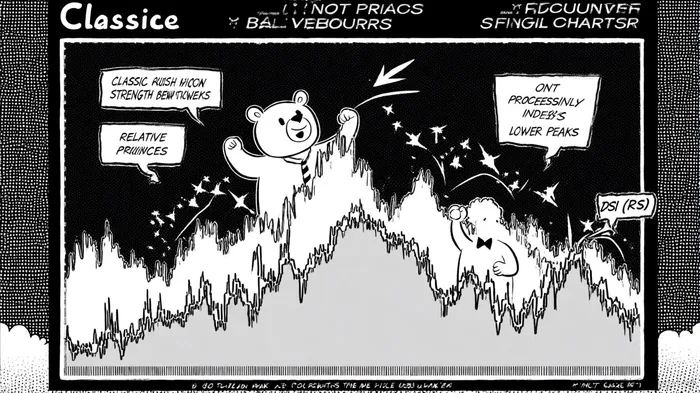
Technical divergences between price action and momentum indicators often serve as canaries in the coal mine. In late 2018, the NYSE Composite hit new highs while the NYSE All Advance/Decline Line formed lower highs, signaling deteriorating market participation, a point made in a Forbes analysis. Similarly, in early 2021, the Nasdaq Composite's narrow leadership-where only a fraction of stocks participated in the rally-foreshadowed a market peak, an observation the same Forbes analysis also described. These patterns, as John J. Murphy emphasizes in Technical Analysis of the Financial Markets, are most reliable when corroborated across multiple timeframes and indicators.
Recent data from 2025 reveals mixed signals: while the S&P 500's Advance/Decline line has shown divergences, earnings momentum in the tech sector has begun to shift. Firms like NvidiaNVDA-- and Micron Technology, once darlings of the AI boom, now exhibit decelerating revenue growth, whereas companies such as AMDAMD-- and Dell show accelerating trends, as detailed in a Futurum Group report. Such shifts, when paired with overbought RSI readings (above 70) or flattening MACD histograms, suggest a potential inflection point.
Earnings Momentum and Contrarian Timing: A Strategic Nexus
Earnings momentum shifts are pivotal in real-time market top identification. A 2025 Harvard study on retail investor behavior reveals that contrarian trading around earnings announcements-particularly for "loser stocks"-drives post-earnings announcement drift (PEAD) and price momentum. This phenomenon is amplified in firms with high retail trading intensity, where behavioral biases like the "Law of Small Numbers" lead to exaggerated price reactions.
For example, in Q3 2025, tech sector earnings momentum began to realign. While AI infrastructure leaders faced profit-taking, companies pivoting toward hybrid cloud solutions or cost optimization saw accelerating revenue growth, a trend the Futurum Group report also documented. Contrarian indicators, such as declining earnings growth among market leaders, act as leading signals for tops, especially when combined with technical divergences. A 2024 systematic review in The Scientific Temper further notes that behavioral biases-anchoring, confirmation bias, and overreaction-persistently distort investment decisions, making adaptive strategies essential.
Strategic Implications: Defensive Positioning and Tactical Flexibility
The convergence of these signals demands a tactical approach. Defensive positioning-such as increasing cash reserves, hedging with volatility derivatives, or tilting toward value stocks-becomes prudent when contrarian indicators and technical divergences align. For instance, a spike in volume during down days may signal capitulation, while a lack of conviction in rallies (e.g., declining volume on higher prices) hints at a top, an idea explored in a FasterCapital primer.
Moreover, adaptive strategies that blend momentum and contrarian principles can mitigate crash risk. Research in a 2023 ScienceDirect study shows that dynamic momentum strategies-switching to contrarian stances after significant losses-outperform static approaches in volatile markets. This hybrid model, informed by behavioral insights, allows investors to capitalize on overreactions while avoiding the pitfalls of pure momentum trading.
Conclusion: Navigating the Behavioral Labyrinth
The identification of market tops is not a precise science but a nuanced art, requiring the integration of behavioral finance, technical analysis, and earnings dynamics. As the 2023–2025 period demonstrates, contrarian indicators and technical divergences offer a roadmap through the fog of collective irrationality. For investors, the lesson is clear: in markets driven by sentiment extremes, the most profitable strategies are those that dare to swim against the tide.





Comentarios
Aún no hay comentarios