
Huntington Bancshares' Strategic Acquisition of Cadence Bank: A Catalyst for Growth in a Consolidating Banking Sector?
Strategic Rationale and Deal Structure
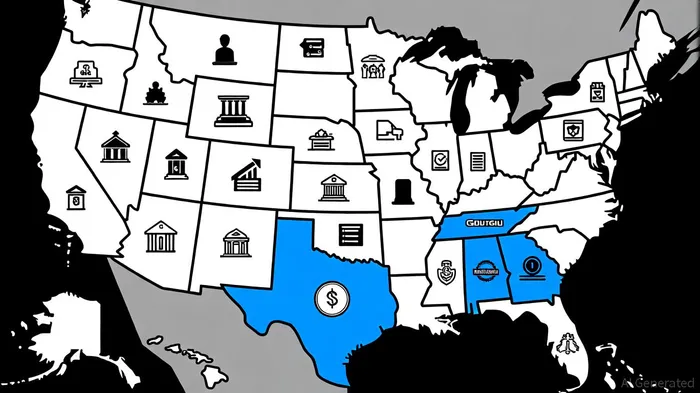
Huntington's acquisition of Cadence Bank is driven by a clear imperative: geographic expansion into high-growth markets. The deal, which values Cadence at 2.475 shares of Huntington stock for every Cadence share, aims to solidify Huntington's presence in Texas, Atlanta, and other Southern hubs, according to a Yahoo Finance report. According to a Stock Titan report, this merger will position Huntington as the largest bank by deposits in Mississippi and among the top 15 regional banks in the U.S. by assets. The strategic logic is straightforward-scale, diversification, and access to markets with robust economic growth.
The all-stock structure is particularly noteworthy. Unlike cash deals, which can strain balance sheets, this approach preserves Huntington's liquidity while aligning incentives for Cadence shareholders. The exchange ratio, fixed at 2.475, ensures Cadence shareholders retain a stake in the combined entity, potentially fostering long-term alignment with value creation, as explained in an exchange ratio primer.
Short-Term Financial Implications
The immediate financial impact of the deal is mixed. Huntington anticipates 10% accretion to earnings per share (EPS) post-merger, a significant boost for shareholders. However, the transaction is expected to be 7% dilutive to tangible book value, with a three-year earn-back period required to offset this dilution. This duality underscores the tension between near-term capital efficiency and long-term strategic gains.
The EPS accretion stems from cost synergies, including operational efficiencies and cross-selling opportunities. Yet, the tangible book value dilution reflects the premium paid for Cadence's assets and the integration costs inherent in merging two large institutions. As noted by Stock Titan, the combined entity will hold $276 billion in assets and $220 billion in deposits, creating a critical mass that could enhance pricing power and risk diversification.
Long-Term Value Creation and Capital Efficiency
The true test of this merger lies in its ability to generate sustainable value. While specific long-term return on equity (ROE) or leverage ratio projections for 2025–2030 are absent from public filings, the strategic benefits suggest a path to improved capital efficiency. By consolidating operations, Huntington can reduce overhead costs, streamline technology platforms, and leverage economies of scale. These efficiencies are expected to enhance ROE over time, particularly as the integration matures beyond the initial three-year earn-back period.
Moreover, the expanded geographic footprint provides a buffer against regional economic volatility. For instance, Texas's resilient economy and Atlanta's growing financial sector offer Huntington a diversified revenue base. This diversification could stabilize earnings and reduce the need for excessive leverage, thereby improving long-term leverage ratios, according to a SomosHermanos report.
However, the absence of concrete ROE targets or detailed synergy timelines remains a caveat. Analysts will need to monitor the pace of integration and the realization of cost savings. A delay in achieving these synergies could prolong the earn-back period for tangible book value and dampen investor confidence.
Risks and Regulatory Considerations
The merger is not without risks. Regulatory approvals are pending, and antitrust concerns in concentrated markets like Houston and Dallas could pose hurdles, as Stock Titan noted. Additionally, integration challenges-such as aligning corporate cultures and IT systems-may strain resources. If these risks materialize, the projected 10% EPS accretion could fall short, undermining the deal's value proposition.
Conclusion
Huntington's acquisition of Cadence Bank is a bold bet on the future of regional banking. While the short-term dilution to tangible book value is a concern, the long-term potential for enhanced scale, geographic diversification, and operational efficiencies is compelling. The success of this merger will hinge on Huntington's ability to execute its integration strategy effectively and realize the promised synergies. In a sector increasingly defined by consolidation, this deal could serve as a model for how strategic acquisitions, when structured with care, can drive sustainable growth.







Comentarios
Aún no hay comentarios