
Hot Chili’s Chilean Projects Secure Regulatory Priority: A Strategic Shift for Copper and Sustainability
Hot Chili Plc has achieved a pivotal regulatory milestone with the Chilean Ministry of Economy granting priority status to its flagship Costa Fuego copper-gold project and Huasco Water infrastructure initiative. This designation, administered through Chile’s Office for Sustainable Project Management (GPS Division), signals a strategic alignment of the projects with national sustainability goals while accelerating their path to development. For investors, the move underscores a potential inflection point for Hot Chili—a company whose shares have traded near yearly lows despite the project’s inherent value. This analysis explores the implications of this regulatory boost, its market reception, and the broader opportunities emerging for the company.
The Projects: Copper and Water as Dual Catalysts
The Costa Fuego copper-gold project holds 1.86 million tonnes of copper, 1.58 million ounces of gold, and 49,000 tonnes of molybdenum in reserves, positioning it as a top-quartile asset with lowest-quartile capital intensity. A pre-feasibility study (March 2024) confirmed its potential for multi-decade production, enhanced by the discovery of the La Verde copper-gold porphyry system, which could expand the resource base further.
Meanwhile, the Huasco Water project, a joint venture with Compañia Minera del Pacifico, is Chile’s sole permitted seawater supplier in the Huasco Valley. Its staged development—beginning with 500 liters per second (L/s) of untreated seawater and scaling to 2,300 L/s of desalinated water—is critical for sustaining Costa Fuego’s operations. A memorandum of understanding (MOU) for an offtake agreement with multiple customers underscores its strategic value as a regional infrastructure hub.
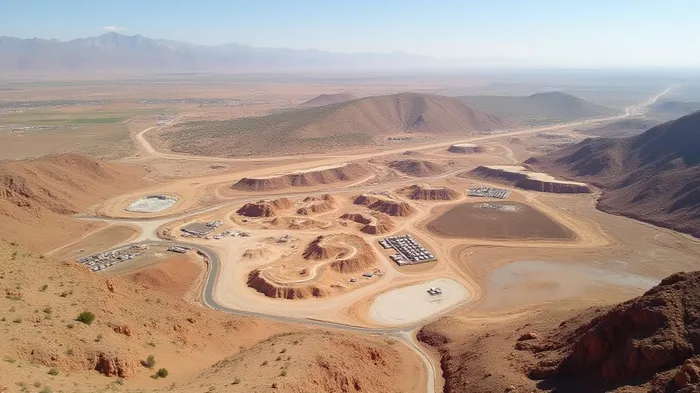
Regulatory and Operational Benefits of Priority Status
The priority designation grants Hot Chili streamlined administrative approvals and centralized oversight via a single platform. Projects receive unique identification codes (PRYXTX11 for Costa Fuego; ZPJCFN59 for Huasco Water), expediting processes like environmental impact assessments (EIAs) and maritime concessions. For example, the Huasco Water project’s second maritime concession application is now under accelerated review, while baseline studies for Stage 1 seawater supply have been integrated into the Costa Fuego EIA.
This fast-tracking mechanism reduces bureaucratic delays, a key risk in Chile’s historically cumbersome permitting process. Management estimates that the priority status could shave 6–12 months off the development timeline for both projects, lowering capital costs and improving project economics.
Market Reaction: Muted Optimism Amid Broader Headwinds
Despite the regulatory win, Hot Chili’s shares remain near their yearly low, trading at ~[USD 0.50] in late 2024 (as of Q3 2024). Analysts attribute this to sector-wide skepticism in mining equities, low trading volumes, and lingering concerns about copper price volatility.
Data visualization would show minimal upward movement post-September 2024 announcement, reflecting a market still cautious on mining stocks.
The Bigger Picture: Chile’s Policy Shift and Copper Demand
Chile’s prioritization of sustainability-aligned projects reflects a broader policy shift. The government aims to fast-track initiatives that balance economic growth with environmental stewardship, positioning Hot Chili’s projects as flagships for green infrastructure development. This aligns with global trends: global copper demand is projected to grow by 3–5% annually through 2030, driven by renewable energy infrastructure (e.g., EVs, solar panels). Costa Fuego’s low-capital-intensity profile positions it well to capitalize on this demand.
Visualization would show rising copper prices to USD $4.50–5.00/lb by y 2025, bolstered by EV adoption and green energy projects.
Risks and Considerations
- Execution Risk: Final drill results from La Verde and EIA approvals are critical milestones. Delays could reignite investor concerns.
- Commodity Volatility: Copper prices remain tied to global economic cycles; a recession could pressure valuations.
- Regulatory Uncertainty: While priority status accelerates approvals, maritime and environmental permits are still pending.
Conclusion: A Strategic Asset in a Growing Market
Hot Chili’s projects represent a compelling long-term opportunity. The priority status reduces regulatory and timeline risks, while Costa Fuego’s top-tier copper reserves and Huasco Water’s first-mover advantage create a sustainable, low-cost production hub. With Chile’s policy support and global copper demand set to grow, the company is positioned to rebound once permits are secured and production begins.
Investors should monitor upcoming catalysts:
1. Final assay results from La Verde (Q1 2025).
2. EIA approval for both projects (targeted for mid-2025).
3. Huasco Water’s Stage 1 seawater delivery (projected late 2025).
While the stock’s current valuation reflects near-term skepticism, the strategic advantages and $20 billion+ net present value (per pre-feasibility studies) suggest upside potential. For investors willing to look past short-term volatility, Hot Chili’s alignment with Chile’s sustainability-driven growth agenda—and the global copper boom—could deliver meaningful returns over the next decade.
In summary, this regulatory win is more than a procedural boost: it is a strategic endorsement of Hot Chili’s role in Chile’s economic future. The path forward is clear—execution will determine the payoff.







Comentarios
Aún no hay comentarios