
Hongkong Land's Strategic Divestment: Unlocking Value in Hong Kong's Property Sector
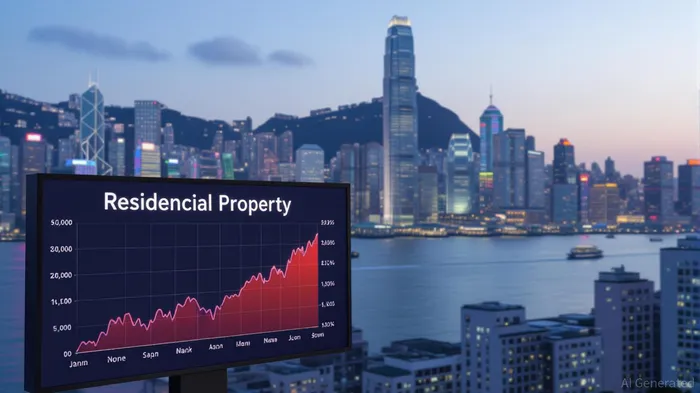
Hongkong Land's recent strategic pivot from residential development to ultra-premium commercial properties marks a pivotal moment in the evolution of Hong Kong's property market. By divesting its MCL Land residential business in Singapore and Malaysia for SGD739 million (USD579 million) and partially selling One Exchange Square in Hong Kong for HKD6.3 billion, the company is recalibrating its portfolio to focus on high-value, income-generating assets[2][3]. This move is not merely a response to market volatility but a calculated strategy to capitalize on undervalued opportunities in a sector undergoing structural transformation.
A Market in Transition
The Hong Kong property market in 2025 is defined by duality: while residential prices have fallen by 7.76% year-on-year, with smaller and older properties experiencing the steepest declines[3], commercial real estate faces its own challenges. Office vacancy rates have surged to 17.3%, driven by weak corporate demand and an oversupply of new developments[4]. Yet, within this landscape of distress lies opportunity. Distressed asset sales now account for 40% of transactions, with investors eyeing undervalued properties in prime locations[3]. Hongkong Land's partial divestment of One Exchange Square, for instance, yielded a 2.9% exit yield—a compelling figure in a market where cap rates for prime office assets have compressed to 4.5%[1].
Strategic Reallocation: From Residential to Commercial
Hongkong Land's strategy to reallocate up to HKD78 billion (USD10 billion) by 2035[1] is underpinned by a clear rationale. By exiting the cyclical residential build-to-sell segment, the company is pivoting to a model of recurring income through integrated commercial developments. These include grade-A office spaces, luxury retail, and branded residences in gateway cities like Hong Kong, Singapore, and Shanghai. The proceeds from asset sales are being directed toward debt reduction, share buybacks, and reinvestment in higher-yielding assets. For example, the recent HKD6.3 billion sale of One Exchange Square's top nine floors to the Hong Kong Exchange and Clearing Ltd (HKEX) has already enhanced the company's net asset value (NAV) and earnings per share (EPS)[3].
The firm's ambition to grow assets under management from USD40 billion to USD100 billion by 2035[1] hinges on leveraging third-party capital through REITs and private funds. This approach not only diversifies risk but also taps into the growing appetite of institutional investors for stable, long-term returns. As noted by CBRECBRE--, the industrial sector—where warehouse rents have fallen by 2.9% year-to-date and vacancy rates hit 10.3%—presents a particularly attractive target for value creation[4]. Hongkong Land's focus on repositioning such assets aligns with broader market trends, including the rise of hybrid workspaces and sustainable infrastructure.
Undervalued Sectors: The Path Forward
The most compelling opportunities lie in sectors where fundamentals are misaligned with current valuations. Office and industrial properties in decentralised areas, for instance, trade at significant discounts to their intrinsic value. According to JLL, landlords are offering incentives like extended rent-free periods and flexible leasing terms to attract tenants—a dynamic that could accelerate value recovery in the medium term[5]. Similarly, the Northern Metropolis development, a government-backed initiative to redevelop Hong Kong's northern border, offers long-term growth potential through strategic land allocation and infrastructure investment[3].
Hongkong Land's capital recycling strategy is also benefiting from policy tailwinds. The expansion of the Capital Investment Entrant Scheme (CIES) to include residential properties valued between HKD30 million and HKD50 million has injected liquidity into a previously stagnant segment[3]. While the company has exited residential development, its focus on branded residences within integrated commercial projects positions it to capture demand from high-net-worth individuals seeking premium assets.
Conclusion: A Model for Resilience
Hongkong Land's strategic divestment is a masterclass in capital reallocation. By exiting volatile residential markets and reinvesting in undervalued commercial assets, the company is positioning itself to thrive in an environment of prolonged uncertainty. The key to its success lies in its ability to leverage third-party capital, reposition distressed assets, and align with structural trends such as hybrid work and sustainable development. For investors, the firm's pivot underscores a broader truth: in a market defined by dislocation, the most enduring returns come from those who dare to rethink the status quo.







Comentarios
Aún no hay comentarios