
Hong Kong's Weakening Private Sector and Its Implications for Regional Investor Confidence: Strategic Reallocation and Risk Mitigation in a Shifting Landscape
Hong Kong's Weakening Private Sector and Its Implications for Regional Investor Confidence: Strategic Reallocation and Risk Mitigation in a Shifting Landscape
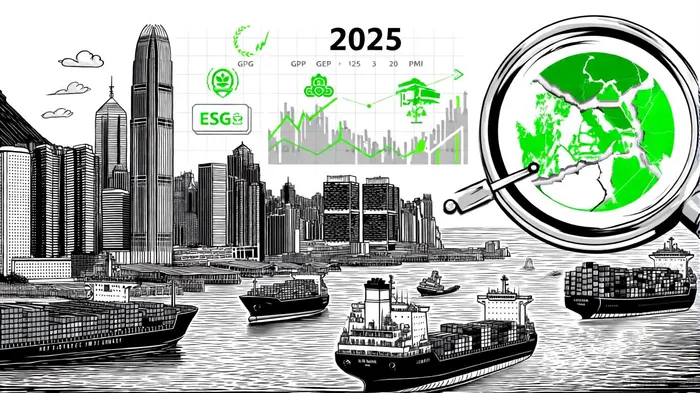
The Hong Kong private sector, once a cornerstone of Asia's economic dynamism, now faces a complex web of challenges that threaten its long-term resilience. While the city's Q2 2025 GDP growth of 3.1% year-on-year offers a veneer of stability, according to the Hong Kong economic bulletin, deeper currents of fragility-ranging from sector-specific contractions to geopolitical headwinds-demand a recalibration of regional investment strategies. For investors, the implications are clear: asset reallocation and risk mitigation must evolve from reactive measures to strategic imperatives.
A Mixed Economic Picture: Growth Amid Structural Weaknesses
Hong Kong's services sector, which accounts for 93.5% of GDP, has shown resilience, driven by a rebound in household consumption and a surge in exports, according to HKTDC research. Exports of goods grew 11.5% year-on-year in Q2 2025, buoyed by temporary U.S. tariff easements, per Trading Economics. Yet, this optimism is tempered by persistent vulnerabilities. The manufacturing sector, for instance, has languished, with the S&P Global Hong Kong SAR PMI hovering near contractionary levels (49.2 in July 2025) despite a brief rebound to 50.7 in August, according to Trading Economics data. Input costs, rising at their fastest pace since late 2023, exacerbate margins pressures, as reported by Dim Sum Daily.
The tourism sector, a critical driver of retail and hospitality, exemplifies this duality. While international visitor arrivals surged 11.9% year-on-year in early 2025, according to Travel and Tour World, overcrowding and strained public infrastructure have sparked concerns about sustainability. Retail sales, paradoxically, fell 5.5% in the first five months of 2025, as Mainland visitors shifted spending to Shenzhen and long-haul tourists prioritized cost-conscious travel, a trend noted by CBRE.
Investor Sentiment: Caution and Adaptation
Regional investor sentiment reflects a fragmented landscape. The third-quarter 2025 business confidence index, at -8, signals modest improvement from -9 in Q2, according to Trading Economics; the same dataset shows finance and real estate sectors have gained traction, with the latter's confidence turning positive for the first time since 2022. Conversely, manufacturing and trade sectors remain mired in pessimism, with confidence indices at -2 and -18, respectively.
Institutional investors are responding with a blend of pragmatism and innovation. A 2025 State Street report reveals that 59% of Hong Kong-based institutions have increased private equity allocations to reduce portfolio volatility, while the report also finds 77% prioritize North America as a top investment region. The democratization of private markets is also gaining momentum, with State Street noting that 53% of institutions anticipate retail-like products to dominate fundraising within two years.
Strategic Reallocation: Cross-Border Flows and Sectoral Shifts
Hong Kong's role as a global financial intermediary is being redefined. The city's Cross-boundary Wealth Management Connect (WMC) 2.0 initiative has spurred a shift from deposits to diversified allocations in funds and bonds, according to an HKMA insight, while regulatory agreements with the UAE, Reuters reported, have streamlined cross-border capital flows. These developments position Hong Kong as a bridge between Asia and the Middle East, with total assets under management (AUM) in its wealth management sector reaching HK$35 trillion in 2024, Reuters estimates.
Sectoral pivots are equally pronounced. Technology and logistics have emerged as focal points, with equity capital market (ECM) fundraising in the TMT sector reaching $13.7 billion in H1 2025, according to an HKEX insight. Meanwhile, the logistics sector benefits from e-commerce-driven demand and brownfield relocations, as detailed in a CBRE report. However, geopolitical tensions-particularly U.S. tariff uncertainties-have prompted firms to diversify supply chains and adopt real-time inventory systems, a trend highlighted in the UOB study.
Risk Mitigation: ESG Integration and Hedging Mechanisms
Environmental, social, and governance (ESG) strategies are no longer optional but essential. Hong Kong's Green Bond Programme, which has issued $120 billion since 2019, underscores a growing alignment with global sustainability trends, as noted in an InCorp blog. Investors are also leveraging derivatives and long/short equity strategies to hedge against volatility. For instance, HKEX's structural innovations-such as call spread overlays-have enhanced equity-linked issuance efficiency, while equity market neutral strategies aim to decouple returns from broader market cycles, a dynamic explained by Pictet Asset.
Geopolitical hedging remains a priority. The U.S. reclassification of Hong Kong-made goods as "Made in China" and the imposition of the Safeguarding National Security Ordinance have heightened uncertainty, according to the U.S. State Department. In response, firms are accelerating digitalization and exploring ASEAN sourcing, as the UOB study explains. For investors, the common law framework and streamlined regulatory processes in Hong Kong provide a stabilizing counterweight to these risks, a point underscored by an FDI China analysis.
Conclusion: Navigating Uncertainty with Strategic Precision
Hong Kong's private sector stands at a crossroads. While its strategic location and financial infrastructure offer enduring advantages, structural weaknesses and geopolitical turbulence necessitate a recalibration of investment approaches. For regional investors, the path forward lies in balancing short-term hedging with long-term diversification-prioritizing sectors like technology and logistics, embracing ESG frameworks, and leveraging Hong Kong's evolving regulatory landscape. As the city navigates these challenges, its ability to adapt will determine not only its own economic trajectory but also the confidence of global capital in Asia's financial ecosystem.







Comentarios
Aún no hay comentarios