
Hims & Hers: Panic Sell or Opportunistic Buy?

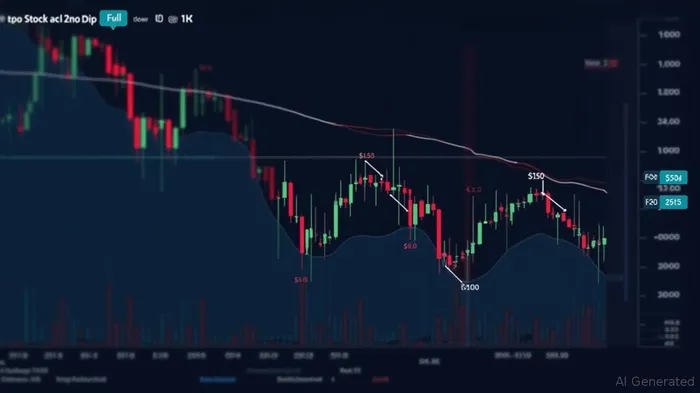
The telehealth sector has long been a battleground of innovation and skepticism. For HimsHIMS-- & Hers (NYSE:HIMS), the question is whether its recent stock decline—from a high of $73 in May 啐2025 to below $60—reflects a structural threat or a buying opportunity. This analysis examines its subscriber growth trajectory, profitability roadmap, and competitive positioning to determine whether the selloff is warranted or overdone.
Subscriber Growth: Momentum vs. Saturation
Hims & Hers' core strength lies in its subscription model, which has driven a 38% year-over-year increase in subscribers to 2.4 million as of Q1 2025. Revenue per subscriber has soared 53% to $84, thanks to higher engagement in premium services like weight-loss programs and men's health. This growth isn't just about quantity: the company's 85% subscriber retention rate (vs. a 71% industry average) suggests sticky customer relationships.
However, the pace of growth has slowed compared to earlier years, raising concerns about market saturation. Competitors like Ro and TeladocTDOC-- are aggressively expanding their DTC offerings, particularly in weight management—a key Hims & Hers revenue driver. To sustain momentum, the company must capitalize on its long-term targets, including $6.5 billion in revenue by 2030, which would require a 30% annual growth rate from current levels.
Profitability: From Burn to Cash Flow Positive
Hims & Hers' financial turnaround is striking. After years of losses, the company reported $49.5 million net income in Q1 2025, a 346% jump from the prior year. Adjusted EBITDA rose to $91.1 million, with margins expanding to 16%—a sign of operational efficiency. Free cash flow, once a liability, turned positive at $50.1 million, a critical milestone for scaling.
Yet risks lurk. Gross margins dipped to 73% in Q1 2025 from 82% in 2024 due to higher supply chain costs and investments in vertical integration (e.g., in-house peptide manufacturing). This compression could persist as the company expands into new therapeutic areas like diabetes and menopause. Management must balance growth with margin discipline to avoid a return to losses.
Market Differentiation: Beyond the Telehealth Crowds
Hims & Hers' edge lies in its subscription-centric model and FDA-approved therapies, such as its Wegovy® offering at $599/month—a price undercutting rivals like Ozempic®. This model, paired with AI-driven personalized care (e.g., MedMatch), creates a defensible niche. The acquisition of Zava (Europe's #1 telehealth platform) also diversifies its geographic footprint, reducing reliance on the U.S. market.
Competitor Comparison:
| Metric | Hims & Hers | Teladoc | Ro |
|----------------------|-------------------|------------------|-----------------|
| Revenue Growth (2024)| 68% CAGR | 12% | 58% |
| Subscription Model | Core Offering | Minimal | Core Offering |
| Gross Margin | 73% | 52% | 68% |
While Ro and Teladoc focus on breadth, Hims & Hers prioritizes depth—offering specialized treatments (e.g., low testosterone, menopause) that command higher margins. This strategy aligns with its 2030 roadmap, which emphasizes expanding into chronic conditions and AI-driven care.
Risks: Regulatory Headwinds and Dependency
Two critical risks could derail Hims & Hers' ambitions:
1. Regulatory Scrutiny: The FDA's May 2025 ban on compounded semaglutide—a cheaper alternative to Wegovy®—forced the company to shift to Novo Nordisk's branded drugs. This reduces legal risk but creates dependency on Novo's supply chain and pricing. 15% of Hims' revenue stems from formulations now under FDA review, which could be reclassified as mass-produced, triggering another revenue hit.
2. Margin Pressures: Scaling into new markets and therapies requires heavy upfront investment. Operating expenses rose 70% YoY in Q1 2025, driven by R&D and supply chain costs. If margins continue to compress, profitability gains could evaporate.
Valuation: Cheap Now, or a Mirage?
Hims & Hers trades at a P/S ratio of 5.7x (based on its $13.67 billion market cap and $2.4 billion 2025 revenue guidance), far below the 5–7x average for high-growth SaaS/healthtech firms. Its EV/EBITDA of 41x (using 2025's $335 million midpoint) drops to 10.5x if it hits its 2030 EBITDA target of $1.3 billion.
Bullish analysts argue this represents undervaluation, citing its $30+ billion market cap potential by 2030. Bears counter that execution risks—especially regulatory and margin-related—could make those targets unreachable. The stock's beta of 1.85 underscores its volatility, making it a high-risk bet for all but the most patient investors.
Investment Recommendation
Hims & Hers is a speculative buy for long-term investors, but with strict caveats:
- Buy: If you believe in its subscription model dominance and ability to execute on 2030 targets, consider accumulating shares at $55–$60, near support levels. The stock's 111% YoY revenue growth and free cash flow generation support a bullish case.
- Hold: For short-term traders. The regulatory and competitive risks create too much uncertainty for quick gains.
- Avoid: If you can't tolerate volatility or believe telehealth's growth phase is over.
Final Call: Hims & Hers is not for the faint-hearted. But with a 16% net income margin, $50 million in free cash flow, and $1.3 billion in long-term EBITDA targets, it offers a compelling risk/reward profile for investors willing to bet on its disruptive vision. Monitor Q2 2025 results (due July 2025) and FDA rulings on personalized formulations as key catalysts.
Disclosure: This analysis is for informational purposes only. Consult a financial advisor before making investment decisions.





Comentarios
Aún no hay comentarios