
High-Insider-Ownership Growth Companies in Asia: Uncovering Undervalued Gems with Aligned Incentives and Strong Governance
In the volatile landscape of Asian equities, investors increasingly seek firms where governance and performance are symbiotically aligned. High insider ownership—a metric often overlooked—has emerged as a critical indicator of such alignment. When executives and directors hold substantial stakes in their companies, their incentives to optimize long-term value creation become more pronounced. This article examines a curated list of high-insider-ownership growth companies in Asia, analyzing their governance structures, incentive mechanisms, and growth trajectories to identify undervalued opportunities.
The Governance-Performance Nexus
Insider ownership is not merely a statistic; it is a signal of confidence and accountability. According to a Financial Times report, firms with concentrated ownership in Asia tend to exhibit disciplined capital allocation and resilience during market downturns. For instance, Changsha Jingjia Microelectronics Co., Ltd. (36.2% insider ownership) is projected to grow revenue at 51.3% annually, driven by its leadership's vested interest in semiconductor innovation. Similarly, Techwing (19.1% insider ownership) in South Korea, with a staggering 122.3% earnings growth forecast, demonstrates how governance alignment can catalyze hypergrowth in tech sectors, according to a Simply Wall analysis.
The academic literature reinforces this dynamic. A Corporate Governance study highlights that insider ownership in Asian firms correlates with reduced agency costs and enhanced transparency, particularly in markets with evolving legal frameworks. This is evident in Shenzhen Dobot Corp. Ltd. (19.6% insider ownership), where a robust board structure—including audit, remuneration, and nomination committees—ensures accountability while fostering 32.1% annual revenue growth, according to its Yahoo Finance profile.
Case Studies in Alignment
DigiPlus Interactive Corp. (Philippines): With 12.3% insider ownership, DigiPlus exemplifies how governance frameworks can drive ESG integration. Its board, chaired by Eusebio Tanco, has implemented a Corporate Governance Manual and received accolades for ethical practices, as documented on DigiPlus corporate governance. Executive compensation is overseen by a Compensation Committee with independent directors, ensuring pay is tied to long-term strategic goals.
Shenzhen Dobot Corp. (Hong Kong): The firm's 19.6% insider ownership is mirrored in its transparent executive pay structure. For FY2024, CEO Peichao Liu's total compensation (HK$959,460) was disclosed alongside rigorous board oversight mechanisms, as reported on MarketScreener. Such transparency aligns with the 2023 PRC Company Law reforms, which mandate stakeholder-centric governance and employee representation on boards, as noted in a Columbia Law Blog analysis.
Lendbox (India): While insider ownership data is sparse, Lendbox's 536.64% CAGR (2020–2023) underscores the potential of high-growth fintechs in Asia. Its success hinges on a governance model that prioritizes digital transformation and risk mitigation, reflecting broader trends in shareholder activism and ESG integration reported by the Financial Times.
Risks and Considerations
High insider ownership is not a panacea. Overconcentration of power can lead to entrenchment, particularly in markets with weak institutional safeguards. For example, Jiangsu Leadmicro Nano-Equipment (18.7% insider ownership) faces scrutiny over its 32.4% earnings growth projections, which must be validated against operational risks in the nanotechnology sector, as flagged in a Yahoo Finance article. Investors must also weigh the impact of regulatory shifts, such as China's 2023 Company Law amendments, which recalibrate board autonomy and shareholder rights, explained in a KWM overview.
Conclusion: A Strategic Imperative
For investors navigating Asia's complex markets, high-insider-ownership firms offer a compelling lens through which to assess governance quality and growth potential. Companies like Techwing, Changsha Jingjia, and DigiPlus demonstrate that aligned incentives and robust governance can drive exceptional performance, even in volatile sectors. However, due diligence remains paramount. As the OECD guidance emphasizes, corporate governance frameworks must balance insider interests with stakeholder accountability to sustain long-term value.
In an era where ESG metrics and digital transparency are reshaping corporate landscapes, these firms represent not just growth opportunities but also a blueprint for the future of responsible investing in Asia.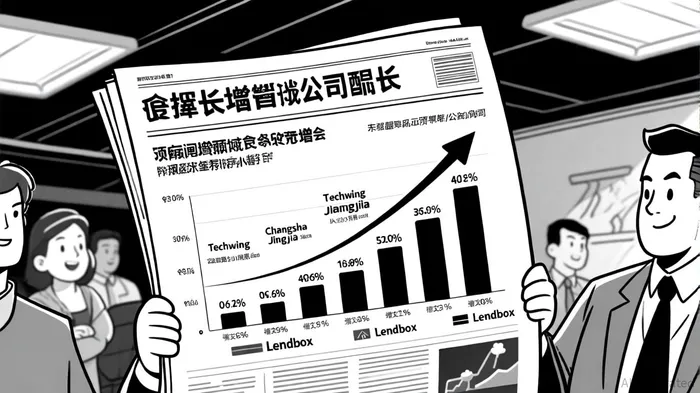







Comentarios
Aún no hay comentarios