
Harley-Davidson's Strategic Debt-Light Transformation and Capital Liberation
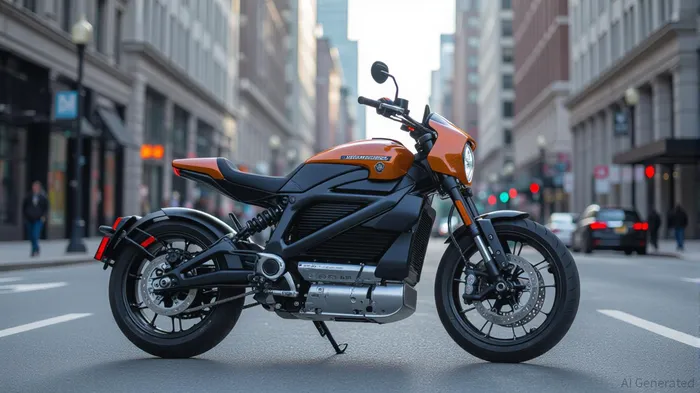
In an era where traditional industries grapple with the dual pressures of technological disruption and capital efficiency, Harley-Davidson's recent restructuring of its financial services arm, HDFS, offers a masterclass in strategic reinvention. By partnering with KKRKKR-- and PIMCO, the iconic motorcycle manufacturer has executed a securitization and equity transaction that not only liberates significant capital but also redefines its risk profile. This move is not merely a financial engineering exercise—it is a blueprint for how legacy businesses can adapt to volatile markets while preserving their core operational strengths.
The Mechanics of Capital Liberation
At the heart of Harley-Davidson's transformation lies the monetization of HDFS's retail loan receivables. By selling $5 billion in existing and future loan portfolios at a premium, the company has effectively converted illiquid assets into immediate cash. This transaction, coupled with the sale of 4.9% equity stakes to KKR and PIMCO at a valuation of 1.75 times post-transaction book value, underscores the market's confidence in HDFS's long-term potential. The implied premium reflects not just the quality of the receivables but also the strategic value of HDFS's servicing capabilities, which remain in-house.
The Forward Flow Agreement—selling two-thirds of annual loan originations while retaining servicing rights—is particularly ingenious. It ensures a steady revenue stream through fixed servicing fees, decoupling HDFS's earnings from the cyclical risks of loan defaults. This structure mirrors the best practices of asset-light models in sectors like technology and logistics, where cash flow predictability and low leverage are paramount.
Risk Mitigation and Balance Sheet Resilience
Traditional finance models often prioritize asset accumulation, but in doing so, they expose firms to liquidity constraints and credit risk. Harley-Davidson's partnership shifts these risks to KKR and PIMCO, which now bear the downside of the sold receivables. For Harley-DavidsonHOG--, this means a cleaner balance sheet, reduced leverage, and a lower cost of capital. The company plans to use $1.25 billion in unlocked cash to retire $450 million of debt and accelerate $500 million in shareholder returns—a move that signals both fiscal discipline and a commitment to rewarding equity holders.
The broader implications are profound. By reducing its exposure to credit cycles, Harley-Davidson can allocate capital more dynamically. The remaining funds will fuel investments in innovation, including its LiveWireLVWR-- electric vehicle division, which is critical for competing in a market increasingly dominated by sustainability-driven consumers.
Strategic Agility in a Volatile Market
The partnership also enhances Harley-Davidson's strategic agility. With KKR and PIMCO as co-owners of HDFS, the company gains access to their expertise in asset-based finance and fixed-income markets. This collaboration is not a one-way transaction; it embeds long-term stability into HDFS's funding model, ensuring that the subsidiary remains a reliable source of liquidity even during economic downturns.
Consider the contrast with TeslaTSLA--, whose stock price has swung wildly as it navigates production challenges and regulatory scrutiny. . While Tesla's growth is driven by innovation, its volatility highlights the risks of relying on market sentiment. Harley-Davidson's approach, by contrast, balances innovation with financial conservatism—a duality that may prove more sustainable in the long run.
Investment Implications
For investors, Harley-Davidson's transformation presents a compelling case. The reduced leverage and enhanced ROE of HDFS are likely to boost the company's overall profitability, while the retained servicing fees provide a recurring revenue stream. The partnership also mitigates the risk of regulatory overreach in financial services, a sector increasingly under scrutiny.
However, the success of this strategy hinges on two factors: the performance of the sold receivables and the execution of LiveWire's electric vehicle ambitions. If defaults on the sold loans remain low and LiveWire gains traction, Harley-Davidson could emerge as a hybrid of old and new—leveraging its heritage while embracing the future.
Conclusion
Harley-Davidson's HDFS securitization is a testament to the power of reimagining traditional finance models. By prioritizing capital efficiency and risk mitigation, the company has not only unlocked value but also positioned itself to thrive in an uncertain economic landscape. For investors, this is a reminder that the most enduring businesses are those that can adapt their financial architectures as fluidly as their products. In a world where agility is the new competitive edge, Harley-Davidson's playbook is worth studying.





Comentarios
Aún no hay comentarios