
Google Warns: U.S. Faces Power Capacity Crisis in AI Race Against China
Generado por agente de IAEdwin Foster
miércoles, 12 de febrero de 2025, 1:16 pm ET2 min de lectura
FOSL--
Google, a tech giant at the forefront of artificial intelligence (AI) development, has recently sounded the alarm on a potential power capacity crisis in the U.S. as the country races to keep up with China in the AI arms race. The warning highlights the growing demand for energy to power AI data centers and the need for innovative solutions to address the looming power shortage.
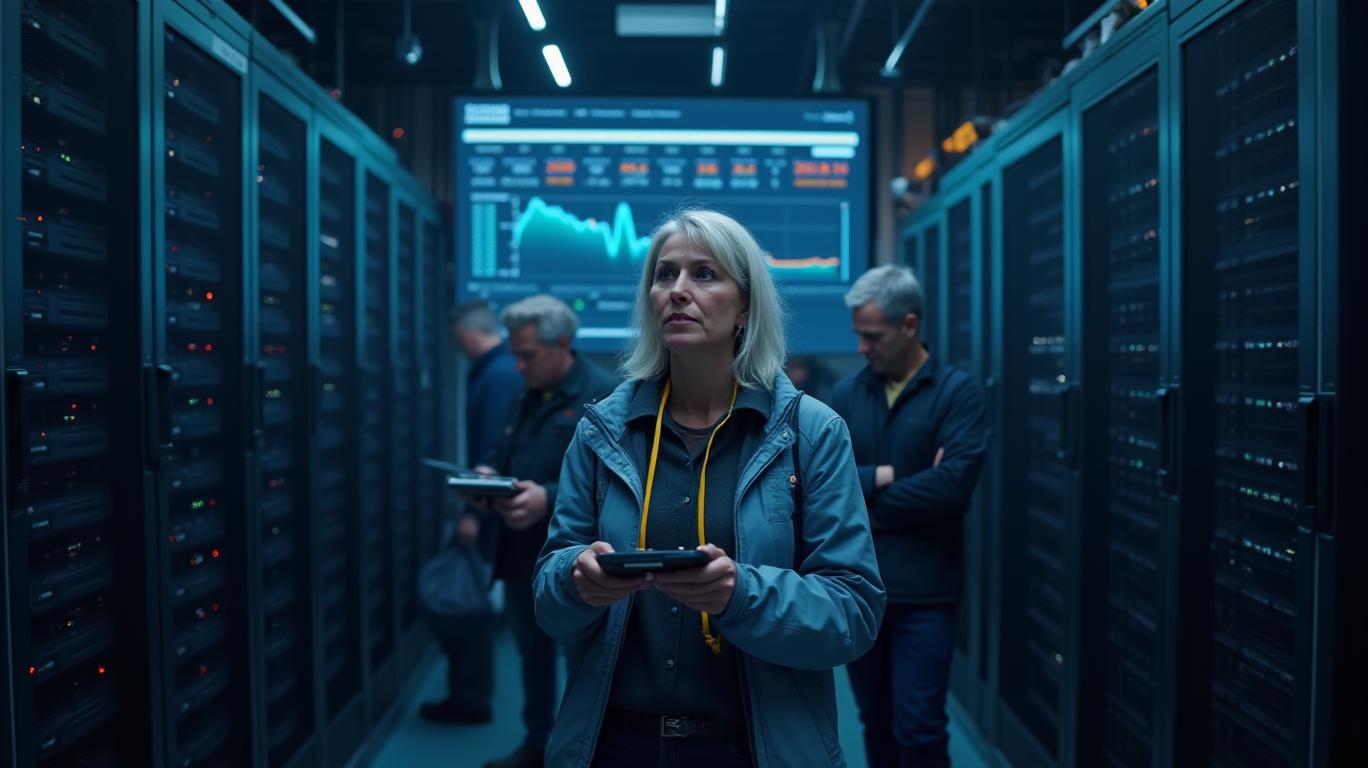
The increasing adoption of AI, particularly generative AI, is driving a surge in demand for computing power. This demand is outpacing the supply of power, especially in regions with high concentrations of data centers. According to the World Economic Forum, power demand in areas with high data center concentrations could outstrip supply within two to three years without significant grid and generation investments. The result could include data centers that aren't able to run at full capacity, while construction of others may be delayed, leading to higher electric bills for everyone.
The energy-intensive nature of AI workloads, especially training and inference for large language models, is a significant contributor to the power capacity crisis. A single rack based on Nvidia's GPUs can consume as much as 120 kilowatt hours per day, equivalent to the daily power consumption of 4.5 US homes. As AI adoption continues to grow, the power demand quickly adds up, with estimates suggesting that AI could add the equivalent of three New York Cities to the U.S. power grid by 2030.
To address the power capacity crisis, the U.S. can consider several strategies:
1. Invest in Renewable Energy and Grid Modernization: The U.S. can invest in renewable energy sources like solar, wind, and hydro to reduce its reliance on fossil fuels and decrease greenhouse gas emissions. Modernizing the grid infrastructure can improve efficiency, reduce losses, and enable better integration of renewable energy sources.
2. Encourage Energy Efficiency in Data Centers: The U.S. can promote energy-efficient practices in data centers, such as using more efficient hardware, optimizing cooling systems, and implementing power-saving software. Incentivizing data centers to adopt these energy-efficient practices can help reduce their overall power consumption and lower the demand on the grid.
3. Develop Advanced AI Hardware: Investing in research and development of advanced AI hardware, such as specialized AI chips and quantum computers, can help improve the energy efficiency of AI workloads. Encouraging collaboration between academia, industry, and government can accelerate the development and deployment of these energy-efficient AI technologies.
4. Establish Public-Private Partnerships: The U.S. government can partner with private companies to develop and deploy AI technologies that are more energy-efficient and require less power. These partnerships can help share the costs of research and development, as well as the risks associated with bringing new technologies to market.
5. Promote AI Governance and Collaboration: The U.S. can work with international partners, including China, to establish AI governance frameworks that promote responsible AI development and use. Encouraging collaboration on AI research and development can help share the benefits of AI technologies and ensure that they are used for the betterment of all nations.
By implementing these strategies, the U.S. can address the power capacity crisis while maintaining a competitive edge in the AI race against China. These efforts will not only help the U.S. stay ahead in AI development but also contribute to a more sustainable and energy-efficient future.
GOOGL--
NVDA--
QMCO--
Google, a tech giant at the forefront of artificial intelligence (AI) development, has recently sounded the alarm on a potential power capacity crisis in the U.S. as the country races to keep up with China in the AI arms race. The warning highlights the growing demand for energy to power AI data centers and the need for innovative solutions to address the looming power shortage.
The increasing adoption of AI, particularly generative AI, is driving a surge in demand for computing power. This demand is outpacing the supply of power, especially in regions with high concentrations of data centers. According to the World Economic Forum, power demand in areas with high data center concentrations could outstrip supply within two to three years without significant grid and generation investments. The result could include data centers that aren't able to run at full capacity, while construction of others may be delayed, leading to higher electric bills for everyone.
The energy-intensive nature of AI workloads, especially training and inference for large language models, is a significant contributor to the power capacity crisis. A single rack based on Nvidia's GPUs can consume as much as 120 kilowatt hours per day, equivalent to the daily power consumption of 4.5 US homes. As AI adoption continues to grow, the power demand quickly adds up, with estimates suggesting that AI could add the equivalent of three New York Cities to the U.S. power grid by 2030.
To address the power capacity crisis, the U.S. can consider several strategies:
1. Invest in Renewable Energy and Grid Modernization: The U.S. can invest in renewable energy sources like solar, wind, and hydro to reduce its reliance on fossil fuels and decrease greenhouse gas emissions. Modernizing the grid infrastructure can improve efficiency, reduce losses, and enable better integration of renewable energy sources.
2. Encourage Energy Efficiency in Data Centers: The U.S. can promote energy-efficient practices in data centers, such as using more efficient hardware, optimizing cooling systems, and implementing power-saving software. Incentivizing data centers to adopt these energy-efficient practices can help reduce their overall power consumption and lower the demand on the grid.
3. Develop Advanced AI Hardware: Investing in research and development of advanced AI hardware, such as specialized AI chips and quantum computers, can help improve the energy efficiency of AI workloads. Encouraging collaboration between academia, industry, and government can accelerate the development and deployment of these energy-efficient AI technologies.
4. Establish Public-Private Partnerships: The U.S. government can partner with private companies to develop and deploy AI technologies that are more energy-efficient and require less power. These partnerships can help share the costs of research and development, as well as the risks associated with bringing new technologies to market.
5. Promote AI Governance and Collaboration: The U.S. can work with international partners, including China, to establish AI governance frameworks that promote responsible AI development and use. Encouraging collaboration on AI research and development can help share the benefits of AI technologies and ensure that they are used for the betterment of all nations.
By implementing these strategies, the U.S. can address the power capacity crisis while maintaining a competitive edge in the AI race against China. These efforts will not only help the U.S. stay ahead in AI development but also contribute to a more sustainable and energy-efficient future.

Divulgación editorial y transparencia de la IA: Ainvest News utiliza tecnología avanzada de Modelos de Lenguaje Largo (LLM) para sintetizar y analizar datos de mercado en tiempo real. Para garantizar los más altos estándares de integridad, cada artículo se somete a un riguroso proceso de verificación con participación humana.
Mientras la IA asiste en el procesamiento de datos y la redacción inicial, un miembro editorial profesional de Ainvest revisa, verifica y aprueba de forma independiente todo el contenido para garantizar su precisión y cumplimiento con los estándares editoriales de Ainvest Fintech Inc. Esta supervisión humana está diseñada para mitigar las alucinaciones de la IA y garantizar el contexto financiero.
Advertencia sobre inversiones: Este contenido se proporciona únicamente con fines informativos y no constituye asesoramiento profesional de inversión, legal o financiero. Los mercados conllevan riesgos inherentes. Se recomienda a los usuarios que realicen una investigación independiente o consulten a un asesor financiero certificado antes de tomar cualquier decisión. Ainvest Fintech Inc. se exime de toda responsabilidad por las acciones tomadas con base en esta información. ¿Encontró un error? Reportar un problema




Comentarios
Aún no hay comentarios