
Gold's Record Surge: A Strategic Case for Positioning in a Geopolitical and Monetary Shift Era
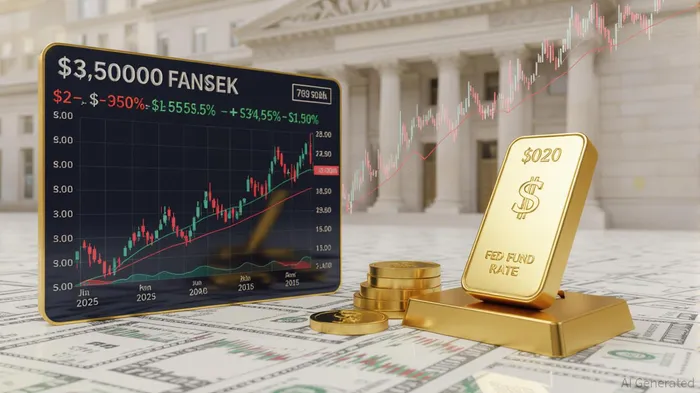
The extraordinary surge in gold prices—now exceeding $3,500 per ounce, a 30% rise year-to-date—reflects a profound shift in global financial dynamics. This rally is not merely a function of cyclical demand but a response to structural forces reshaping the interplay between geopolitics, monetary policy, and asset allocation. As the U.S. dollar weakens and central banks diversify reserves, gold has reasserted itself as the ultimate safe-haven asset in an era of escalating uncertainty.
Geopolitical Tensions and the Erosion of Dollar Confidence
The current geopolitical landscape is marked by a confluence of risks: U.S.-led trade wars, Middle East volatility, and the unraveling of the post-Bretton Woods monetary order. According to a report by CNN, gold’s record high in September 2025 coincided with Donald Trump’s imposition of additional tariffs on Indian imports and the broader erosion of confidence in U.S. trade policy [1]. These measures, coupled with a federal appeals court ruling that most of Trump’s tariffs were unconstitutional, have created a “tug-of-war” dynamic: while tariffs temporarily strengthened the dollar, the resulting economic instability has amplified demand for gold as a hedge against systemic risk [3].
Central banks, particularly in emerging markets and Europe, have accelerated their shift away from dollar-dominated reserves. By mid-2025, global central banks added nearly 900 tonnes of gold to their reserves, with China, India, and Türkiye leading the charge [3]. This trend mirrors the post-2014 period, when gold prices rebounded amid similar geopolitical tensions and central bank diversification. Unlike fiat currencies, gold offers a “buffer zone” against the risks of geopolitical miscalculation and currency devaluation [4].
Fed Policy Uncertainty and the Gold-Dollar Inverse
The Federal Reserve’s policy trajectory remains a critical variable. While the Fed initially projected two rate cuts by year-end 2025, recent data and Trump’s aggressive trade agenda have introduced significant volatility. As noted by J.P. Morgan, the timing and magnitude of these cuts will determine gold’s near-term trajectory. A weaker dollar, driven by dovish monetary policy, reduces the opportunity cost of holding non-yielding bullion, historically boosting gold prices [4].
However, the Fed’s independence itself is now in question. European Central Bank President Christine Lagarde has warned that Trump’s pressure on the Fed—such as his attempts to remove Governor Lisa Cook and push for rate cuts—threatens global economic stability [2]. This erosion of institutional credibility has further amplified gold’s appeal. During the 2020-2025 period, gold outperformed U.S. Treasurys, the yen, and the Swiss franc as investors sought assets untethered to government liabilities [1].
Gold vs. Traditional Safe-Haven Assets
While U.S. Treasurys and the Swiss franc have traditionally served as safe havens, their relative performance has weakened. The 10-year Treasury yield fell to 3.991% in 2025 as investors flocked to bonds amid trade war fears, but this demand has waned as fiscal risks—such as Trump’s tariff-driven inflation and a Moody’s credit downgrade—have emerged [1]. Similarly, the Swiss franc’s strength against the dollar (a 5.6% decline in the USD/CHF pair year-to-date) has been tempered by negative interest rates and limited policy flexibility [1].
Gold, by contrast, has demonstrated resilience. Its 30% rally in 2025 far outpaced the 8-10% gains of the yen and Swiss franc against the dollar [1]. This divergence underscores gold’s unique role as a store of value in an era of fiscal experimentation and geopolitical fragmentation.
Strategic Implications for Investors
For investors, the case for gold is compelling. Central bank demand suggests a structural shift in reserve management, while geopolitical risks ensure continued safe-haven flows. J.P. Morgan and Goldman SachsGS-- project gold could reach $4,000 per ounce by mid-2026 if the Fed adopts a more dovish stance [3]. However, positioning in gold requires caution: its price remains sensitive to dollar strength and Fed policy clarity.
Conclusion
Gold’s record surge is not a fleeting phenomenon but a symptom of deeper shifts in global finance. As U.S. policy uncertainty and Fed independence come under strain, gold’s role as a hedge against systemic risk—and a counterweight to dollar dominance—has never been more critical. For investors navigating this volatile era, a strategic allocation to gold is no longer a speculative bet but a prudent response to the new normal.
**Source:[1] Gold price hits a new record high on a weaker dollar and ... [https://www.cnn.com/2025/09/02/business/gold-price-record-dollar-interest-rates-intl][2] World leader issues warning to Trump on Fed independence [https://www.foxbusiness.com/economy/world-leader-issues-warning-trump-fed-independence][3] Gold's Unprecedented 30% Rally in 2025: A Strategic ... [https://www.ainvest.com/news/gold-unprecedented-30-rally-2025-strategic-case-positioning-geopolitical-monetary-shift-era-2509/][4] What's The Fed's Next Move? | J.P. Morgan Research [https://www.jpmorganJPM--.com/insights/global-research/economy/fed-rate-cuts]







Comentarios
Aún no hay comentarios