
Global Supply Chains and Emerging Market Equity Exposure: Navigating the U.S.-India Trade Fracture
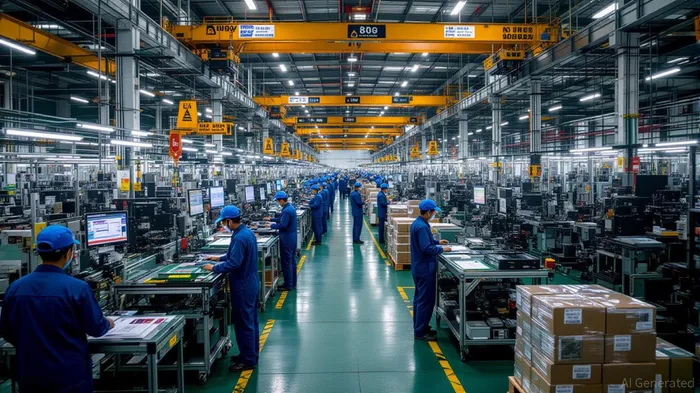
The U.S.-India trade tensions of 2025, exacerbated by President Trump's aggressive tariff policies, have become a seismic force in reshaping global supply chains and investment flows. As tariffs on Indian exports—ranging from 20% to 40%—threaten to disrupt manufacturing and agricultural trade, corporations are recalibrating their sourcing strategies. This recalibration is not merely a reaction to immediate economic pain but a strategic repositioning to mitigate long-term geopolitical and market risks. For investors, the implications are profound: emerging markets in Southeast Asia and Eastern Europe are emerging as critical nodes in a fragmented global economy, offering both opportunities and challenges for equity exposure.
The U.S.-India Trade Fracture and Its Ripple Effects
The U.S. trade deficit with India, which stood at $45.8 billion in 2024, has become a focal point of Trump's protectionist agenda. Tariffs on pharmaceuticals, textiles, and agricultural goods—key Indian exports—have forced companies to seek alternatives. India's resistance to opening its agricultural sector, coupled with its reliance on Russian oil and military equipment, has further escalated tensions. The U.S. has responded with a dual strategy: imposing tariffs on Indian goods and threatening secondary sanctions for continued Russian imports.
These measures have triggered a cascade of corporate responses. Indian manufacturing firms are diversifying their export destinations, while global multinationals are accelerating re-shoring efforts. The immediate consequence is a reallocation of capital flows toward countries with stable trade policies and lower production costs. Southeast Asia, in particular, has emerged as a beneficiary of this shift.
Southeast Asia: A Manufacturing Magnet
Vietnam, Indonesia, and Malaysia have become central to this new trade order. Vietnam's recent trade agreement with the U.S., which locks in 20% tariffs on direct exports while imposing 40% on transshipments, has provided clarity for investors. Despite U.S. efforts to curb Chinese re-exports through Vietnam, the country's infrastructure investments and integration into the Regional Comprehensive Economic Partnership (RCEP) have made it an attractive hub.
Indonesia and Malaysia are following suit. Both nations are leveraging their strategic locations and lower labor costs to attract manufacturing investments. For example, Indonesia's push into electric vehicle battery production and Malaysia's focus on semiconductorON-- manufacturing have drawn significant capital. These developments are reflected in rising equity markets: the MSCIMSCI-- Southeast Asia Index has surged 12.7% year-to-date in 2025.
However, the region's success is not without risks. While U.S. tariffs aim to curb transshipments, the complexity of global supply chains makes enforcement difficult. Chinese intermediate goods remain embedded in Southeast Asian production, complicating the U.S. goal of decoupling from China. For investors, this duality—geopolitical alignment with the U.S. and economic dependence on China—demands careful sectoral diversification.
Eastern Europe: A Strategic Alternative
While Southeast Asia dominates headlines, Eastern Europe is quietly emerging as a second-tier manufacturing hub. Poland, Hungary, and the Czech Republic are capitalizing on their proximity to European markets, lower labor costs, and EU funding. Poland, for instance, is set to receive €135 billion in EU recovery funds by 2027, a portion of which will be directed toward energy infrastructure and green manufacturing.
Hungary has become a focal point for automotive and technology firms seeking to avoid U.S. tariffs. The country's stable political environment and streamlined regulatory processes have attracted investments from German and U.S. automakers. Similarly, the Czech Republic's expertise in precision engineering and its integration into European supply chains make it a compelling option for re-shoring.
For investors, Eastern Europe offers a unique blend of geopolitical stability and economic potential. Unlike Southeast Asia, which is entangled in U.S.-China tensions, Eastern European markets are less exposed to direct trade conflicts. However, they face their own challenges, including aging infrastructure and regulatory inconsistencies.
Strategic Risk Diversification: Lessons for Investors
The U.S.-India trade dispute underscores the importance of diversifying across sectors and geographies. For emerging market equity exposure, the following strategies are critical:
- Sectoral Balancing: While Southeast Asia's industrial and commodity sectors offer growth, India's services sector (particularly IT and business process outsourcing) remains resilient. Similarly, Eastern Europe's energy and manufacturing sectors provide exposure to non-U.S. demand.
- Currency Hedging: The Indian rupee's volatility and the yuan's appreciation highlight the need for currency diversification. Exposure to Vietnamese dong or Polish zloty can mitigate dollar-centric risks.
- Policy Resilience: Countries with clear regulatory frameworks and transparent trade policies—such as Vietnam and Poland—are better positioned to weather geopolitical storms.
Conclusion: A Fragmented Future, A Diversified Portfolio
The U.S.-India trade tensions of 2025 are not an isolated event but a symptom of a broader realignment of global trade. As corporations and investors navigate this fragmented landscape, the ability to adapt to shifting supply chains and geopolitical risks will determine long-term success. Southeast Asia and Eastern Europe are not mere alternatives to China or India; they are integral to a new global order where resilience and diversification outweigh traditional cost efficiencies.
For investors, the message is clear: a diversified portfolio that spans sectors, geographies, and currencies is the key to navigating the turbulence of the post-2025 trade era. The future of global manufacturing—and the investment opportunities it presents—lies in a world where strategic risk management is as vital as market growth.







Comentarios
Aún no hay comentarios