
The Global Rebalancing: Why Commodity Supercycles Are Now Inescapable
The world is undergoing a profound structural rebalancing. Commodity supercycles-long-term price trends driven by shifts in supply, demand, and geopolitical dynamics-are no longer speculative possibilities but inevitable outcomes of deglobalization, energy transitions, and fiscal stimulus. These forces, operating in tandem, are reshaping global markets in ways that defy traditional economic models.
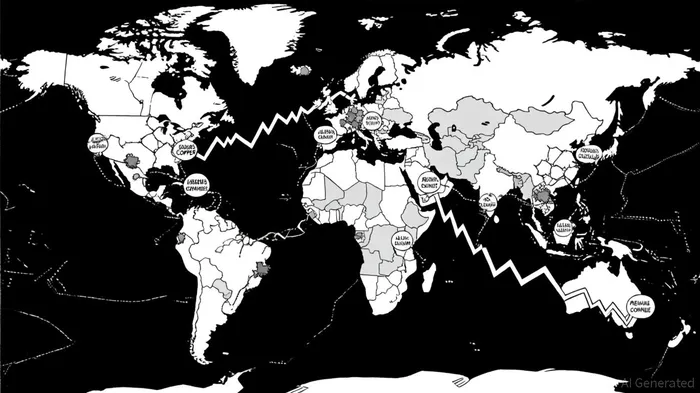
Deglobalization: Fragmentation and Strategic Scarcity
Geopolitical fragmentation has accelerated the unraveling of hyper-globalized supply chains. Protectionist policies, export controls, and strategic stockpiling have created localized shortages and price disparities. For instance, copper-a linchpin of the energy transition-faces dual pressures: supply constraints from regulatory and geopolitical risks in key producing nations, and surging demand from electric vehicles and renewables. As Market Navigator reports, copper prices have appreciated significantly in 2025 due to these dynamics, with strategic stockpiling by nations further tightening supply.
The shift toward reshoring and nearshoring, exemplified by the U.S. CHIPS and Science Act and the European Critical Raw Materials Act, has introduced inefficiencies but also entrenched demand for critical minerals. While these policies enhance resilience, they come at the cost of higher production costs and structural inflation, particularly in advanced economies. Developing nations, meanwhile, remain vulnerable to commodity price shocks, as two-thirds of them still rely heavily on commodity exports, according to UNCTAD.
Energy Transitions: A New Demand Paradigm
The global push for decarbonization has redefined commodity demand. Government spending on clean energy infrastructure has surged, with advanced economies accounting for 93% of $1.34 trillion in global clean energy investments since 2020, Market Navigator finds. The U.S. Inflation Reduction Act (IRA) alone has tripled clean energy manufacturing investment, with $14 billion in Q1 2025 alone, UNCTAD reports. These policies are driving unprecedented demand for lithium, cobalt, and rare earth elements, essential for batteries and renewable technologies.
Utilities are also ramping up spending on grid infrastructure, with annual capital expenditures rising from $287 billion in 2003 to $320 billion in 2023. Transmission and distribution spending has nearly tripled, reflecting the need to integrate intermittent renewables into aging systems, the EIA reports. Yet, underinvestment in mining and production over the past decade has left supply struggling to keep pace, exacerbating price pressures, Market Navigator argues.
Fiscal Stimulus: Fueling the Supercycle
Fiscal stimulus has become a double-edged sword. While it cushions economies from trade tensions and global shocks, it also amplifies commodity demand. China's use of weaker exchange rates and fiscal support to offset U.S. tariffs, and Germany's fiscal expansion to boost eurozone growth, illustrate how governments are leveraging spending to navigate deglobalization, according to UNCTAD. However, mounting fiscal pressures-driven by defense, climate, and economic security spending-are tightening fiscal space, particularly in low-income countries, UNCTAD warns.
The result is a self-reinforcing cycle: stimulus-driven demand, constrained supply, and geopolitical competition. As Mining.com notes, this trifecta is fueling a commodity supercycle characterized by sustained price increases and reshaped supply chains. For investors, commodities are increasingly seen as hedges against macroeconomic instability, while policymakers face the challenge of balancing resilience with efficiency, the article adds.
Conclusion: Navigating the New Normal
The inescapability of commodity supercycles lies in their structural roots. Deglobalization has fragmented markets, energy transitions have reoriented demand, and fiscal stimulus has amplified both. These forces are not temporary disruptions but enduring shifts that will define the next decade. For investors, the lesson is clear: diversification into commodities and supply-chain resilience is no longer optional. For policymakers, the challenge is to mitigate the costs of this rebalancing without stifling the very transitions that promise long-term stability.
The global economy is not merely adjusting to a new era-it is being rebuilt around it.







Comentarios
Aún no hay comentarios