
Germany's Clean Energy Transition: Strategic Investments and the Role of Credit Tools in a Shifting Policy Landscape
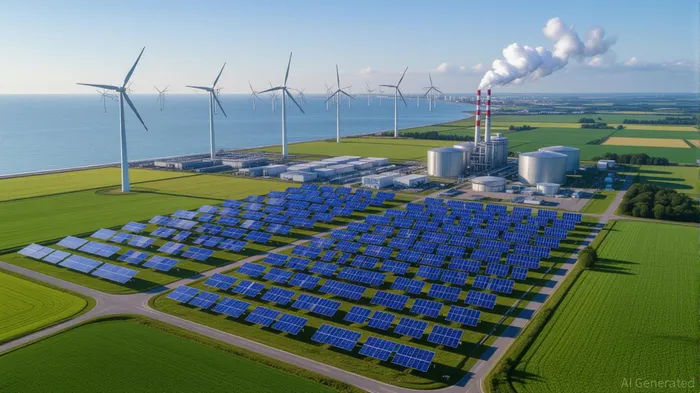
Germany's clean energy transition remains a linchpin of its economic and environmental strategy, yet the path forward is marked by both promise and peril. As the country navigates a complex policy landscape, the role of credit tools in accelerating green infrastructure investments has become increasingly critical. This analysis examines how Germany's evolving policies, industrial demand shifts, and financial instruments are shaping opportunities—and risks—for investors in the clean energy sector.
Policy Momentum: A Tale of Two Directions
Germany's climate policy has long been a beacon of ambition, but recent developments reveal a bifurcated trajectory. On one hand, the government has reaffirmed its commitment to decarbonizing key sectors, including heating and transport, with binding targets to raise renewable energy to 42.5% of total consumption by 2030 under the Renewable Energy Directive. The REPowerEU Plan, a European Commission initiative, has further bolstered this momentum by reducing reliance on Russian fossil fuels and promoting domestic clean energy production.
Yet, contradictions persist. The new government has rolled back previous measures, such as doubling planned gas-fired power capacity to 20 GW by 2030 and removing hydrogen-readiness requirements. These shifts risk locking in emissions and complicating the 2045 climate neutrality target. Such policy instability raises questions about long-term investor confidence, particularly in capital-intensive sectors like renewable energy and hydrogen infrastructure.
Credit Tools: KfW's Role as a Financial Enabler
Amid these uncertainties, Germany's KfW Bank has emerged as a critical player in financing the energy transition. Its Renewable Energy – Standard program provides low-interest loans and guarantees for projects ranging from solar farms to wind turbines, directly aligning with the national goal of achieving 80% renewable electricity by 2030. While specific details for 2023–2025 remain sparse, KfW's historical role suggests it will continue to bridge gaps left by inconsistent policy signals.
However, the absence of newer, tailored credit instruments for emerging sectors—such as green hydrogen or advanced battery storage—highlights a potential shortcoming. Investors seeking to capitalize on Germany's decarbonization agenda may find themselves reliant on existing frameworks, which, while robust, lack the specificity needed to address rapidly evolving industrial demands.
Industrial Demand Shifts: Opportunities and Bottlenecks
The industrial sector's pivot toward clean energy is reshaping demand dynamics. Renewable energy expansion, particularly in wind and solar, has gained traction, with Germany's grid increasingly reliant on these sources. Yet, the transport sector lags, despite its critical role in emissions reduction. The removal of EV purchase incentives in late 2023 has slowed adoption, underscoring the need for alternative measures like a bonus-malus tax system.
Meanwhile, the heating sector presents a dual challenge: retrofitting existing infrastructure and scaling up district heating networks powered by renewables. Here, credit tools could play a pivotal role by de-risking investments in technologies like heat pumps and hydrogen-ready boilers.
Strategic Investment: Balancing Ambition and Realism
For investors, Germany's energy transition offers a paradox: a market with long-term potential but short-term policy headwinds. Strategic investments must account for both the country's regulatory stability and its susceptibility to political shifts. Key considerations include:
1. Sectoral Focus: Prioritize sectors with clear policy support, such as renewables and hydrogen, while hedging against underperforming areas like transport.
2. Credit Instrument Innovation: Advocate for KfW and other institutions to develop targeted tools for emerging technologies, such as green hydrogen bonds or carbon capture incentives.
3. Resilience to Policy Reversals: Diversify portfolios to mitigate risks from abrupt regulatory changes, such as the recent gas capacity expansion.
Conclusion: A Call for Cohesion
Germany's clean energy transition is at a crossroads. While its policy ambitions remain lofty, the lack of coherent financial instruments and industrial alignment threatens to undermine progress. For investors, the path forward lies in leveraging existing credit tools while pushing for innovation that matches the scale of the challenge. As the IEA notes, long-term regulatory stability is essential, but so too is the flexibility to adapt to a rapidly changing energy landscape.
Source:
[1] Germany 2025 – Analysis - IEA [https://www.iea.org/reports/germany-2025]
[2] 2022 Sustainability Report, KfW Bank [https://www.kfw.de/PDF/Download-Center/Konzernthemen/Nachhaltigkeit/englisch/Sustainability-Report-2022.pdf]
[4] REPowerEU - Energy - European Commission [https://commission.europa.eu/topics/energy/repowereu_en]







Comentarios
Aún no hay comentarios