
Georgia's Energy Grid Expansion: Strategic Opportunities in South Metro Atlanta Transmission Infrastructure
The rapid industrialization and technological transformation of South Metro Atlanta are reshaping the energy landscape of Georgia, creating both challenges and opportunities for investors. At the heart of this evolution lies a critical question: how can the region's transmission infrastructure evolve to meet surging demand while ensuring economic and environmental sustainability? Georgia Power's 2025 Integrated Resource Plan (IRP), approved by the Georgia Public Service Commission, offers a blueprint for addressing this challenge-and for investors, it reveals a compelling case for long-term infrastructure investment.
The Drivers of Energy Demand Growth
Georgia's energy consumption is projected to triple over the next decade, driven primarily by the proliferation of data centers. These facilities, which require continuous, high-capacity power, are central to the state's economic strategy. According to Georgia Power, the region will see approximately 8,500 megawatts (MW) of electrical load growth by 2030, with peak demand increasing by 2,600 MW compared to earlier projections. This surge is fueled by the artificial intelligence revolution, which has intensified the need for "always-on" computing infrastructure as research shows.
The industrial sector, already a major energy consumer, is set to expand further. Georgia's transportation sector remains the largest energy-consuming segment, but the residential and commercial sectors are catching up, reflecting broader demographic and economic trends according to EIA data. For investors, this diversification of demand underscores the resilience of the market, as growth is not concentrated in a single sector.
Transmission Infrastructure: A Pillar of Resilience
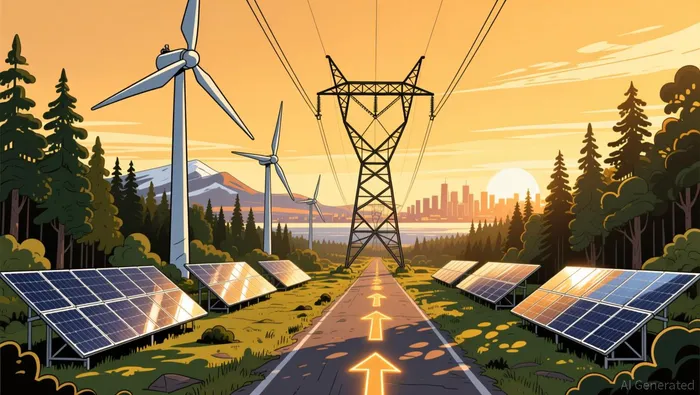 To accommodate this growth, Georgia Power has committed to a 10-year transmission plan involving over 1,000 miles of new high-voltage lines as part of its 2025 plan. A flagship project is the Ashley Park–Wansley 500kV transmission line, a 35-mile corridor connecting Ashley Park to Plant Wansley. Scheduled for completion by Q2 2028, this project will enhance grid reliability and facilitate the integration of renewable energy from South Georgia into North Georgia's high-demand zones according to local reports.
The strategic value of such projects lies in their dual role: they not only address immediate capacity constraints but also future-proof the grid against the volatility of renewable energy sources. Battery energy storage systems (BESS), with over 1,500 MW planned by 2035, will further stabilize the grid by balancing intermittent solar and wind generation as Georgia Power reports. For investors, the combination of transmission upgrades and storage deployment represents a robust infrastructure model that aligns with global decarbonization trends.
Financial Projections and ROI Considerations
While precise ROI metrics for specific projects remain opaque, the broader financial rationale is clear. Georgia Power's IRP emphasizes cost recovery through service agreements with large load customers, including data centers, which are expected to cover the bulk of infrastructure costs according to utility analysis. This model reduces the risk of stranded assets, as demand is underpinned by long-term contracts.
Critics, however, caution against overbuilding. A report by Clean Energy.org notes that Georgia Power's load growth projections may overstate future needs, particularly for projects with uncertain timelines according to Clean Energy.org. For instance, 6 gigawatts of large load projects were removed from the pipeline between Q2 and Q3 2025, raising questions about the accuracy of demand forecasts as Utility Dive reports. Yet, the utility's commitment to quarterly monitoring of economic development and load forecasts provides a dynamic adjustment mechanism, mitigating long-term risks as the company states.
Strategic Opportunities for Investors
The interplay of demand growth, regulatory oversight, and technological innovation creates a fertile ground for strategic investment. Key opportunities include:
1. Transmission Line Development: Projects like Ashley Park–Wansley offer stable returns through regulated utility rates and long-term service agreements.
2. Renewable Energy Procurement: Georgia Power's target of 4,000 MW of renewables by 2035 opens avenues for solar and wind developers, supported by competitive bidding processes as the company reports.
3. Battery Storage Integration: The planned 1,500 MW of BESS capacity aligns with national trends in grid modernization, offering high-growth potential.
For investors, the critical metric is not just ROI but alignment with Georgia's broader economic and environmental goals. The state's energy profile-already among the top 10 in the U.S. for total consumption-positions it as a hub for innovation in grid resilience and clean energy transition according to EIA data.
Conclusion
Georgia's energy grid expansion is not merely a response to demand but a strategic investment in the state's future. While risks exist-particularly around demand accuracy and regulatory scrutiny-the scale of the opportunity is undeniable. For investors, the key lies in balancing short-term infrastructure needs with long-term sustainability goals. As South Metro Atlanta continues to attract data centers and industrial activity, the region's transmission infrastructure will remain a cornerstone of economic growth-and a compelling asset class in its own right.







Comentarios
Aún no hay comentarios