
Geopolitical Risks and Strategic Opportunities in Energy and Nuclear Security Post-Plutonium Pact Withdrawal
Geopolitical Risks and Strategic Opportunities in Energy and Nuclear Security Post-Plutonium Pact Withdrawal
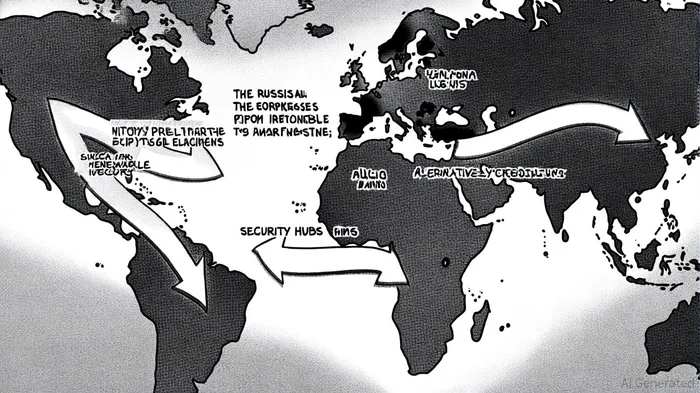
The unraveling of U.S.-Russia nuclear cooperation, epitomized by the collapse of the Plutonium Management and Disposition Agreement (PMDA) in 2016 and the impending expiration of the New START treaty in February 2026, has created a geopolitical vacuum with profound implications for energy and defense sectors. As Russia pivots from Europe to Asia and doubles down on nuclear energy as a geopolitical tool, investors are increasingly turning to alternative energy and nuclear security firms to hedge against instability and capitalize on emerging opportunities.
The Fracturing of Nuclear Arms Control and Its Consequences
Russia's withdrawal from the PMDA, a 2000 agreement to dispose of 34 tons of weapons-grade plutonium, marked a turning point in global nuclear security. The U.S. shift to a "dilute and dispose" strategy, coupled with Russian sanctions and geopolitical tensions, led Moscow to suspend its obligations, undermining trust in arms control mechanisms, as an Arms Control Center analysis explains. This erosion of cooperation has raised fears of a new nuclear arms race, with Russia potentially expanding its deployed arsenal by 60% without treaty constraints, a Reuters report warned. Such instability not only heightens defense sector risks but also destabilizes markets reliant on nuclear energy for power generation.
Energy Sector Realignments and Investment Opportunities
The European Union's accelerated energy transition, spurred by the 2022 Ukraine war, has reduced reliance on Russian gas, with pipeline flows plummeting to 20% of pre-war levels by 2024, according to a Forbes analysis. This shift has opened avenues for alternative energy partnerships. For instance, Bulgaria's $14 billion agreement with Westinghouse to replace Soviet-era reactors with AP-1000 models exemplifies how Western firms are displacing Russian influence in Europe, as the Atlantic Council analysis notes. Similarly, the U.S. is promoting small modular reactors (SMRs) and high-assay low-enriched uranium (HALEU) to secure energy independence, a trend highlighted in an OilPrice article that examines opportunities for companies like BWX TechnologiesBWXT-- and Oklo.
Meanwhile, Russia's pivot to Asia-exemplified by the Power of Siberia 2 pipeline to China-has created a new geopolitical chessboard, according to the New Lines Institute. While China's growing appetite for Russian gas offers Moscow short-term revenue, it also exposes vulnerabilities. For example, U.S. tariffs on Indian goods in August 2025 threaten to disrupt India's Russian oil imports, highlighting the fragility of these new energy alliances. Investors in alternative energy firms, such as Cameco Corporation, which is capitalizing on the U.S. ban on Russian uranium imports, stand to benefit from this volatility, as shown in MarketBeat coverage.
Nuclear Security Firms in the Crosshairs of Geopolitical Tensions
The breakdown of arms control agreements has amplified demand for nuclear security solutions. Companies like Constellation Energy and Dominion Energy are securing long-term contracts with tech firms to power AI data centers, leveraging nuclear energy's reliability and carbon-free profile, as a Forbes roundup highlights. Additionally, the global push to triple nuclear capacity by 2050-led by China and the U.S.-is driving investment in advanced reactor designs, including SMRs and Generation IV models, as a Nuclear Business overview observes. J.P. Morgan notes that nuclear energy now generates 20% of U.S. electricity and over 50% of its clean energy, making it a cornerstone of the carbon transition.
Strategic Recommendations for Investors
- Uranium Producers: Cameco and other Western uranium suppliers are well-positioned to fill the gap left by Russian exports, particularly as the U.S. seeks to reduce its reliance on foreign fuel, as noted by MarketBeat.
- Nuclear Technology Firms: BWX Technologies and Oklo, with their focus on HALEU and SMRs, align with U.S. Department of Energy initiatives to repurpose Cold War-era plutonium for civilian use, an opportunity discussed in the OilPrice article.
- Renewable Energy Partnerships: European firms like Vestas and NextEra Energy stand to gain from the EU's REPowerEU strategy, which prioritizes renewables to offset lost Russian gas supplies, according to a ScienceDirect study.
Conclusion
The geopolitical fallout from Russia's withdrawal from the Plutonium Pact has redefined the energy and defense landscapes. While the risks of a nuclear arms race and energy insecurity persist, the resulting market gaps present compelling opportunities for firms in alternative energy and nuclear security. Investors who align with these trends-whether through uranium producers, SMR developers, or renewable energy innovators-can navigate the volatility of a fractured geopolitical order while contributing to a more resilient global energy system.





Comentarios
Aún no hay comentarios