
Geopolitical Risk in Latin American Mining: Peru's Social Unrest and Copper Supply Chain Vulnerabilities
The Perfect Storm: Social Unrest, Copper Supply Chains, and Investor Sentiment in Peru
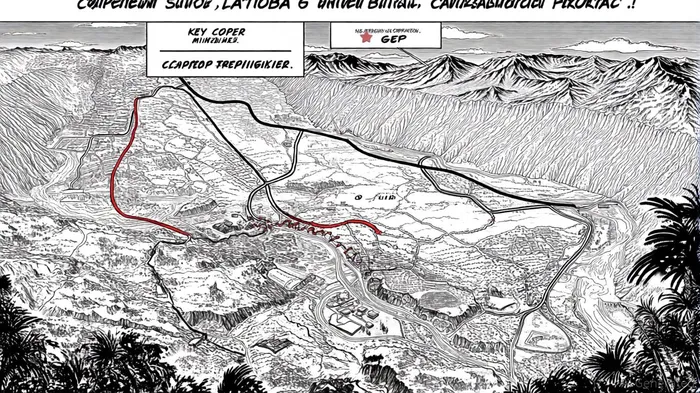
Peru, the world's third-largest copper producer, has become a flashpoint for geopolitical risk in Latin American mining. In 2025, social unrest driven by informal miners has disrupted critical supply chains, threatening global copper markets and reshaping investor sentiment. The blockades in the Southern Mining Corridor—particularly around MMG's Las Bambas and Hudbay Minerals' Constancia mines—have exposed the fragility of resource-dependent economies and the cascading effects of political instability.
Root Causes: Regulatory Shifts and Informal Miner Protests
The crisis began in late June 2025 when the Peruvian government announced the termination of the REINFO program, a temporary formalization initiative for informal miners. This decision left over 50,000 miners without legal operating permits, triggering widespread protests. Informal miners, who rely on simplified regulatory processes, blocked key transportation routes to demand extended deadlines and streamlined formalization procedures [1]. The Confederation of Artisanal and Informal Miners (CONFEMIN) led these efforts, leveraging their control over critical transit corridors to pressure the government [2].
The political context is equally volatile. President Dina Boluarte's administration, which took office following the controversial removal of Pedro Castillo, faces nationwide protests demanding her resignation. This instability has exacerbated tensions, with mining operations caught in the crossfire between state authority and grassroots movements [3].
Supply Chain Disruptions and Production Risks
The blockades have directly impacted Peru's copper output. Las Bambas, Peru's fourth-largest copper producer, saw a 30% reduction in output during the initial phase of the protests, while Constancia's operations were temporarily halted for safety and logistical reasons [4]. These mines collectively account for nearly 10% of Peru's total copper production, and prolonged disruptions could push 2025 output below the projected 2.8 million metric tonnes [5].
Transportation bottlenecks have compounded the issue. Copper-laden trucks are unable to reach coastal ports like Matarani, delaying exports and increasing operational costs. The Peruvian central bank estimated a 0.2% GDP contraction in July 2025 due to mining-related disruptions, underscoring the sector's economic weight [6].
Market Reactions: Copper Prices and Investor Volatility
The uncertainty has sent shockwaves through global copper markets. Analysts predict prices could surge to $12,000 per tonne, driven by supply constraints and robust demand from renewable energy and electric vehicle sectors [7]. While MMG and Hudbay MineralsHBM-- have maintained production guidance for 2025, their shares have shown heightened volatility, reflecting investor concerns over operational risks [8]. Glencore's Antapaccay mine, though unaffected so far, remains exposed to secondary disruptions due to shared transportation routes [9].
Investor sentiment is further clouded by broader geopolitical risks. Peru's mining sector, already grappling with declining ore grades and a lack of new projects, now faces a credibility crisis. A report by the Financial Times notes that prolonged instability could deter future investments, exacerbating supply shortages in a market already strained by China's post-pandemic demand rebound [10].
Pathways to Resolution and Strategic Implications
Temporary truces, such as the July 15 suspension of blockades, offer fleeting relief. However, the conditional nature of these pauses highlights the unresolved tensions between formal and informal mining sectors. For Peru to stabilize its copper industry, the government must balance regulatory rigor with transitional support for small-scale miners. Failure to do so risks further GDP contractions and a loss of market share to competitors like Chile and Mexico.
For investors, the crisis underscores the importance of diversification and risk mitigation. Copper's role in the energy transition ensures long-term demand, but short-term volatility will persist in regions with weak governance and social cohesion. Mining companies operating in Latin America must now factor in not just operational costs but also the political capital required to navigate such crises.
Conclusion
Peru's 2025 mining protests are a microcosm of the broader challenges facing Latin American resource sectors. The interplay of social unrest, regulatory shifts, and geopolitical risk has created a perfect storm for copper supply chains. While the immediate economic and market impacts are significant, the long-term implications for investor confidence and global supply security remain to be seen. As the world pivots toward green energy, the resilience of mining-dependent economies will be tested like never before.







Comentarios
Aún no hay comentarios