
Geopolitical Risk and the Fragile Infrastructure of U.S. Humanitarian Aid: Implications for Defense Contractors and Humanitarian Tech
The United States has long positioned itself as the world's leading humanitarian actor, channeling vast resources into crisis zones through agencies like USAID. Yet, the seismic shifts in U.S. foreign aid policy since 2023—marked by the Trump administration's restructuring of humanitarian programs and the reallocation of responsibilities to the State Department—have exposed deep vulnerabilities in the infrastructure underpinning global aid. For investors, this transformation raises critical questions about the long-term viability of U.S.-backed aid mechanisms and their implications for defense contractors, humanitarian technology firms, and emerging aid infrastructure.
The Erosion of a Humanitarian Infrastructure
The Trump administration's 90-day pause on U.S. foreign development assistance in 2023 triggered a cascade of program terminations, with 86% of USAID initiatives shuttered by late 2025. This abrupt shift has dismantled decades of investment in humanitarian infrastructure, including early warning systems like FEWS NET and global health monitoring tools. The termination of 5,341 programs—spanning food aid, disease prevention, and disaster response—has left critical gaps in the U.S. capacity to address crises in Syria, Yemen, and Afghanistan, where 64 million people now face unmet humanitarian needs.
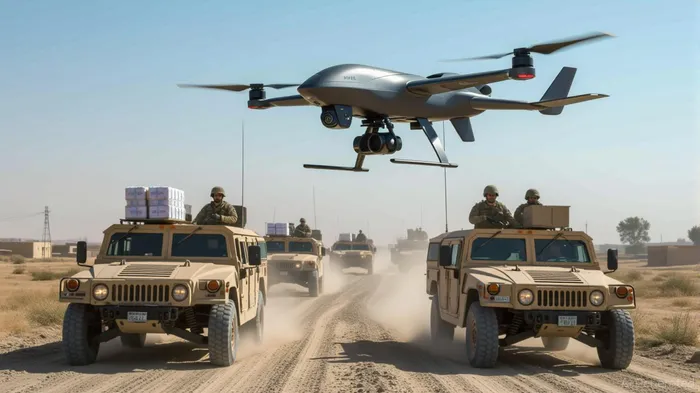
For defense contractors, the implications are twofold. First, the shift from long-term development projects to short-term crisis interventions has altered the demand for specialized infrastructure. Companies previously engaged in USAID-funded projects—such as logistics networks for vaccine distribution or AI-driven disaster prediction systems—now face a shrinking market. Second, the State Department's focus on diplomatic and security-oriented aid has opened new avenues for defense firms to pivot toward “security-first” solutions, such as rapid-response supply chains or AI-powered surveillance for conflict zones.
Humanitarian Tech: A Sector in Flux
Humanitarian technology, once buoyed by USAID's multi-year funding, now grapples with a fragmented landscape. The termination of programs like the Famine Early Warning System Network has crippled the ability to predict and respond to food insecurity, while the suspension of health data systems has hampered global disease surveillance. For firms specializing in humanitarian tech, the challenge lies in adapting to a funding environment that prioritizes immediate crisis response over systemic resilience.
Investors must weigh the risks of underfunded innovation against the potential for niche opportunities. For example, blockchain-based aid distribution platforms or AI-driven resource allocation tools could gain traction in a world where speed and precision are paramount. However, the lack of sustained U.S. funding for these systems—coupled with geopolitical competition from China and Russia—creates an uncertain outlook.
Geopolitical Risks and Strategic Realignment
The U.S. retreat from long-term humanitarian commitments has not gone unnoticed. As Washington reduces its footprint in multilateral institutions like the World Food Programme and UNAIDS, competitors are stepping in to fill the void. China, in particular, has expanded its influence in the Global South through infrastructure-heavy aid packages, often tied to strategic interests. This realignment poses a dual risk: not only does it erode U.S. soft power, but it also fragments the global aid ecosystem, complicating coordination during crises.
For investors, the geopolitical dimension is critical. Defense contractors with expertise in hybrid operations—combining humanitarian aid with security logistics—may find new markets in a world where aid is increasingly weaponized. Conversely, firms reliant on traditional USAID contracts face a bleak future unless they pivot to state-led initiatives or private-sector partnerships.
Investment Advice: Navigating the New Normal
- Defense Contractors: Prioritize firms with adaptable capabilities in rapid-response logistics and crisis management. Companies like Northrop GrummanNOC--, which has expanded into AI-driven supply chain solutions, may outperform peers focused on legacy systems.
- Humanitarian Tech: Invest in firms developing modular, scalable technologies that can operate in both crisis and development contexts. PalantirPLTR-- Technologies, with its data analytics platforms, and smaller innovators in AI-driven resource allocation could offer high-growth potential.
- Emerging Aid Infrastructure: Consider opportunities in private-sector partnerships or multilateral funds that aim to fill the U.S. void. Impact investors may find value in ventures addressing climate-related displacement or digital health infrastructure in conflict zones.
The U.S. humanitarian aid model is at a crossroads. While the current administration's focus on efficiency and national interest has streamlined operations, it has also eroded the long-term infrastructure that underpinned global stability. For investors, the path forward lies in balancing short-term gains with the recognition that a fragmented aid landscape will amplify geopolitical risks—and create both challenges and opportunities in the years ahead.





Comentarios
Aún no hay comentarios