
Genesis Energy's Q3 Earnings Signal Operational Resilience and Attractive Midstream Exposure
Q3 Earnings: A Mixed but Resilient Performance
Genesis Energy reported results showing a GAAP net loss of $0.05 per share in Q3 2025, with revenue rising 4.2% year-over-year to $414 million. While the loss reflects the headwinds of fluctuating commodity prices, the revenue growth highlights the company's ability to stabilize cash flows through its midstream operations. Notably, the firm revised its full-year 2025 Adjusted EBITDA guidance downward, anticipating results slightly below the low end of its $545–$575 million range in the same report. This adjustment, however, does not diminish the underlying strength of its infrastructure-driven business model.
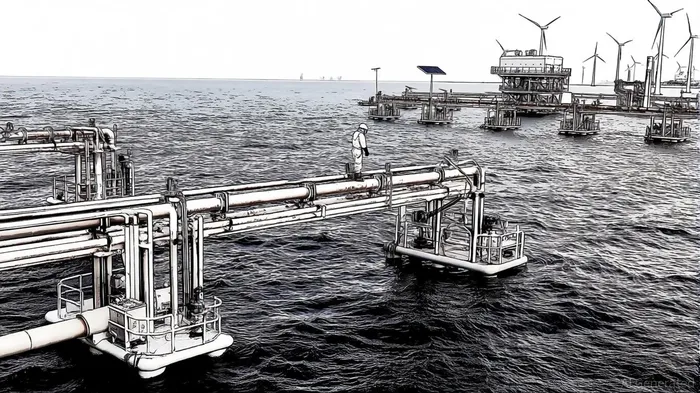
The company's offshore pipeline transportation segment, in particular, has shown robust performance. The ramp-up of the Shenandoah and Salamanca floating production units-connected to Genesis's owned pipelines-has driven throughput increases. The Shenandoah project achieved 100,000 barrels per day (kbd) within 75 days of startup, while Salamanca is on track to reach 40 kbd from its initial wells, according to a Morningstar release. These developments suggest that Genesis's midstream assets are not only resilient but also scalable, positioning the company to capitalize on future demand for pipeline capacity.
Strategic Midstream and Renewable Initiatives
Genesis's operational resilience is further bolstered by its dual focus on midstream infrastructure and renewable energy. In New Zealand, the company has leveraged favorable hydrology and wind conditions to boost hydro generation to 904 gigawatt-hours in Q1 FY26, as reported in a Fool.com.au article. Complementing this, the completion of the Huntly battery energy storage system and the acquisition of the Leeston Solar Farm underscore its commitment to diversifying its energy portfolio, as noted in the same Fool.com.au article. These projects are part of the Gen35 strategy, which aims to balance traditional midstream operations with low-carbon solutions.
A particularly noteworthy initiative is Genesis's pivot to biomass in New Zealand. The company is developing a domestic supply chain for biomass to replace coal and gas at the Huntly Power Station, with long-term agreements in place to secure 300,000 tonnes of biomass annually by 2028, according to a Bioenergy News report. This shift not only mitigates exposure to fossil fuel price swings but also aligns with global decarbonization goals, enhancing the company's long-term earnings potential.
Industry Trends and Midstream Resilience
The broader energy sector is witnessing a paradigm shift in midstream infrastructure. In North America, for instance, strategic partnerships like the Hitachi and Blackstone partnership are reshaping grid services. Hitachi's $1 billion investment in grid modernization and digital solutions highlights the sector's pivot toward reliability and sustainability-a trend that resonates with Genesis's operational focus.
Meanwhile, the low-voltage inverters market in North America is projected to grow at a 8.37% CAGR from 2025 to 2035, driven by renewable integration and electrification, according to an inverters market analysis. While Genesis is not directly involved in this segment, the broader demand for grid resilience and distributed energy solutions validates the strategic value of midstream infrastructure as a buffer against commodity volatility.
Assessing Long-Term Value
Genesis Energy's ability to adapt to a volatile energy landscape hinges on its midstream infrastructure and renewable investments. The company's Q3 results, though tempered by short-term challenges, reveal a business model that prioritizes operational flexibility and long-term stability. By capitalizing on excess pipeline capacity, expanding into biomass, and integrating renewable assets, Genesis is positioning itself as a bridge between traditional energy systems and the decarbonized future.
For investors, the key takeaway is clear: midstream infrastructure, when paired with strategic innovation, offers a durable foundation for value creation. Genesis's Q3 performance and forward-looking initiatives suggest that the company is not merely weathering the storm but actively building a moat against the uncertainties of the energy transition.





Comentarios
Aún no hay comentarios