
General Motors' Strategic Shift: Can Duncan Aldred Steer North America to EV Dominance?
General Motors’ appointment of Duncan Aldred to a pivotal global commercial leadership role—effectively anchoring its North American strategy—marks a critical juncture in the automaker’s transition to an electric future. Aldred’s 35-year career at GM, spanning sales, marketing, and operational roles across Europe and North America, positions him to navigate the company’s twin challenges: scaling EV production profitably while mitigating the risks of trade wars and supply chain fragility. This article examines the implications of his ascension and GM’s broader strategic bets.
The Aldred Factor: Why He Matters
Aldred’s promotion reflects GM’s confidence in his ability to harmonize global ambitions with North America’s operational realities. His tenure as VP of Buick and GMC (2014–2024) saw the brands pivot toward premiumization and electrification—evident in the creation of GMC’s Denali and AT4 sub-brands. Now, as VP of Global Commercial Growth Strategies, Aldred oversees divisions critical to GM’s future:
- GM Energy: Expanding charging networks, including access to Tesla’s Superchargers via NACS adapters.
- GM Envolve: Integrating BrightDrop’s EV fleet into Chevrolet’s lineup to simplify commercial offerings.
- Customer Care and Digital Services: Ensuring seamless post-purchase support for EV owners.
His appointment underscores GM’s “Winning with Simplicity” strategy, which prioritizes operational efficiency and customer-centricity. Aldred’s cross-continental experience—having managed sales in the UK, Europe, and North America—equips him to balance regional priorities, from U.S. manufacturing dominance to China’s EV market.
GM’s North America Playbook: Strengths and Risks
1. EV Growth and Profitability
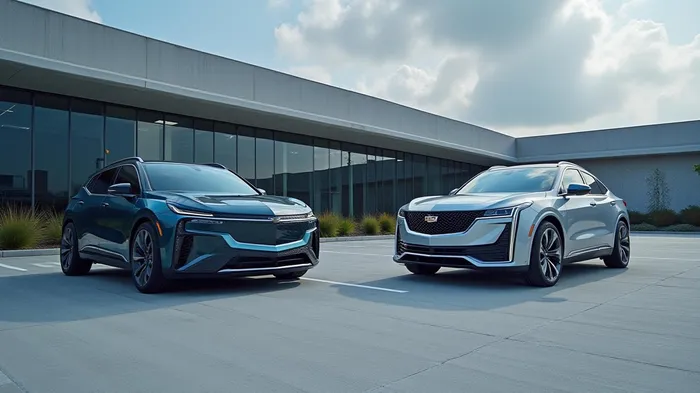
GM’s North American EV sales surged 90% year-over-year in early 2025, with the Chevrolet Equinox EV and Cadillac Lyric leading the charge. Nearly half of EVs produced in Q1 were already variable-profit positive, a milestone toward GM’s goal of EV breakeven by 2025. The Cadillac Escalade IQ, set for launch in 2025, promises high-margin sales, leveraging Cadillac’s brand equity in luxury SUVs.
2. Manufacturing Resilience
GM has reshored production to counter tariffs, boosting U.S. content in vehicles to 80% compliance with USMCA rules. The Fort Wayne plant’s pickup production expansion by 50,000 units annually highlights this strategy. However, tariffs still cost GM $4–5 billion annually, pressuring EBIT guidance to $10–12.5 billion—a 25% cut from 2024 projections.
3. Supply Chain and Tech Innovation
Partnerships like the Lithium Americas deal (securing 100% of GM’s lithium needs by 2027) reduce reliance on foreign suppliers. Meanwhile, AI integration with NVIDIA aims to cut battery costs by $10,000 per vehicle, a critical step toward EV competitiveness.
Investment Implications: Opportunities and Threats
Opportunities
- EV Profitability: GM’s EV portfolio is nearing breakeven, with the Escalade IQ and software-defined vehicles (e.g., Super Cruise) offering high-margin growth.
- U.S. Manufacturing Dominance: A network of 50 U.S. plants and 80% local content insulate GM from trade shocks, supporting margins.
- Liquidity and Capital Allocation: Despite pausing buybacks, GM’s $32.8 billion liquidity and $12 billion free cash flow midpoint provide flexibility for innovation.
Threats
- Tariff Volatility: Trade policy uncertainty remains the largest near-term risk. GM expects to offset 30–50% of tariff costs via production shifts, but outcomes depend on U.S.-China negotiations.
- Warranty Costs: A $500 million Q2 hit from engine defects could strain margins, though GM’s cost discipline (e.g., renegotiated supplier deals) mitigates broader risks.
- Competitor Pressure: Tesla’s Model Y and Ford’s F-150 Lightning continue to eat into market share, requiring GM to innovate faster.
Conclusion: GM’s Road Ahead
Duncan Aldred’s leadership is a calculated bet on GM’s ability to blend operational rigor with EV ambition. With nearly 50% of EVs now profitable, $12 billion in projected free cash flow, and a fortress-like U.S. manufacturing footprint, GM is positioned to weather near-term tariff headwinds while capitalizing on EV demand. However, sustaining this momentum hinges on executing three priorities:
1. Cost Reduction: Achieving $10,000-per-vehicle battery savings and maintaining U.S. production efficiency.
2. Market Penetration: Expanding Super Cruise adoption and leveraging the Escalade IQ’s premium appeal.
3. Trade Policy Resilience: Navigating U.S.-China tensions without sacrificing global scale.
For investors, GM offers a compelling mix of defensive cash flows from its traditional business and transformative EV growth. While risks remain, Aldred’s track record and GM’s structural advantages suggest it will remain a key player in the automotive sector’s electric revolution.
Data Sources: GM Q1 2025 Earnings Report, Automotive News, Reuters.





Comentarios
Aún no hay comentarios